

 Smaller
 Bigger
From Remittances to IP: The Dominican Republic’s Next Economic Play
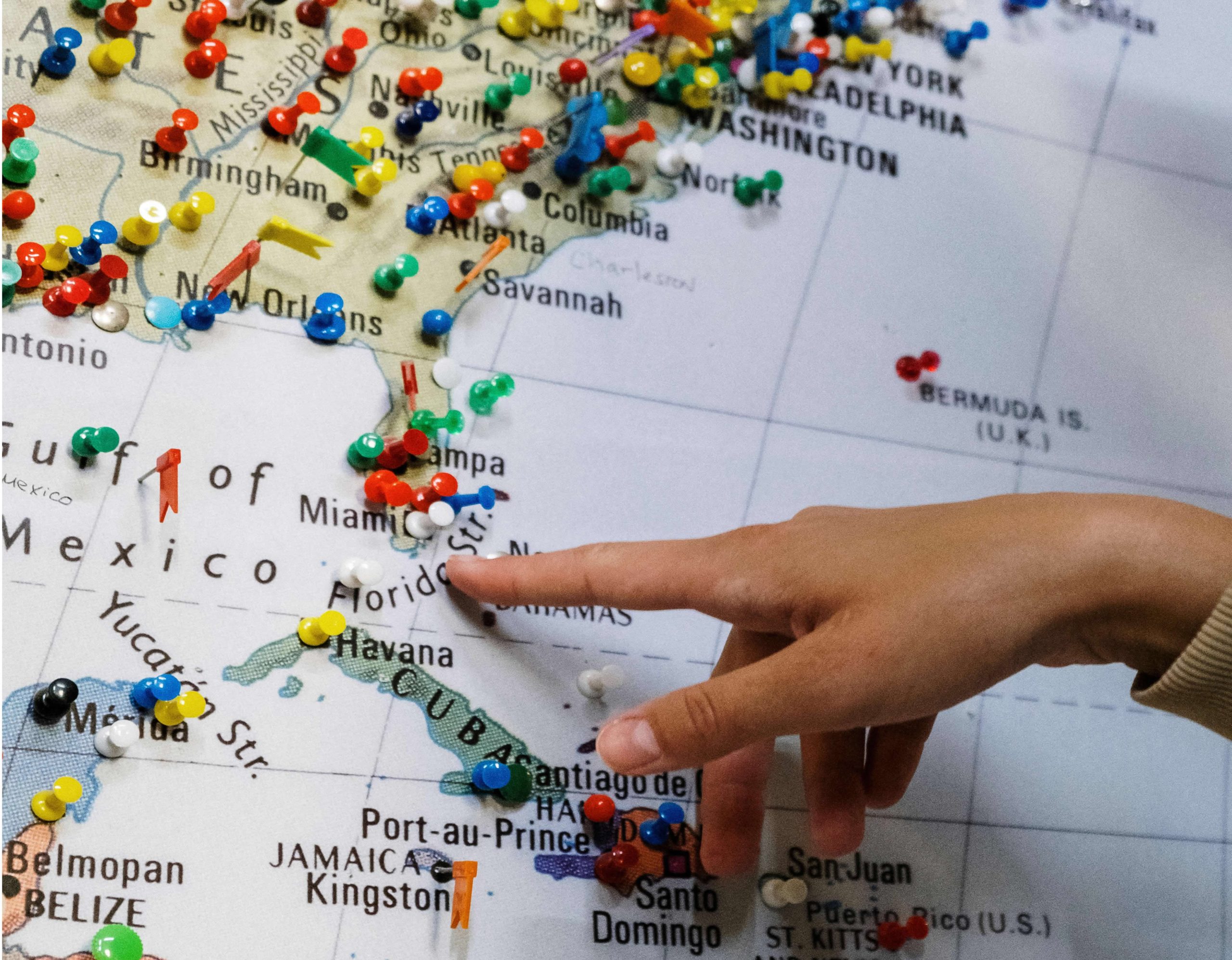
Foto by cottonbro - pexels.com
By Jonathan Joel Mentor | @jonathanjmentor
The Dominican Republic doesn’t have one economy. It has two.
One sits on this side of the water: tourism, free zones, construction, macro stability.
The other lives in JFK, Barajas, Toronto Pearson and a few million WhatsApp chats.
Ask any official what drives Dominican growth and you’ll get the usual track: record tourism, dynamic free zones, resilient remittances, “macroeconomic stability.”
They’re not lying. They’re just telling half the story.
Because the most powerful Dominican institution on the planet right now doesn’t sit in Santo Domingo. It lives in the diaspora.
Not as a flag emoji. Not as “orgullo dominicano” at a parade. As an economic engine and innovation network we’re still treating like an ATM.
THE NUMBERS ARE NOT SUBTLE
On paper, we’re a development darling.
The World Bank notes that over the last two decades, the Dominican Republic’s economic growth has tripled the Latin American and Caribbean average, lifting around three million people out of poverty and building a middle class that finally outnumbers the poor.
In 2024, the Central Bank reported US$10.76 billion in remittances, roughly 8.6% of GDP—well above a global remittance share closer to 5%.
And according to the most recent Registro Sociodemográfico de los Dominicanos en el Exterior, we have about 2.87 million Dominicans living abroad, including roughly 2.39 million in the United States and over 200,000 in Spain.
If you’re a politician, that’s the perfect scoreboard:
- You fly to Washington and Brussels talking about exceptional growth.
- You fly home talking about poverty reduction and social progress.
- You hold press conferences thanking “our diaspora” for the remittances that keep supermarkets and construction sites humming.
It’s a comfortable narrative. It’s also running out of road.
THE CEILING WE PRETEND NOT TO SEE
Behind the celebration, the World Bank’s Country Economic Memorandum is blunt: Dominican growth has been “exceptional” and “far exceeding the LAC average,” but it’s been driven mostly by factor accumulation—more capital, more labor, more hotels and malls—rather than productivity. That model is reaching its limits.
At the same time:
- We rank among the most climate-vulnerable countries in the world; one analysis puts us 12th globally in terms of impact from natural hazards over 1998–2017.
- Our Human Capital Index sits around 0.50—meaning a Dominican child born today will only reach about half their potential productivity, given current education and health outcomes.
Layer in the permanent crisis next door. We share an island with Haiti’s collapse, manage Haitian migration and labor, and still watch young Dominicans leave for New York and Madrid because they don’t see local institutions keeping up.
So we’re in an awkward middle:
- Too rich to play “poor little island” in development negotiations.
- Too dependent on tourism, construction and basic exports to pretend this is a knowledge economy.
- Too exposed to climate and regional shocks to keep building on sand and vibes.
You don’t break that ceiling with another all-inclusive, another tower, or one more BPO deal.
You break it by upgrading what you export.
That’s where the Dominican diaspora stops being a sentimental talking point and becomes the most underused piece of our growth strategy.
A DISTRIBUTED DOMINICAN REPUBLIC WE ONLY SEE WHEN THE MONEY HITS
INDEX’s fourth update of the diaspora registry is more than a vanity exercise. It quietly admits we now have a parallel Dominican Republic abroad: 2.87 million people mapped across 100+ countries, with disaggregated data by age, sex, and geography.
The International Organization for Migration went further in “Diáspora dominicana: inclusión productiva e inversión en el desarrollo nacional.” It describes the diaspora as a “dynamic source of human capital whose economic role transcends borders,” highlighting:
- their skills,
- their savings and credit,
- and their dense social networks that reach into roughly half of Dominican households via remittances and family ties.
Translated into plain language:
We have a global Dominican class living inside the most advanced economies on earth—learning in universities we didn’t fund, working in companies we didn’t build, operating under rule-of-law systems we haven’t fully replicated—and we still mostly experience them as a line in a remittance report.
Think of:
- the Dominican engineer in New Jersey building credit models for a U.S. bank,
- the product manager in Madrid shipping fintech features for Latin America,
- the logistics operator in Panama quietly running Caribbean flows,
- the nurse in Toronto, the data analyst in Boston, the operations lead in Miami.
All Dominican. None of that capacity shows up in our export statistics.
We have built, accidentally, a distributed Dominican Republic sitting inside other people’s institutions.
Economically, we still treat it like an offshore emergency fund.
WHY NOBODY IN POWER HAS TAKEN THIS MANTLE (YET)
If the upside is so obvious, why isn’t “Dominican diaspora investment and innovation” the centerpiece of every development strategy, every Caribbean innovation economy pitch deck, every conversation about alternative investments in the Dominican Republic?
Because owning this mantle threatens the current equilibrium.
First, remittances stop being enough.
IOM and local analyses estimate that Dominicans abroad generate tens of billions of dollars in income annually, with billions in savings sitting in foreign banks. Against that, our US$10–11 billion in annual remittances look like what they are: essential, but primitive. Cashflow, not capital structure.
That is a hard pill to swallow for a political class used to presenting record remittances as proof that everything is working.
Second, the definition of “export” gets rewritten.
Once you accept that Dominican-origin IP, software, algorithms, data products, platforms and frameworks are exports, you’ve just created a new game:
- A founder in Santiago,
- a data scientist in Queens,
- and a strategist in Barcelona
can co-create assets counted as Dominican exports, without relying on land, concessions or traditional FDI.
That threatens anyone whose power depends on controlling the “hard” economy: ports, property, contracts.
Third, you have to share authorship.
Treating the diaspora as a sovereign production base means conceding that many of the people who left:
- have more relevant skills for the next decade than some who stayed,
- are less dependent on domestic political favors,
- and can walk away from any project that smells like the old game.
You can fly up for “encuentros con la diáspora” and cut ribbons in the Bronx. That’s easy.
Letting diaspora operators co-design export policy, co-lead funds, or co-own critical digital infrastructure is another conversation entirely.
So the system doesn’t attack the idea. It just ignores it:
- The diaspora appears in development plans as a footnote.
- INDEX keeps the registry and organizes events.
- MIREX does good work on rights and consular protection.
- The Central Bank praises remittances as a macro pillar.
And the rest of the machine goes back to its comfort zone: tourism, free zones, construction, some nearshoring, and the same macro story.
You don’t need a villain here. Incentives are enough.
THIS IS NOT A SILVER BULLET—BUT IT IS THE MISSING PILLAR
None of this replaces the homework we already know we owe:
- energy sector reform,
- real rule of law,
- serious public education,
- modern, predictable regulation.
Diaspora-backed IP doesn’t fix bad institutions. It punishes them faster.
If we don’t fix the basics, we’ll simply train and export even more of our best people and ideas.
But if we do get serious about internal reform, the diaspora becomes the multiplier—especially for Dominican innovation and startups that don’t look like BPO clones.
That’s the frame behind a whitepaper I’ve been developing on Dominican diaspora investment and exportable IP: a blueprint for treating the diaspora not just as cash and culture, but as the co-author of our next growth model. This article is the public-facing argument; the whitepaper is the operating manual.
- PUT “DIASPORA-BACKED IP” ON THE BOOKS AS A STRATEGIC EXPORT
If it doesn’t exist on paper, it doesn’t exist in policy.
This means:
- Updating national export and innovation strategies to explicitly name software, data products, algorithms, proprietary frameworks and digital platforms as strategic export categories in their own right.
- Tracking not just “tech startups,” but Dominican-origin recurring revenue from foreign clients in finance, logistics, insurance, mobility, and education.
The World Bank is already telling us we need to move from factor accumulation to productivity and innovation.
Fine. That shift needs a line item, not just a paragraph in a PDF.
- BUILD VEHICLES, NOT MORE SLOGANS
We don’t need another conference on “the Dominican diaspora.” We need pipes.
Concretely:
A Diaspora Guarantee & Co-Investment Facility
Years ago, IOM and MEPyD sketched the FIG-DOMEX concept: a guarantee fund to back diaspora savings and credit into productive investments in the country. That blueprint needs an upgrade:
- Tilt it toward IP-heavy ventures—data infrastructure, B2B SaaS, risk and mobility platforms—rather than just real estate or traditional SMEs.
- Blend multilateral guarantees with diaspora capital so risk is shared, but upside stays largely Dominican.
Diaspora Revenue-Share Funds
Stop pitching diaspora investors on “help your homeland” sentiment and start offering hard contracts:
- Funds that buy into recurring revenue streams: SaaS contracts, infrastructure usage fees, data subscriptions across the Caribbean and Latin America.
- Transparent governance, professional RevOps, clean reporting.
If you’re serious about alternative investments in the Dominican Republic that go beyond construction and hotels, this is where the real risk-adjusted upside sits.
There are already Dominican teams quietly building the kind of assets that fit this thesis: mobility-and-data infrastructure, regional risk engines, vertical SaaS for emerging-market logistics and finance. They don’t look like “buy a tower and pray.” They look like exportable infrastructure you can’t touch—code, rights, data, rails—with revenue in hard currency and exposure to the Caribbean and LatAm middle class.
If you understand that sentence, you already know you’re early.
Corporate Innovation Mandates
Our big domestic players—banks, insurers, telcos, logistics groups—should be co-developing products with Dominican talent abroad:
- a Dominican bank running a credit and risk lab with Dominican data scientists in the U.S. and Spain,
- an insurer co-building parametric products with Dominican actuaries in Toronto and Santiago,
- a logistics group co-building routing and scoring systems with Dominican operators in Panama and Miami.
That’s not CSR. That’s survival.
This is where my own lane comes in. When CEOs come to me, they don’t show up saying “help me honor the diaspora.” They show up saying:
“We know our next growth is regional and global—diaspora, Caribbean, LatAm—but our revenue architecture, our data, and our messaging are still built for a single-market, offline world.”
You don’t fix that with inspiration. You fix it with revenue operations, data strategy, and cross-border go-to-market design.
- PUT DIASPORA OPERATORS INSIDE THE ROOMS THAT MATTER
Right now, the diaspora lives in:
- MIREX and INDEX (rights, consular issues, cultural work),
- the occasional MEPyD workshop,
- Central Bank remittance charts.
If we’re serious, that has to evolve.
- Economy & Planning should have a permanent “Diaspora Product & Investment” desk, staffed by people who have actually built and invested abroad.
- Export promotion agencies should treat diaspora markets as priority entry points for Dominican IP, not just for rum and resorts.
- Major public–private roundtables on development should include diaspora founders and operators as peers, not decoration.
This isn’t about replacing local founders with some global Dominican elite. It’s about wiring them together so a coder in Queens and an operator in Santiago can co-own the same infrastructure and sell it to the world.
- IF YOU’RE A FOUNDER OR EXECUTIVE, THIS IS YOUR LANE—RIGHT NOW
Let’s speak directly.
If you’re building in the Dominican Republic—or you’re Dominican and building abroad—and this article is hitting a nerve, you’re already living in this tension:
- Global opportunity: diaspora markets, regional clients, global platforms.
- Local constraint: systems, revenue engines, and narratives still built for a domestic, analog economy.
You don’t solve that with more hustle. You solve it by redesigning the machine you’re running.
That’s exactly what I work on with founders in my Founder Intensive: a short, brutal sprint where we tear your model down to the studs and rebuild:
- your revenue architecture,
- your data strategy,
- your international story,
for a world where your customers, operators, and investors are split between Santo Domingo, New York, Madrid and beyond.
If you read this and felt, “He’s talking about my company,” you’re probably the kind of founder who belongs in that room.
And if you’re an investor who has only ever looked at this country through resorts, bonds, or nearshoring, consider this your early warning: the most interesting Dominican alternative investments over the next decade will not be visible from a beach. They’ll be in Dominican-built infrastructure you can’t photograph—code, data, rights, and rails that quietly power mobility, risk, finance and logistics across multiple markets.
A handful of us are structuring those plays now. The smart money will show up before they have names.
THE POINT OF ALL THIS
So let’s land it clearly.
The Dominican Republic has:
- A growth story the World Bank uses as a positive case study.
- Structural ceilings—productivity, human capital, climate vulnerability—that won’t be fixed by more concrete.
- A diaspora of almost three million people embedded in advanced economies, with skills, capital and networks we haven’t even begun to systematically plug into our development model.
We can keep treating that diaspora as a sentimental ATM and hope the current model limps along for another decade.
Or we can finally say, with a straight face:
The next growth engine of the Dominican Republic is not another resort.
It is a global Dominican network producing IP, capital and institutions our grandchildren can inherit.
If you’re a policymaker, your job is to stop pretending this is optional and start writing it into strategy.
If you’re a founder or executive, your job is to build products and revenue systems that assume this future is already here—and to find partners who know how to operationalize it.
My job, the way I’ve chosen to do it, is simple:
Keep making this argument impossible to ignore—and help the people who are ready to move actually build the thing.
Jonathan Joel Mentor is the CEO of Successment and architect of the Digital Nomad Summit™, scaling startups and challenging institutions to evolve. UN World Summit Award Nominee & ADOEXPO National Excellence in Exportation Award Winner www.jonathanjmentor.co | digitalnomadsummit.co














Agree with most of this, need to get some serious manufacturing going on down here, what exactly I’m not sure yet. But they only leave as there are no good well paying jobs here!
Manufacturing is something that requires land, labor and time. This is why I advocate for innovation, startups and IP. Lower lift, higher upside.
a Dominican vehicle market would be a decent start, maybe even a space industry.
This two industries require massive commercial infrastructure guardrails. I would support that idea in the long term. In the near term, I’m confident that we can prioritize other industries with a higher upside and a lower barrier to entry, Thanks for the comment.
Is there anyone in this country with integrity and does not steal and lie straight out? Why bars on nearly all the homes? Why extra store personnel in each aisle along with cameras to watch for shoplifters? Why so many prostitutes and no family committed women? BAD SHAPE INDEED AND THEN USING THE LORDS NAME IN ALL THIS…BIG PROBLEMS!
This is a very dissapointing comment.
Isn’t there any space here in the DR for a large Data Center for AI work as in what is now the largest expansion of technology going on now in the USA? and hooked up right beside a standalone power source (eg. the new NatGas power plant in MonteCristi can be expanded (doubled/tripled) with the now newly installed port and storage infrastructure) with no need for transmission and distribution lines? Let’s talk to the players like MSFT, NVDA, DELL, or any of the big Tech companies spending billions on their new data centers in the USA and are looking for secure, stable and scalable energy supplies and promote the North West (MonteCristi) area with huge amounts of inexpensive easily buildable land to develop. Why not? thank you very much Jonathon for bringing to the fore a most interesting essay and looking towards the future for the DR, not just what we have been doing successfully in the past. well done sir.
This is exactly the right line of thinking — and you’re not alone in seeing it.
What’s happening in the U.S. around AI infrastructure is not just a technology boom, it’s a geopolitical energy + compute land grab. The real constraint is no longer chips — it’s power, stability, and jurisdictional resilience. That’s where places like the Dominican Republic, and specifically regions like Monte Cristi, become strategically interesting.
Proximity to scalable generation, port infrastructure, underutilized land, and political stability is the same playbook being executed in Texas, Virginia, and the Gulf states right now. The difference is that the DR has the opportunity to design this intentionally, rather than retrofitting around legacy constraints.
The missing layer is not vision — it’s coordination, deal structuring, and narrative control: aligning energy, policy, land, talent, and international partners into a coherent investment thesis that global operators can actually underwrite. That’s the work.
This is precisely the kind of future-facing strategy the country should be exploring if it wants to move beyond remittances and tourism into infrastructure-grade economic pillars.
Happy to continue this conversation offline — these are the discussions that shape the next decade, not the next quarter.
Feel free to contact me directly: jonathan@successment.co