 Smaller
 Bigger
Dominican Foreign Minister’s wake-up call: navigating a turbulent global economy

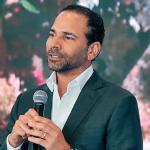
Roberto Alvarez and Miguel Lama, before the business forum. (Photo: External source).
Santiago, DR.- Dominican Foreign Minister Roberto Álvarez has issued a direct challenge to the country’s business leaders, urging them to adapt to a volatile new global landscape or risk being left behind. His message, delivered at a recent business forum, was a stark reminder that traditional strategies no longer suffice in a world defined by rising protectionism and geopolitical uncertainty.
Álvarez’s remarks, made during a Capex-hosted event, underscored the critical need for businesses to meticulously analyze markets and stay ahead of international trends. He pointed to two major forces reshaping the global economy: a growing bipartisan stance in the U.S. against China and a global shift from large regional trade deals to smaller, more flexible bilateral agreements.
Tariffs, trade, and a strategic push for growth
The Foreign Minister also shed light on the government’s dual approach to international trade. He confirmed the use of tariffs as a strategic tool to boost fiscal revenue while also outlining measures to prevent other countries from exploiting loopholes to access the lucrative U.S. market.
Looking beyond immediate challenges, Álvarez offered a glimpse of future opportunities. He highlighted ongoing exploratory talks with the United Arab Emirates, specifically mentioning the potential for Emirati airlines to establish a major hub in the Dominican Republic. Such a move, he suggested, could transform the nation into a key regional center for air travel and trade.
The event also featured Miguel Lama Rodríguez, President of FUNCAPEX’s Board of Directors, who echoed the urgency of the moment. He called for a shift toward a more agile, informed, and conscious mindset to tackle the pressures of geopolitics, technological disruption, and the growing demand for sustainable business models.
Both leaders agreed on a central theme: success in this new era requires a unified front. The collective goal, they argued, must be for the government and private sector to stop working in silos and instead collaborate with a shared purpose to secure the country’s economic future.