

 Smaller
 Bigger
Dominican Republic’s informal employment at 54.7%
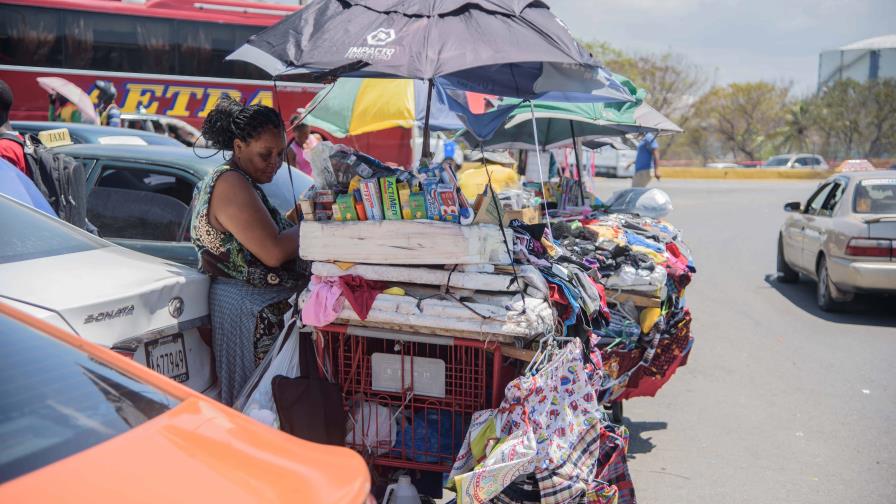
Santo Domingo.- Informal employment in the Dominican Republic accounts for approximately 54.7%, according to the Regional Competitive Bulletin published on Wednesday by the Honduran Council of Private Enterprise (Cohep).
The bulletin also states that Honduras ranks second in Central America, with the highest informal employment rate, at 82.6%, behind only Guatemala.
The report reveals that Guatemala tops the list with an informality rate of 83.2%, followed by Honduras. In contrast, countries such as Costa Rica (37.4%) and the Dominican Republic (54.7%) have considerably lower levels.
Meanwhile, El Salvador has an informality rate of 66.5%, Nicaragua 63%, and Panama 58.7%, the document detailed.
“Informal employment remains one of the main obstacles to productivity in the region,” the bulletin notes, while warning that millions of workers are forced to resort to this type of employment due to the lack of opportunities in the formal economy.
This situation exacerbates the “levels of vulnerability and precariousness” associated with employment, and restricts access to fundamental rights such as social protection, decent working conditions, and job security.
Economic performance
Regarding regional economic performance, the bulletin notes that in 2024, Central America and the Dominican Republic reached a combined Gross Domestic Product (GDP) of $498 billion, representing a growth of 2.8%, according to data from the Economic Commission for Latin America and the Caribbean (ECLAC).
Kaffati emphasized that countries like Honduras, El Salvador, and Nicaragua contributed only between 4% and 7% of the region’s total GDP, which, in his opinion, “forces” countries to focus on “how to boost our economies from within.”
In addition to the individual impact, COHEP warns that informality affects the entire economy, reducing public revenues, limiting the state’s ability to address social needs, and limiting the sustainability of formal businesses.
- Informality is an “obstacle to workers ‘ rights , including fundamental principles and rights at work, as well as to social protection and teaching working conditions,” he added.
He also asserts that most people who join the informal economy “do so not by choice, but rather as a result of a lack of opportunities in the formal economy and a lack of other means of support.”













That Haitian women on that picture tells the whole story. There are 5 to 7 million illegal Haitians willing to work for slave wages. Their children take up all the rooms in the schools, and their wives take up all the beds on the maternity hospitals. It’s hard to complete with millions of people that come from a semi jungle state.
DR needs another Trujijjo.
You are not going to report on the military man that was kidnapped, torture and killed at the border by a gang of Haitians? If you don’t report on it. It didn’t happened. You are very selective on what you report.
Need to remove all of these illegal Haitians so that the citizens can secure employment. Then ENFORCE the wage laws. Finally, cut-off all government and social services for these illegals. If they can’t get it for free they won’t come looking for it.