

 Smaller
 Bigger
Private schooling’s hidden tax: families pay the price for an unregulated education market
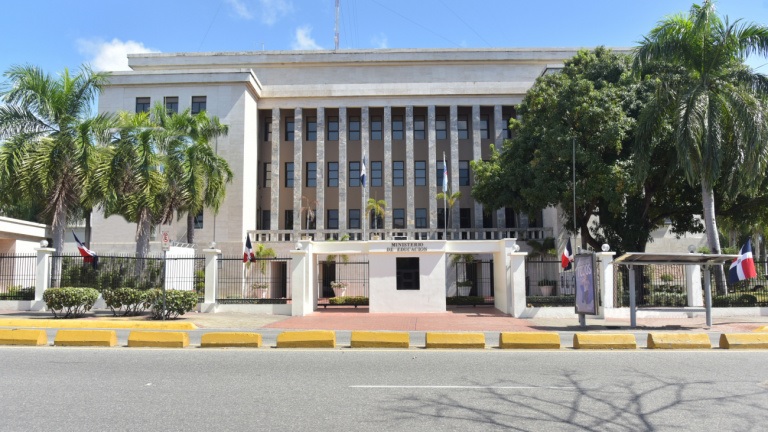
Santo Domingo.- As another school year looms, Dominican middle-class families face a familiar squeeze: private-school fees and related costs that push household budgets to the breaking point. Parents describe a system that demands large up-front payments, obliges them to buy ever-new textbook editions and treats education like a profit center rather than a public good.
Tuition shock and hidden costs
“For a modest private school, we pay nearly RD$359,000 a year for a single child, full day, meals and after-school care, and still must cover registration, uniforms and books,” said Elena Ramos, a mid-level manager who with her husband takes home about RD$200,000 monthly. “We had to take a bank loan just to get through enrollment.” Her story is far from isolated.
Mariana Cordero, a parent of two teenagers, offered a granular account of the recurring expenses that drain household finances. “The basic secondary book kit runs between RD$13,000 and RD$15,000, and that does not include electives, language courses, arts or technology subjects,” Cordero said. “A family with two children in private school ends up spending more than RD$250,000 each year, not counting food and project materials. The hardest burden is the upfront percentage of the school year, usually 30 to 40 percent, and the requirement to buy new textbooks every year because publishers change editions.”
Small business owners, pensioners and single parents report similar distress. Tomas Rivera, who runs a neighborhood hardware store, expected to reuse last year’s books for his younger child. Instead, he was told the editions had changed. “I ended up spending nearly RD$30,000 on books that I thought we could reuse,” Rivera said. “It looks a lot like planned obsolescence.”
Business as usual: publishers, schools and policy gaps
Parents and consumer advocates point to an unregulated market dynamic: schools mandate new editions, publishers issue frequent updates, and families foot the bill. Down-payment requirements — often a third of annual tuition — leave little room for installment plans or emergency flexibility, critics say. “That down payment is what breaks households,” said Ana Morales, a single mother who works part-time in a clinic. “If you miss the deadline, you risk losing your child’s spot.”
Education experts warn that unchecked costs sustain inequality. When private schooling becomes the default choice for families who can afford it, those who cannot are pushed toward underfunded public options — or into debt. “When schooling starts extracting debt from families, the system fails its stated purpose,” said a policy analyst who reviewed parental testimony on the issue.
Parents demand concrete reforms
The chorus of complaints converges on a handful of policy fixes: cap mandatory up-front fees, require transparent notification when textbook content changes, permit used books when content remains substantially the same, and create a public registry of editions required by each school. Parents also press the Ministry of Education to supervise the textbook market and to promote “book bank” initiatives or regulated second-hand markets that reduce repeat purchases.
For now, as registration deadlines pass and bills arrive, many families brace for another year in which education itself becomes a driver of household debt. “You send your child to school thinking you are investing in their future,” Ramos said. “When that investment forces you into loans you cannot afford, the promise of education collapses into a debt sentence.”





If only there was a system to spread the high cost of education out to all members of society so every child could receive a quality education… oh wait.
And parents spend big $$$ to avoid placing their child into that failed system you advocate
When you score position 80 of 81 in PISA scores (only Cambodia did worse than the DR), public schools are not an option for many of us. Yes, the pinch every year in August is a big one. The state of education in this country, although promised to improve, is as poor as it ever was. It becomes a major financial sacrifice to provide your children a qualified education as a result.