

 Smaller
 Bigger
This is how the Chinese vehicle fleet is growing in the Dominican Republic.
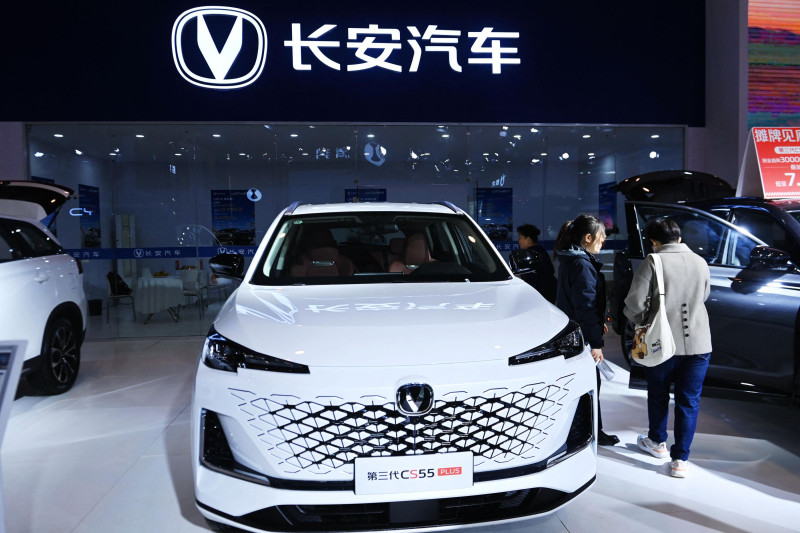
Santo Domingo— With affordable prices, technological equipment, official support, and, in some cases, electric mobility, the presence of Chinese vehicles in the country is growing, narrowing the gap in a market traditionally dominated by Japanese, American, and Korean vehicles.
At the beginning of this year, the General Directorate of Internal Revenue ( DGII ) registered 6,194,052 vehicles, of which 1.3% were of Chinese origin, excluding motorcycles. Surpassed by European vehicles, Chinese vehicles rank fifth in terms of country of origin.
Between 2020 and 2025, 610,509 vehicles of 430 brands and 3,269 different models were registered, according to data provided to this outlet by the DGII. Motorcycles are the most common: 576,434, with the Tauro brand dominating the market (124,513), followed by Loncin and Super Gato.
In addition to motorcycles, the jeep category is the second most popular among registered vehicles. Changan, Kia, and Chevrolet (models manufactured in China) are the most in-demand, with the CS55 PLUS, Seltos, and Captiva LT FWD models standing out, respectively.
On average, 101,752 vehicles were registered annually between January 2020 and August 2025.
Advantages and disadvantages
According to the National Association of Vehicle Distribution Agencies (Anadive), Chinese vehicles are becoming attractive due to the technological boom and the widespread use of electric models, with a competitive price strategy that implies lower costs than those manufactured in the West.
However, they have a limitation, and this is, according to the association, the availability of parts, accessories, and services in the local market, in a timely and efficient manner.
However, this has not impeded the increase in imports in recent years.
Imports on the rise
According to statistical data managed by this association, which brings together nearly 400 companies selling new and used vehicles , Chinese models have been imported into the country for more than a decade, with the number increasing starting in 2021. By then, the number had risen to 3,080 units, and in 2022, it increased exponentially to 9,122 vehicles.
In 2023, the number declined due to the pandemic and continued to rise in 2024, when it reached a record high of 12,236 units.
Anadive estimates that by 2025, the figures will exceed all previous years.
“In the first seven months of the year, 10,791 vehicles were imported, i.e., 2,250 more than in the same period in 2024, for a rise of 8,541. Furthermore, the association registered 1,739 more vehicles than at the end of June this year,” the association stated in a statement sent to this media outlet following an inquiry.
Data from the General Directorate of Customs, on the other hand, shows 57,556 Chinese vehicles imported into the country between January 2020 and August 2025, resulting in a difference of 15,573 more than the numbers provided by Anadive.
Only 3% (1,553) of these vehicles were not new. Furthermore, they were mostly trucks (748) and cars (249).
The most in demand
China’s imported vehicles range from cars, jeeps, trucks, vans, and buses to ambulances, fire trucks, buggies, four-wheelers, go-karts, and golf carts, with prices paid abroad ranging from $133,000 to $314,950.
There are 1,487 models and 380 different brands. These include foreign companies such as Kia, Hyundai, Ford, Audi, and Chevrolet (models manufactured in China), among others.
The latter, despite being American, is the second most imported brand, with 4,897 vehicles of Chinese origin, and the N400 van is the most requested model; followed by JAC Motors, the brand dedicated to the manufacture of automobiles, cargo vehicles, and light commercial transport, with 4,126 vehicles imported between 2020 and 2025.
With 10,099 imported jeeps, cars, vans, and cargo vehicles, Changan is the brand with the highest number of imports. Its CS55 model has been the most imported into the country in the last five years, and the CS55 PLUS is the most registered with the DGII.
However, jeeps and cargo vehicles are the most imported vehicle classes, while those in the “emergency” category are the least imported, regardless of make or model.















Is it just that I am getting old, or is this article very hard to read?
It is a mystery. Chevrolet cars manufactured in China are being sold in the RD. There is an agreement between GM and China to allow manufacture of Chevy’s in China for its domestic consumption. Yet, guessing there is a condition allowing China to sell the cars in Mexico and RD? Wondering why GM would allow this when both nations, Mex & RD, are nipping at the US’s ankles. Only can hunch the cars are not designed or environmentally controlled to comply with US regulations allowing US manufacture.