 Smaller
 Bigger
AI integration, key to boosting the advancement of health tourism in the Dominican Republic
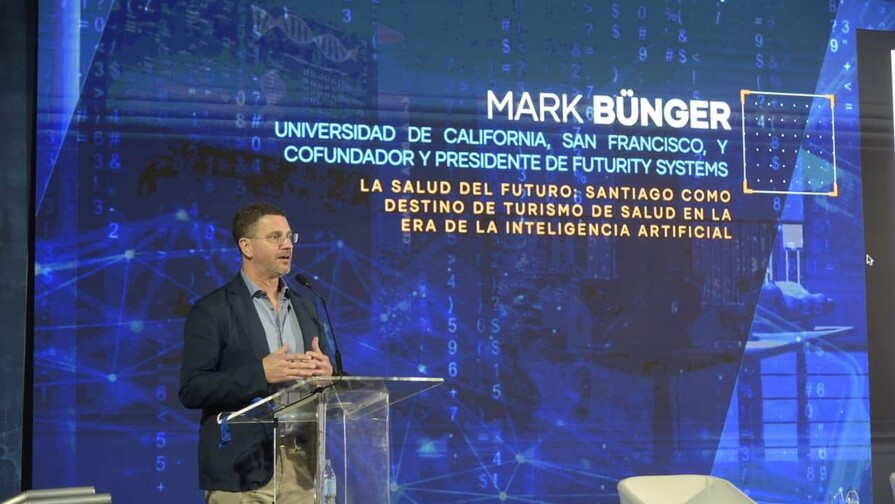
International expert Mark Bünger, representing the University of California, San Francisco, and co-founder and president of Futurity Systems, stated that the integration of artificial intelligence ( AI ) with existing medical strengths can turn the Dominican Republic into a strategic health tourism destination in the region.
During his lecture titled “The Health of the Future: Santiago as a Health Tourism Destination in the Age of Artificial Intelligence”, the specialist argued that great innovations arise from combining already established capabilities, citing, for example, the integration of tourism and medicine to enhance international medical care.
In that context, he explained that AI should not be developed in isolation, but applied directly to sectors where the country already shows competitive advantages.
Bünger noted that the nation has immediate strengths in areas such as cosmetic surgery and dentistry, where artificial intelligence can already be used to analyze X-rays and CT scans and generate predictive models that allow patients to visualize results more accurately before undergoing procedures.
He also highlighted that the accelerated aging of populations in nearby countries such as the United States, Canada, and Puerto Rico presents a natural opportunity for growth in Dominican health tourism.
He indicated that citizens will seek quality medical services at more affordable costs and in friendly environments, according to Diario Libre.
The speaker also emphasized the need to prepare to address chronic diseases associated with aging, such as cardiovascular and respiratory conditions, and diabetes.
In his opinion, offering efficient and affordable treatments would attract retirees interested in extending their life expectancy and quality of life in the country.
Real-world examples of AI applied to healthcare
To demonstrate that artificial intelligence is already transforming medicine, Bünger presented concrete projects with global impact.
He mentioned advanced research systems capable of solving complex scientific problems in record time, as well as personal assistance initiatives developed in Spain, where an avatar was created with the cloned voice of a patient who lost her speech after a stroke, reconstructed from old WhatsApp audios, allowing her to communicate again with her family.
He also highlighted innovations in telehealth using artificial vision, which enables analysis of subtle color changes on a patient’s face during video calls to estimate heart rate and support remote diagnoses.
Among the most striking developments, he cited a “smart mirror” with an AI-generated avatar that facilitates medical consultations for stigmatized conditions, creating an environment where patients can speak without fear of judgment. The system transcribes the conversation and subsequently alerts healthcare staff.
He added that the same technology can be adapted to the home to monitor medical inventories of chronic patients, managing supplies and treatments as if it were a “hospital at home”.
Another key advance noted is the automation of clinical documentation using AI, which allows medical records and notes to be written automatically, significantly reducing healthcare staff exhaustion and freeing up more time for human care.
The activity was organized by the Global Democracy and Development Foundation (Funglode) together with the Metropolitan Hospital of Santiago (HOMS).