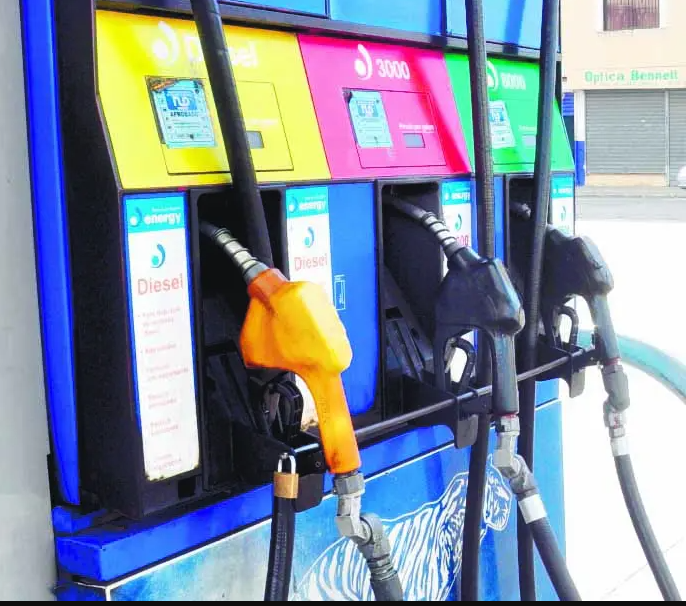
The Dominican government’s decision to raise gasoline and diesel prices by RD$10 this week underscores the growing impact of global instability on the local economy. While authorities point to the escalating conflict in the Middle East as the driving force behind the adjustment, the move once again places the burden of international shocks squarely on consumers.
According to the Ministry of Industry, Commerce and MSMEs, the surge in oil prices—fueled by what it describes as the most significant supply disruption in history—has pushed WTI crude up by 70% so far in 2026. In that context, officials argue that the increase is a matter of fiscal responsibility rather than choice.
Yet the numbers tell a more complex story. The government has allocated RD$1.702 billion in subsidies this week alone in an effort to cushion the blow of volatile global markets. At the same time, it has opted to freeze the price of liquefied petroleum gas (LPG), a measure that offers some relief to households but highlights the difficult balancing act between protecting consumers and preserving public finances.
For the week of March 21–27, 2026, fuel prices will be as follows:
- Premium gasoline: RD$305.10 per gallon (increase)
- Regular gasoline: RD$287.50 per gallon (increase)
- Regular diesel: RD$239.80 per gallon (increase)
- Premium diesel: RD$257.10 per gallon (increase)
- Avtur: RD$323.49 per gallon (increase)
- Kerosene: RD$366.60 per gallon (increase)
- Fuel oil #6: RD$201.38 per gallon (increase)
- Fuel oil 1%S: RD$215.86 per gallon (increase)
- Liquefied petroleum gas (LPG): RD$137.20 per gallon (unchanged)
- Natural gas: RD$43.97 per cubic meter (unchanged)


 Smaller
 Bigger