 Smaller
 Bigger
Nearly 70% of the Dominican Republic is vulnerable to flooding; authorities’ response capacity is highlighted.

Juan Manuel Méndez Méndez.
Approximately 70% of the Dominican Republic is vulnerable to flooding, whether due to natural causes or inappropriate construction practices, a situation that is exacerbated by the occurrence of more extreme events resulting from climate change.
This reality has led authorities to acquire better equipment and seek strategies to provide effective and coordinated responses among various agencies, including the Emergency Operations Department (COE), the Hospital Emergency Services Directorate (DAEH), and the Dominican Institute of Meteorology (Indomet).
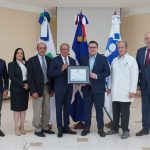
They were joined by representatives of the DAEH, Pablo Mateo, Deputy Director; Ruddy de Gracia, Coordinator and Liaison with the Public Network; José Aljeriz Jérez, Head of Outpatient Management; and Carlos Henríquez, Head of Monitoring and Surveillance. Also representing the COE were Edwin Olivares, Deputy Director of Operations, and José Luis Germán, Deputy Director of Information Management.
Vulnerability is built
“Almost 70% of our country’s provinces are vulnerable to flooding at some point, whether rural or urban,” Méndez said, noting that in addition to the overflowing of water bodies that cause flooding, flooding worsens when properties are built in unsuitable locations. “Human beings create vulnerability when they build next to or on top of a ravine, or on the side of a mountain,” he noted.
He pointed out that municipal governments should be involved, as they should not allow construction on land unsuitable for human settlement. He lamented that many natural drainage channels have been occupied by homes that subsequently flood, citing cases in La Vega and San Cristóbal.
Meanwhile, Ceballos explained that hurricanes are necessary because they help spread the heat from the tropical oceans to the mid- and high latitudes, preventing it from concentrating in one place. He cited Hurricane Erin as an example, which absorbed a lot of heat, weakening the potential of nearby systems.
He explained that another benefit is that they move the topsoil, meaning they renew it when trees fall and make way for new seedlings.
He also emphasized that the only way to fill dam reservoirs is when storms produce accumulated rainfall exceeding 200 millimeters, a volume that troughs or tropical waves cannot provide.
Faced with the dilemma of whether they are good or bad, he maintained that the problem lies in the population’s vulnerability. “If vulnerability didn’t exist, one would want these events to exist to improve forest renewal and ensure the rainfall needed for rivers, reservoirs, and life in general. It’s the planet’s mechanism to harness all the energy that accumulates during these summer months,” he stated.
Best teams
Méndez and Ceballos stated that, with the Puerto Plata radar operating since May and a new information system set to come online next month, the country is better prepared to make short-term forecasts.
This radar will be added to the one in Punta Cana, and another one will be installed soon at Las Américas Airport. “With these three radars, we will have coverage of the entire national territory, since we have orographic systems that require state-of-the-art tools to monitor these phenomena that form very quickly and generate calamitous situations,” Ceballos said.
However, both emphasized that some events evolve so rapidly and at such an extreme pace that even countries like the United States and Spain, with better equipment, have not been able to prevent tragedies. Méndez asserted that human attacks on nature also play a role, in addition to a lack of education on the fundamental issue of proper solid waste disposal.
Coordination
Regarding the role of the DAEH, he explained that it was created to manage the health component of the emergency care system. It has 448 ambulances that provide services to users, as well as 122 ambulances from the Emergency and Urgency Regulatory Centers (CRUE). It has 8,200 employees, the majority of whom are doctors, nurses, and medical transport technicians.
Jerez reported that in the first half of 2025, the DAEH provided $312,000 in assistance, averaging $44,000 per month. They have also facilitated 657 safe neonatal transfers, utilizing 36 ambulances equipped with incubators. Additionally, they have provided 38,000 in-hospital transfers and treated nearly 100,000 cruise passengers who have arrived through the port of Cabo Rojo in Pedernales. “With a timely response, we significantly reduce the risk of death or after-effects,” he stated.
De Gracia stated that DAEH fills a healthcare need that any system faces, and in the country’s case, it was previously based more on volunteerism and characterized by limited resources. He indicated that approximately 80% of patients are transferred to the public healthcare system, 10% to the private healthcare system, and the rest to military hospitals. “We have been able to optimize timely care, and the country can achieve better health indicators based on the DAEH’s responses,” De Gracia stated.