 Smaller
 Bigger
Juan Pablo Duarte: the political thought behind the father of the nation
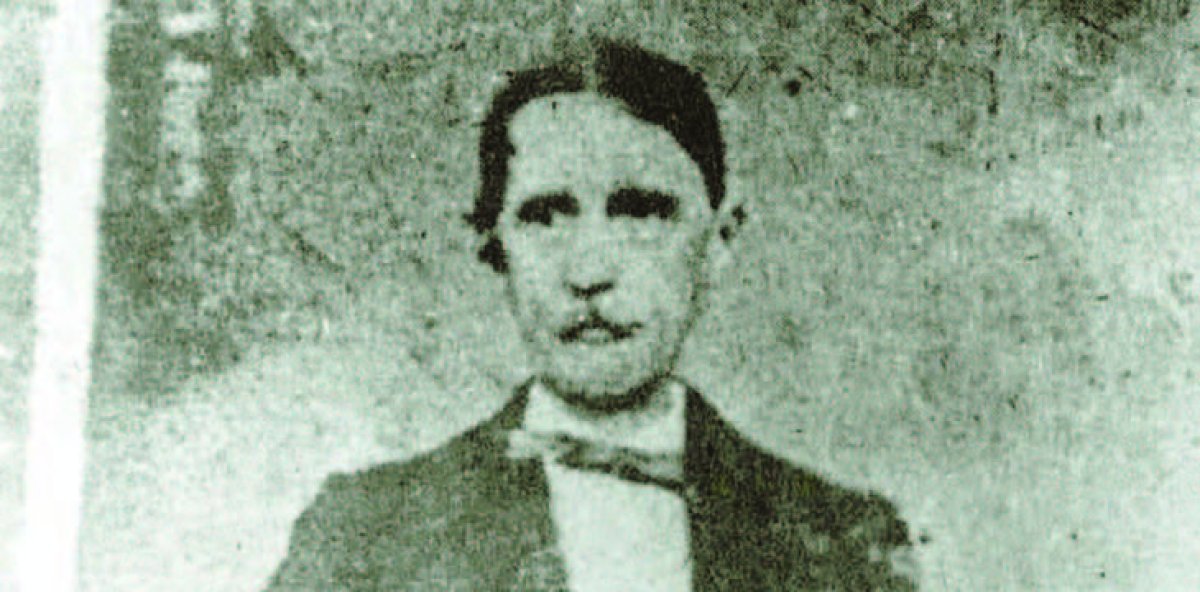
Photo of Juan Pablo Duarte, taken by Próspero Rey in 1873.
The father of the nation and founder of the Republic, Juan Pablo Duarte, had an obvious idea of politics, regardless of whether it has changed or whether the current actions of some politicians have redefined the concept in the minds of Dominicans.
Duarte believed that this activity, whose origins date back to ancient Greece, is not speculation, but rather the purest and most worthy science, after philosophy, to occupy noble minds. He also understood that working for the homeland entailed placing the nation’s supreme interests above all personal interests.
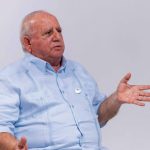
Wilson Gómez Ramírez, president of the Duartian Institute, says that the patriot considered that branch a channel to serve the public, not himself, which also implied a sacrifice and the opportunity to enrich the country through honest, transparent, and integral work.
President of the Duartian Institute, Wilson Gómez Ramírez.
“Another idea of Duarte’s that reveals his conviction that it was ennobling to dedicate oneself to the noble task of serving one’s people is when he exhorts people to detach themselves from personal interests when seeking to serve the country. He says: ‘Let us work for and for the homeland, which is to work for our children and for ourselves.'”
The president of the Duartian Institute recalled that Duarte offered the highest example of integrity through his accountability. As the general who was deputy commander of the Southern Expeditionary Army, when he was unexpectedly summoned to Santo Domingo by the Central Electoral Board, he provided a detailed report of how he spent every penny on the troops. Of the total amount received, he spent 17.3%, returning 82.7% to the treasury and receiving the corresponding discharge.
Duarte contributed his fundamental bill, which extensively outlines his ideas on politics and institutions. It reveals his unwavering commitment to the rule of law, respect for basic rights and guarantees, legal certainty, and his uncompromising conviction regarding the importance of sovereignty for a nation,” Gómez Ramírez stated.
The newspaper *Hoy* asked the doctor of law how Duarte would see the Dominican Republic in 2026: ” I would feel ashamed at the lack of honesty, the lack of commitment and selflessness of the majority of the people responsible for leading national life, since, from the performance of public and private functions, the supreme interest of the nation is not privileged, but rather preference is given to private interests; everything ends up being corrupted by the search for advantages.”
However, he said, he would feel proud to see part of his dream about the Dominican Republic come true.
“Today the State assumes the name he gave it, our Flag waves with pride, the National Coat of Arms and the motto ‘God, Fatherland and Liberty’ are enshrined in the Constitution.”
Duarte was born on January 26, 1813, in Santo Domingo. He was the son of Juan José Duarte Rodríguez, a Spanish merchant, and Manuela Díez Jiménez.
In 1828, when he was 15 years old, he was sent to Europe to continue his studies, as the University of Santo Domingo had closed during the Haitian occupation. He lived in countries such as England, France, and Spain, where he encountered liberal and nationalist ideas that championed the freedom of nations. These ideas profoundly influenced his thinking.
Upon returning to the country in 1831, Duarte had a clear objective: to fight for the independence of the Dominican people and create a free nation.
The Trinity
On July 16, 1838, Duarte founded La Trinitaria, a secret society whose purpose was to organize the independence struggle. Among its first members were Juan Isidro Pérez, Félix María Ruiz, and José María Serra. Later, Francisco del Rosario Sánchez and Matías Ramón Mella joined, and they were key figures in the proclamation of independence on February 27, 1844.
La Trinitaria taught its members values such as love of country, sacrifice, and civic commitment.