

 Smaller
 Bigger
U.S. grants presidential permit for Puerto Rico–Dominican Republic submarine power cable
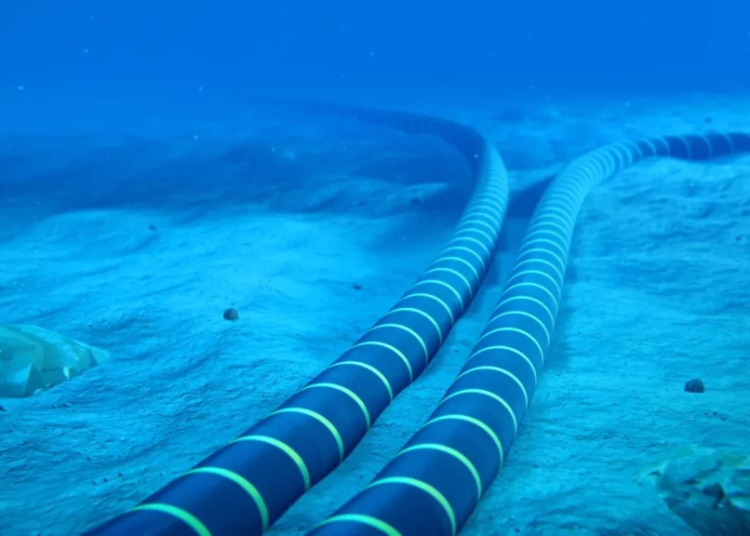
Washington.- The Trump administration has approved the presidential permit required for the construction of a submarine power cable connecting Puerto Rico and the Dominican Republic, marking a major step forward for one of the most ambitious energy projects in the Caribbean. Although the U.S. Department of Energy (DOE) has not yet issued a formal notification, the Caribbean Transmission Development Company (CTDC) confirmed it has already received “no objection” clearances from the U.S. Departments of State and Defense. A public announcement is expected in mid-February.
According to CTDC president Rafael Vélez Domínguez, the official announcement is scheduled for February 17 in the Dominican Republic and is expected to be attended by Dominican President Luis Abinader, Puerto Rico Governor Jenniffer González, and representatives of the U.S. government. While the DOE website still lists the permit application as “pending,” Vélez Domínguez said the company is preparing to move forward once the federal process is formally completed, including issuing purchase orders for the submarine cable.
The project would allow the transmission of up to 700 megawatts of electricity in both directions, strengthening energy security in both territories. In the Dominican Republic, the cable would connect to a new natural gas power plant developed exclusively for the project, while in Puerto Rico it would link to the electrical grid through the Mayagüez substation. CTDC must still finalize power purchase agreements with the Puerto Rico Electric Power Authority (PREPA), secure fuel supply contracts, obtain environmental and regulatory approvals in both jurisdictions, and raise an estimated US$2.5 billion in financing.
CTDC aims to energize the cable by January 2031. Initially, the project is expected to supply part of Puerto Rico’s energy demand, but in the long term it could also facilitate the export of surplus solar energy from Puerto Rico to the Dominican Republic. If completed, the initiative would become the first electrical interconnection in the Caribbean, joining more than 160 similar cross-border power links already operating between the United States, Canada, and Mexico.












The cable will benefit both locations to supply or receive power when demand in one location or the other exceeds its local generation ability. This hopefully will result in less blackouts. It also should include partnering with the cable additional battery storage capacity on both ends as power reserves should a general demand exceed total generation capacity. It will favor the economies and public-well being of the RD and PR.
Puerto Rico has had very bad power outages for the last 5 years…hurricanes Irma and Maria in 2017 took care of that…the electric grid has never been the same since then with the latest nationwide blackout happening in April of last year 2025…