 Smaller
 Bigger
January ended with a 47% increase in cases of severe acute respiratory infections
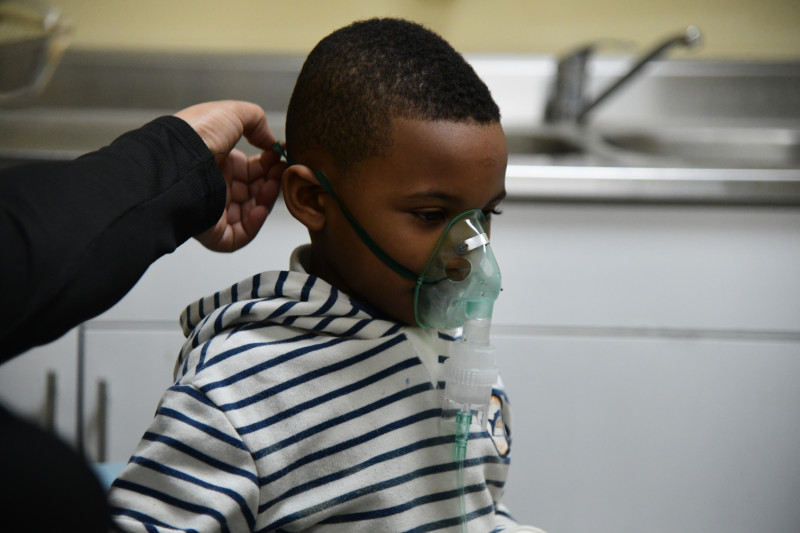
Severe acute respiratory infections lead to increased hospitalization rates. File/LD
Santo Domingo — The month of January 2026 closed with an increase of 47% in cases of severe acute respiratory infections(SARI) captured by the sentinel surveillance carried out by the Ministry of Public Health through the General Directorate of Epidemiology, with the most affected being children under four years of age and those over 60 years of age.
The highest concentration of cases was registered in the provinces of Azua and Santo Domingo, followed by the National District and San Cristóbal.
Official reports indicate that, although in the first month of the year no deaths from ARI were reported, there was an increase in the number of cases, with 69 suspected cases compared to 47 reported in January 2025, for an increase of 47%, but without evidence of an increase in severity, according to the report.
Only during the last week of January, i.e., during epidemiological week 4, 15 suspected cases were reported, compared with 9 in the same period of the previous year, representing a moderate increase.
The districts with the highest numbers of cases were Azua with 31 and Santo Domingo with 13, followed by the National District and San Cristóbal with 5 each.
The epidemiological report highlights that this pattern is consistent with provinces with higher population density, mobility, and demand for hospital services, while most provinces report low or no cases, consistent with limited circulation or reduced exposure to high-severity respiratory agents.
Children under 4 and over 60 years of age
The reported cases are concentrated at the extremes of life, with a peak in children aged 1-4 years and a second increase in adults over 60 years of age. Males predominate in childhood, and females in older adults; in intermediate ages, the frequency is low.
The authorities explain that this pattern is consistent with greater biological vulnerability and comorbidities typical of severe acute respiratory infections.
In terms of lethality, the report indicates that no deaths from ARRI will be recorded in 2026, maintaining a cumulative lethality of 0%, compared with 3 deaths in 2025 for the same period, with a lethality of 6.4%.
This behavior, the report highlights, suggests earlier detection, timely referral, and adequate clinical management of severe cases.
Syncytial and influenza
Regarding the circulation of respiratory viruses, the bulletin corresponding to epidemiological week 4, highlights the persistence of respiratory syncytial virus and influenza, although it points out that at the beginning of 2026, a progressive decrease in viral activity is observed.
Regarding genetic characterization, it reports that no circulation of influenza A (H3N2) subclade K has been documented in the country, but that, nevertheless, virological surveillance for the early detection of emerging variants is being maintained and reinforced, recognizing that the absence of detection does not mean the absence of risk.
Increased surveillance
The Ministry of Public Health reports that it has strengthened virologic surveillance by expanding sampling, immediate notification, and daily monitoring of bed occupancy.
In addition to activating rapid referral routes for serious pediatric cases, it ensures the availability of critical supplies.
It indicates that, in a complementary manner, influenza vaccination is being promoted among at-risk groups, and community interventions on respiratory hygiene, overcrowding reduction, and timely consultation are being strengthened.
However, it recognizes that structural challenges persist, such as limited availability of Neonatal Intensive Care (NICU/ICU) and territorial access gaps, which reaffirm the need for sustained, intersectoral strategies to contain morbidity during a more active and prolonged respiratory season.