
 Smaller
 Bigger
Dominican track star Marileidy Paulino inspires future public servants at ISFODOSU
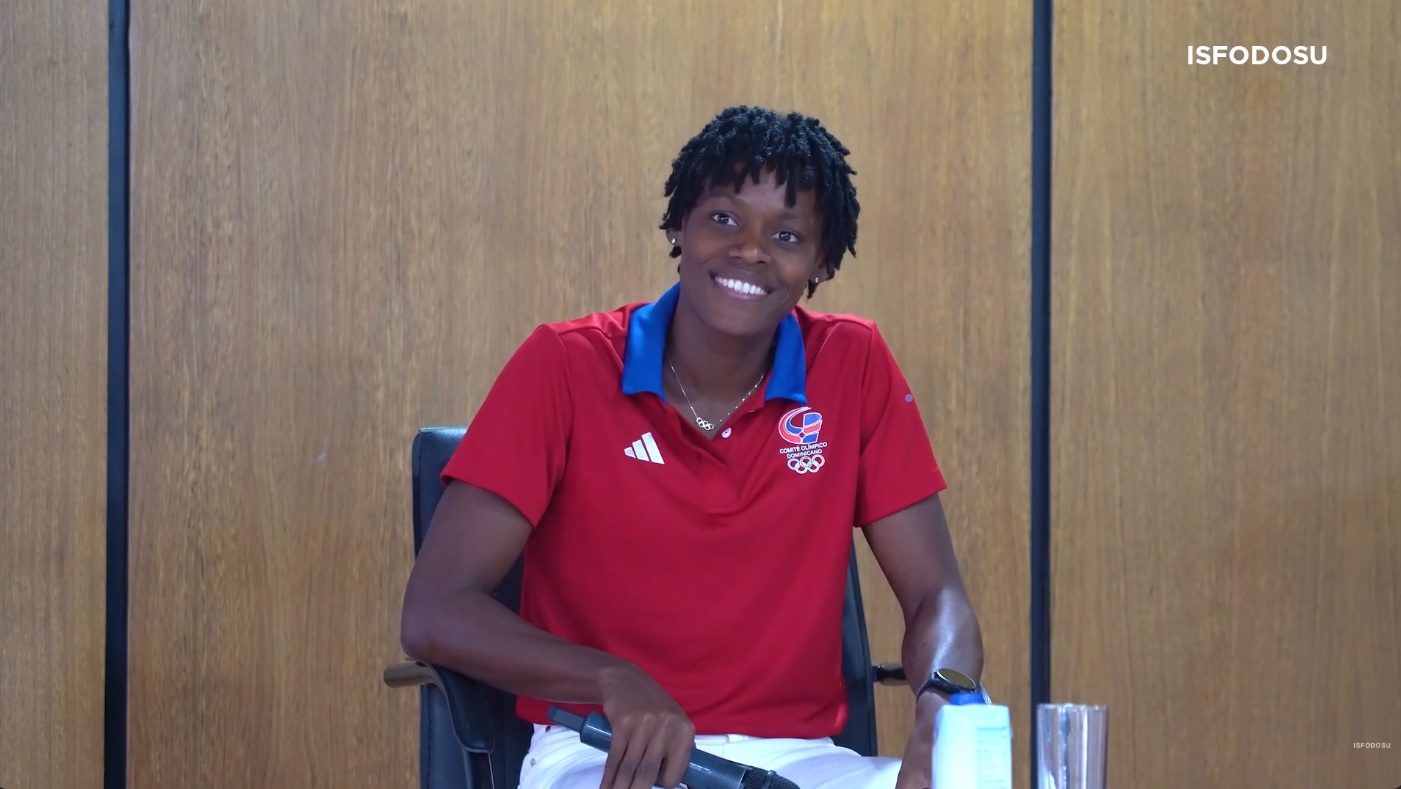

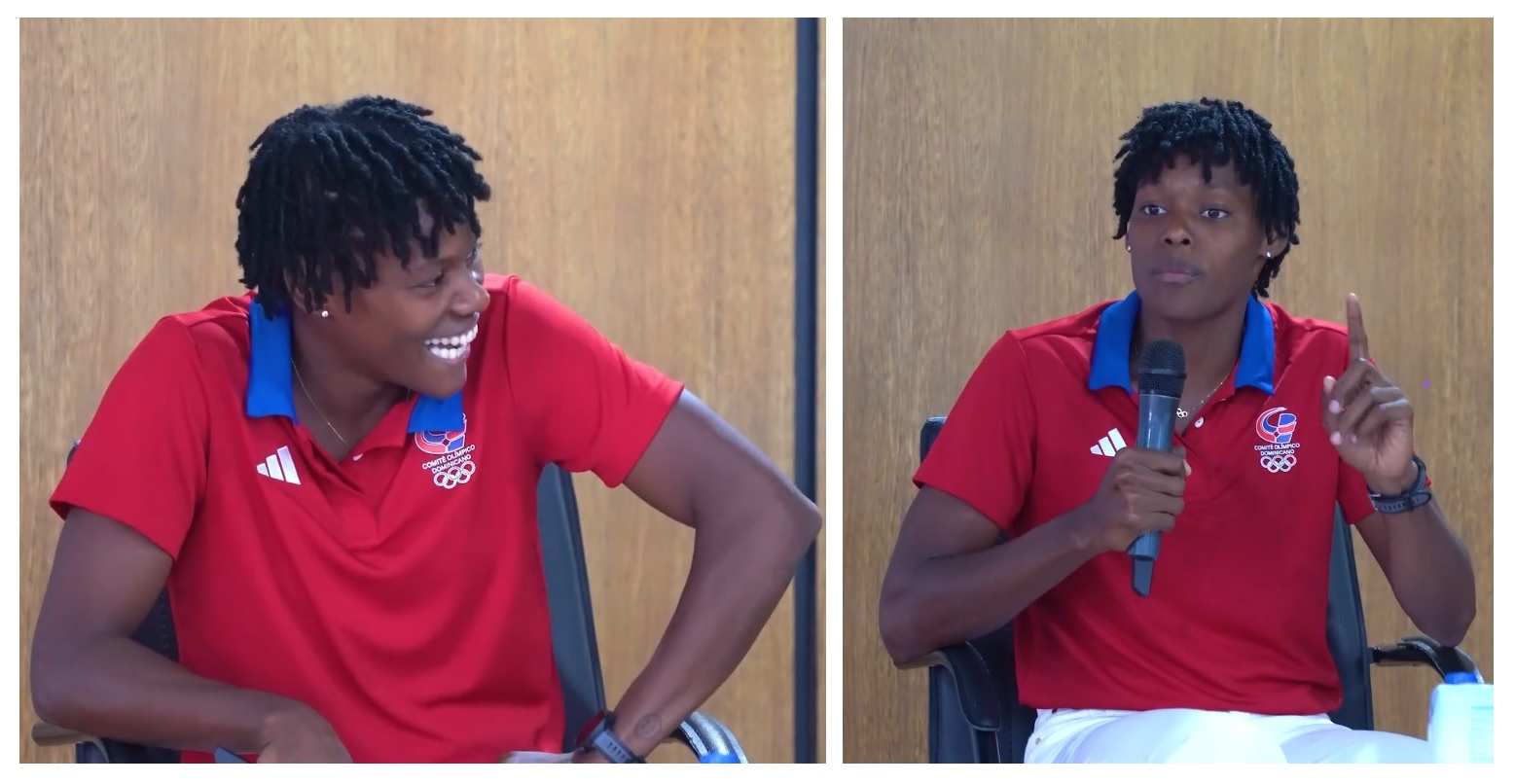
Santo Domingo.– Olympic medalist and national icon Marileidy Paulino brought a wave of inspiration to the Instituto Superior de Formación Docente Salomé Ureña (ISFODOSU) on National Public Servant Day. The anticipated visit, initially planned to honor her role as a Second Lieutenant in the Dominican Air Force, morphed into a deep exploration of the psychological and spiritual architecture required to become a champion.
Paulino spoke with a level of candor that bridged the gap between an elite athlete and the future educators in the room, framing her success not as a matter of luck, but as a result of a radical commitment to discipline and a faith that was forged in the scarcity of her childhood.
Paulino emphasized that her identity as a public servant carries a weight comparable to her Olympic responsibilities. “Being a public servant means representing an entire nation, all those people who want to work day after day to get ahead,” she declared with a voice that resonated through the auditorium. She revealed that her decision to join the Air Force was initially born of necessity, a pragmatic choice to secure a future for her family. Yet, over time, it became the foundation for her professional development and a platform for national representation.
With a touch of humor and local charm, she invited the students to witness the annual military games, describing sports as a vital tool to “rescue” young people and provide them with a sense of purpose. For Paulino, the military was the structured environment that allowed her family to move forward while she tested the physical and mental limits of her own potential.
Overcoming challenges and finding her path
The transition from the dusty streets of Don Gregorio to the global stage was fueled by a profound spiritual awakening. Paulino admitted that before 2020, her faith was not as strengthened as it is today. The postponement of the Tokyo Olympics until 2021 became a pivotal moment of reflection where she decided to place her destiny entirely in God’s hands. This shift in perspective allowed her to overcome a past defined by debilitating social anxiety. “I was a person who was afraid of people. I didn’t want to go out; I thought people were watching me,” she confessed, painting a picture of a young girl who could barely look others in the eye, let alone imagine standing on a podium.
Today, she views her ability to perform before thousands as a divine transformation, reminding the students that focus is the only antidote to fear and that one must be open to doors that seem daunting at first.
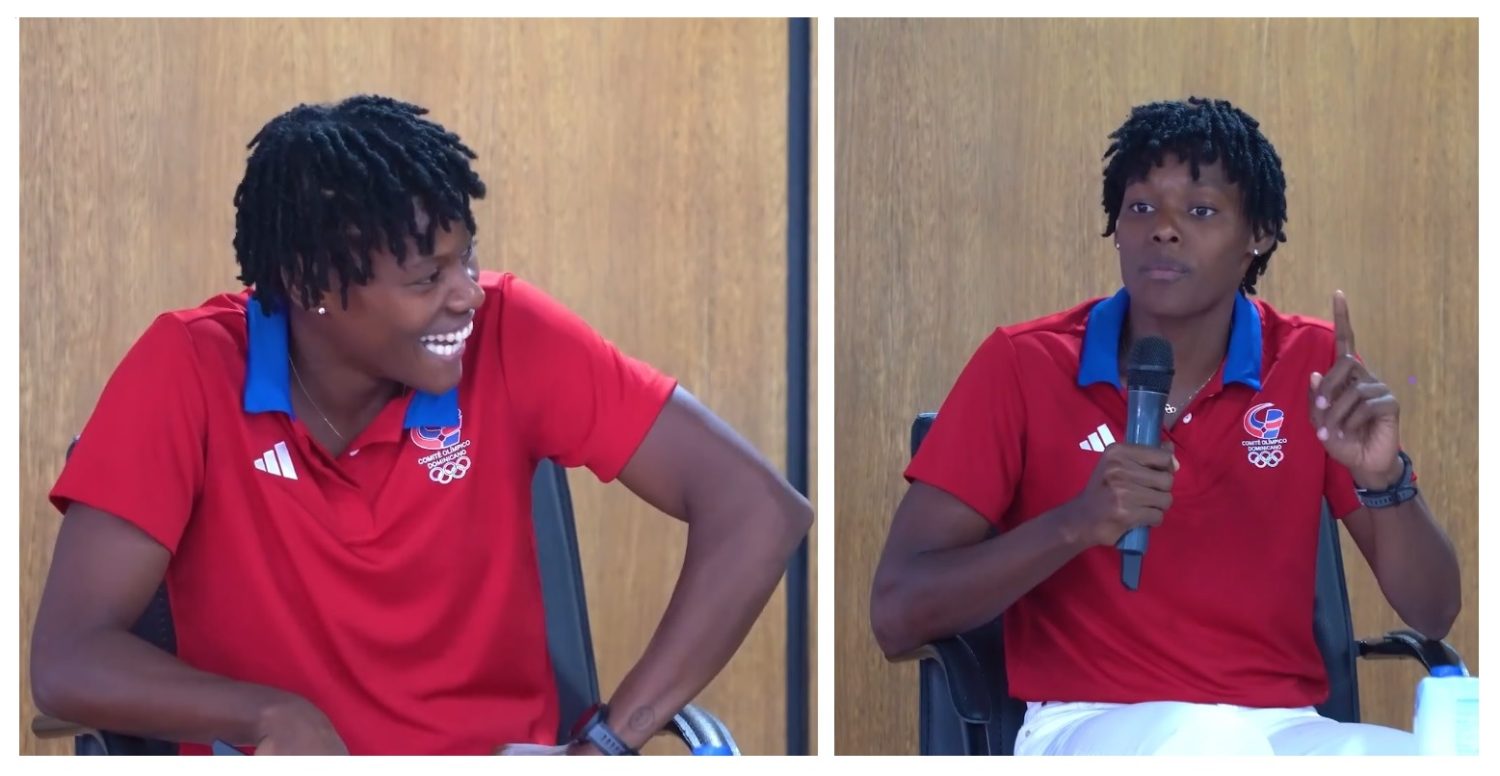
Her technical journey is equally a story of profound humility. She recounted her discovery during a school jumping test where she outperformed the boys, leading to jokes from her peers that she must be a man because of her sheer power. Despite her natural talent, she initially disliked track and field, preferring the team dynamics of handball. However, once she committed to the track, she embraced the grind of the “dirt tracks” in rural towns like Baní.
She reminded the audience that she didn’t start at the top; she saw seventh and fourth-place finishes long before she ever saw a podium. These early setbacks were essential to her growth, teaching her that it is necessary to pass through the struggle of the last positions to truly earn the right to be first. She spoke of these “learning defeats” as the necessary soil where a champion’s roots are grown.
This resilience is what defines her today as she manages the intense pressures of elite competition. Paulino revealed that during the Tokyo 2021 games, she completely disappeared from social media to protect her focus, remaining blissfully unaware of the millions of pesos or the fame awaiting her back home. She told the story of how her teammates would gossip about the prize money, while she remained focused solely on the finish line.
Her competitive fire is now fueled by a constant desire for self-improvement rather than external rewards. “If I do 47 seconds, I want to do 46; if I do 46, I want to do 45,” she insisted. She described defeat not as a loss, but as an “impulse” to overcome a goal twice as hard next time. To Marileidy, even those who finish eighth have not lost; they have reached a finish line that many others never see due to injury or lack of persistence.
Her childhood memories provided some of the most moving moments of the talk. She spoke of her mother, a woman who often lacked the few pesos needed for a bus ticket to send Marileidy to the capital for training. “Sometimes one of the three meals wouldn’t appear,” she recalled, her voice softening. They survived on faith and what “God allowed.”
These experiences of hunger and lack did not embitter her; instead, they gave her an unbreakable resolve. She learned that if she could survive those days of scarcity, she could survive the final 100 meters of any race. This background makes her current success even more significant, as she remains a woman who understands the value of every “centavo” and every second of effort.
From dirt tracks to Olympic glory: building a champion’s mindset
When the conversation turned to her specific strategy for the 400 meters, Paulino described a race governed by strict, almost mathematical parameters. She explained that many spectators think she starts slow and then accelerates, but in reality, she must maintain an exact pace. “If I push the first 200 meters to 22 seconds, I might not even reach the finish line,” she noted. Her success depends on hitting the 23-second mark with surgical precision.
This level of discipline extends to her daily life, where she is the first to arrive at training at 6:00 AM, often traveling from further away than those who arrive late. She challenged the future teachers to adopt this same rigor in their academic lives, urging them to lead with love and purpose rather than just seeking a paycheck.
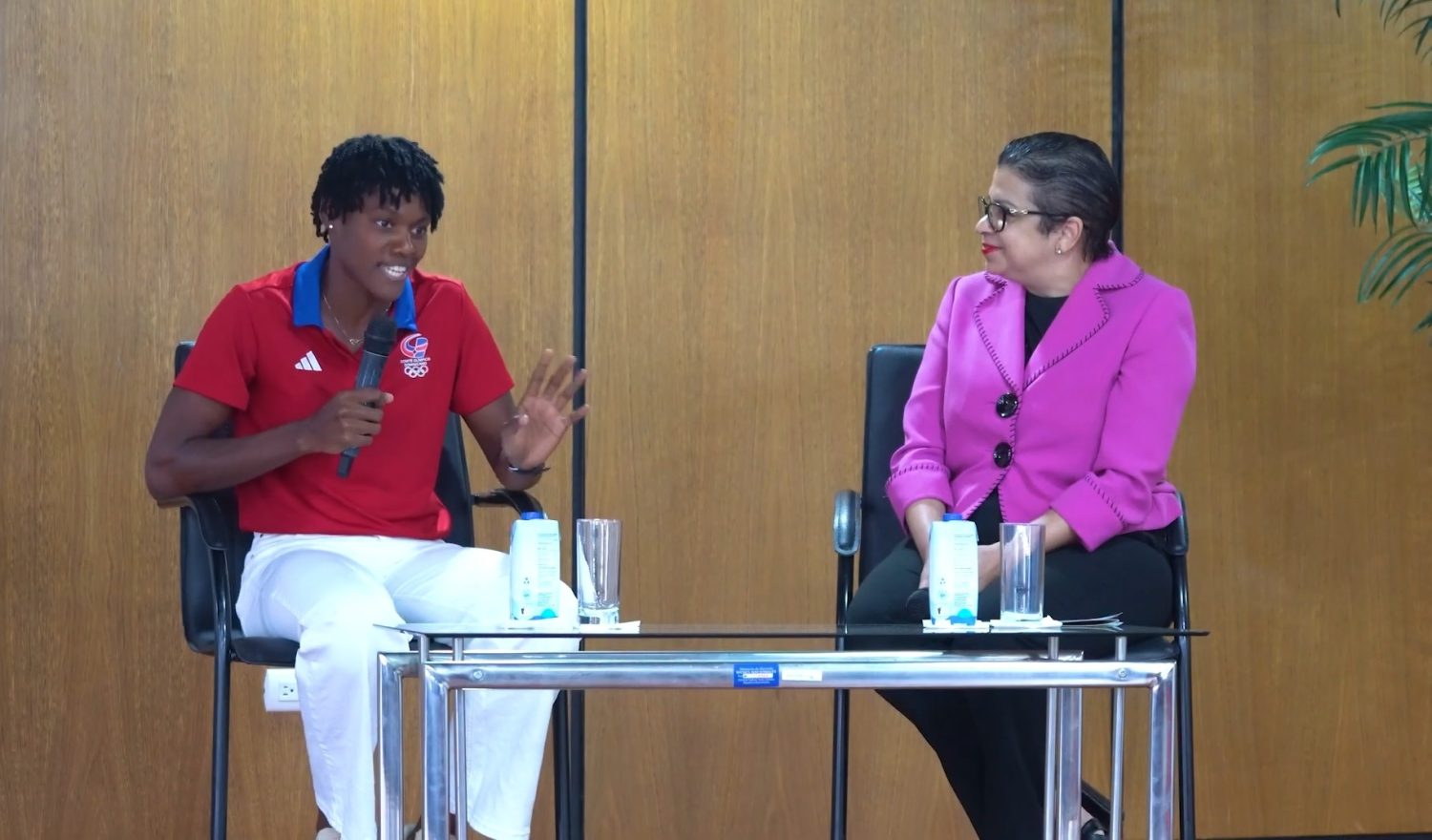
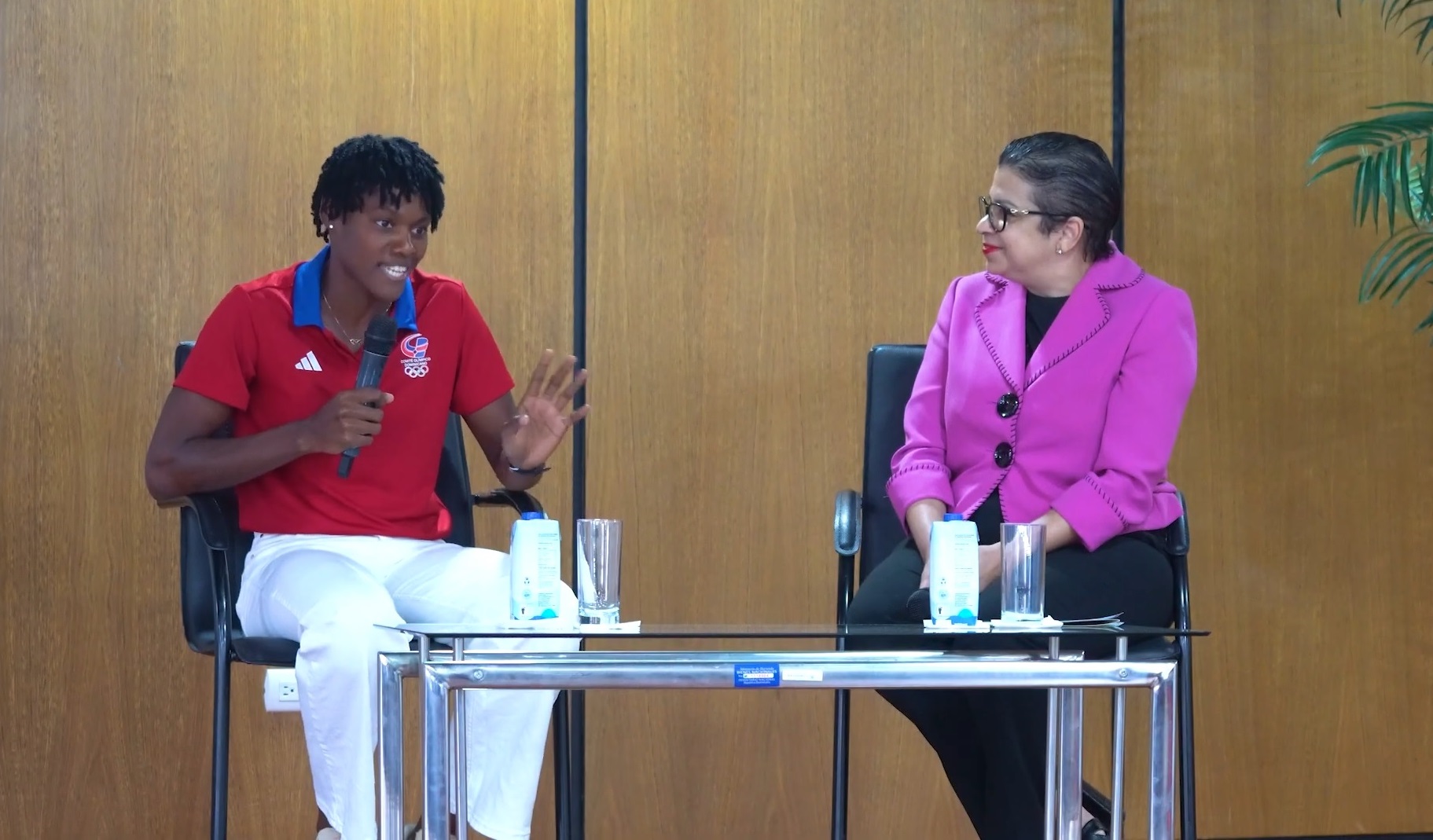
Olympic medalist Marileidy Paulino (left) discusses the importance of humility and persistence with Patricia Mora, Head of the Communications Department at ISFODOSU. During the talk, Paulino reminded students: “Defeat is just an impulse to overcome what you want to do twice as much.” (Photo: courtesy)
Beyond her physical prowess, Paulino is already planning for a future beyond the track. While she is currently a student of Sports Management, she chose this path specifically because she noticed a gap in the national system. “There are many physical education teachers, but few people who know how to put order in the sports management of a country,” she remarked. Her vision is to leave a legacy of professionalized athletics through her foundation, Creando Sueños Eternos, which supports young athletes who, like her, may have started running barefoot or in socks.
She expressed a desire for Dominican youth to keep their feet on the ground and remain humble, warning against the arrogance that often accompanies success in the sporting world. She believes that a true champion is measured by how many people they help to climb up behind them.
The interaction with the students revealed a more personal side of the athlete. When asked for advice on how to succeed in the academic world, she told them to ignore “bad opinions” and focus on their own path. She shared her experiences traveling to cities like Paris, Zurich, and Tokyo, noting how she visited the Olympic Museum to further her studies in sports management. Every trip is a learning opportunity for her, a chance to bring knowledge back to her country.
She even touched on her personal health habits, recommending natural juices like spinach, carrot, and orange to stay energized. She jokingly warned the audience about the “chicharrón” of December, encouraging everyone to embrace physical activity not just for aesthetics, but for the clarity of vision it provides.
Giving back and inspiring the next generation
As the event concluded, Paulino shared a glimpse into the sacrifices of her daily routine, the discipline of “fasting” before intense workouts to avoid the physical toll of the effort. She often trains on an empty stomach because the intensity of her sprints causes her to vomit if she has eaten. This level of physical suffering is a price she pays willingly for the glory of her nation.
Her final message was one of collective responsibility: she urged the government and the youth to continue the integration of education and sports, as the classroom is where the next “Gacela” will likely be found. She praised the current efforts to merge these two worlds, hoping that future administrations will maintain the momentum of programs that treat sports as a fundamental part of a child’s development.
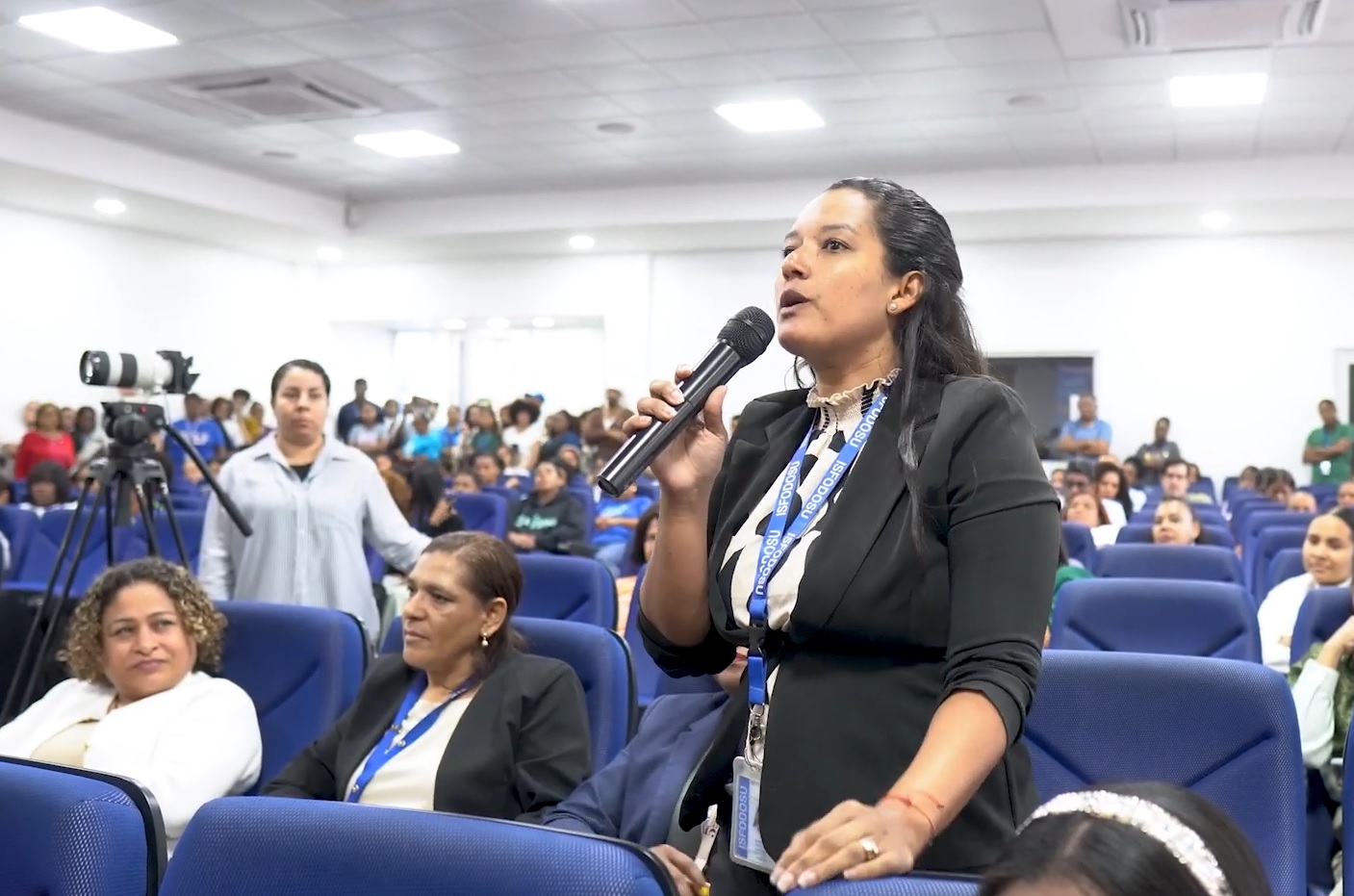
Loren Medina Messina, Head of the Institutional Development Department and Director of Planning and Development at ISFODOSU, addresses a question to Marileidy Paulino during the Q&A session. (Photo: courtesy)
For the students at ISFODOSU, her visit was a reminder that excellence is not a destination, but a daily practice of faith, responsibility, and the unwavering courage to open the doors that destiny presents. Paulino left the stage not just as a runner, but as a philosopher of effort, urging every future teacher in the room to look for the “barefoot talent” in their future classrooms.
Her journey from the dirt tracks of Nizao to the podiums of the world stands as a testament to the fact that when preparation meets faith, no obstacle is too great to overcome. She reminded them that she still lives with the same humility she had in Don Gregorio, and that her greatest race is the one she runs for the progress of the Dominican people.
____________
By Adrian R. Morales
Journalist and writer
adrian.editor@gmail.com