 Smaller
 Bigger
ISFODOSU hosts workshop on best practices at the 26th Santo Domingo International Book Fair
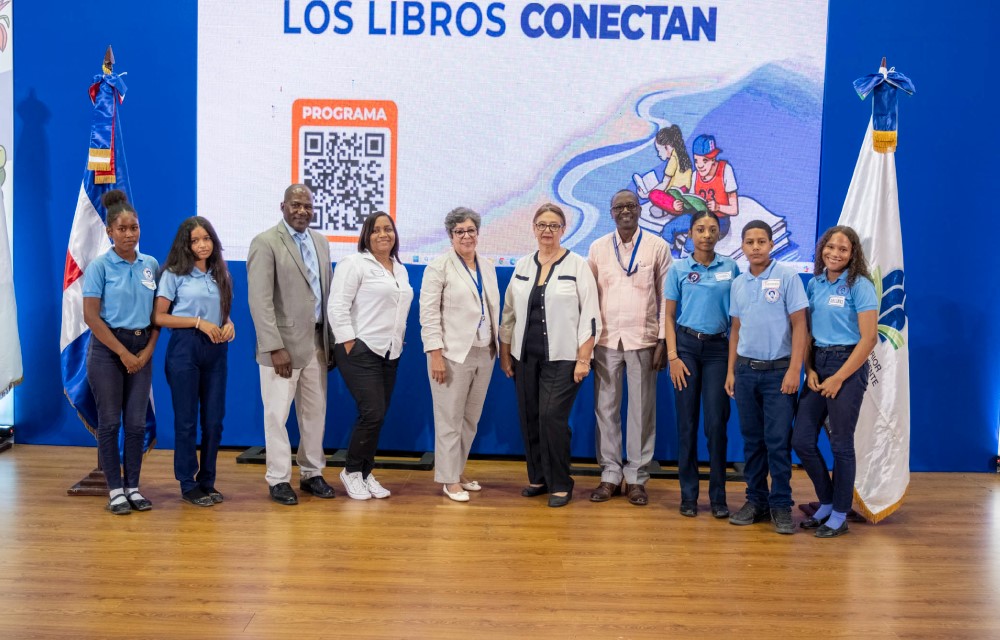
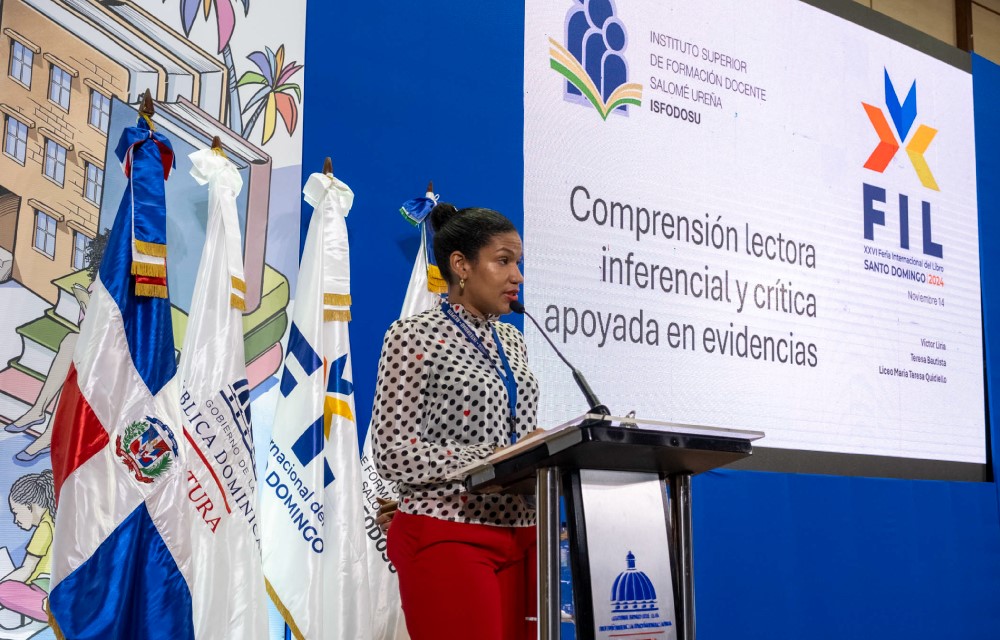
Santo Domingo.- The Salomé Ureña Institute for Teacher Education (ISFODOSU) hosted a workshop on best practices in higher education during the recently concluded 26th Santo Domingo International Book Fair.
Led by professors Victor Liria and Teresa Bautista, the interactive workshop engaged high school students in discussions about the history of slavery in 18th and 19th-century Latin America through text analysis. Participants included students from ISFODOSU’s Language and Literature program, as well as students from the María Teresa Quidiello High School and the Marcos Castañer Fe y Alegría School.
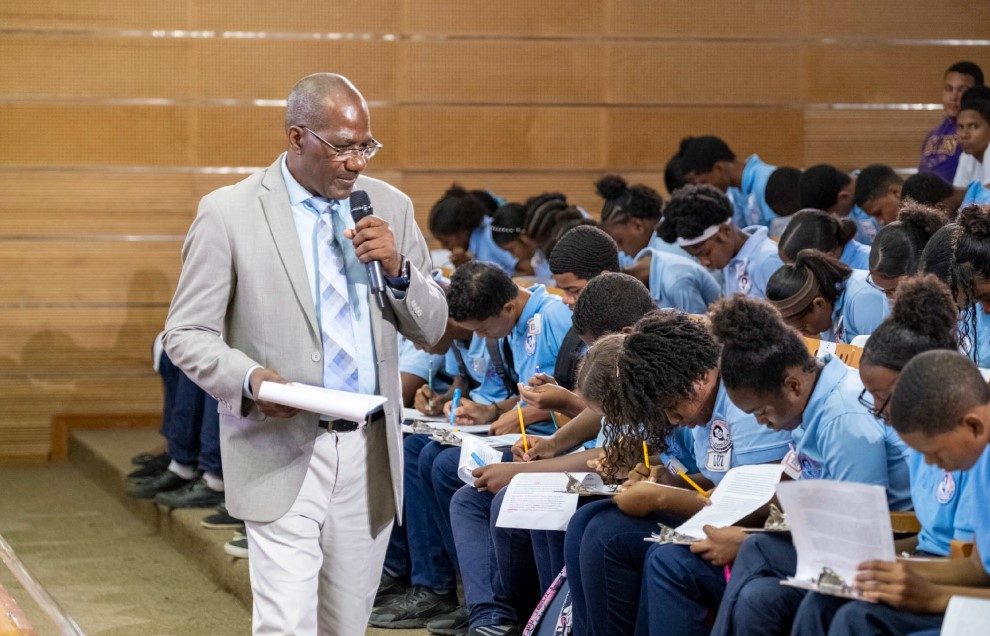
Professor Victor Liria. (Photo: Isfodosu)
Professor Bautista explained that the workshop utilized the RICE strategy (Rewrite the Question, Include the Answer, Cite Evidence, Explain the Answer), which encourages students to delve deeper into their reading materials. “By implementing this approach,” she said, “we aim to foster a classroom environment where students can analyze complex texts and improve their comprehension skills.”
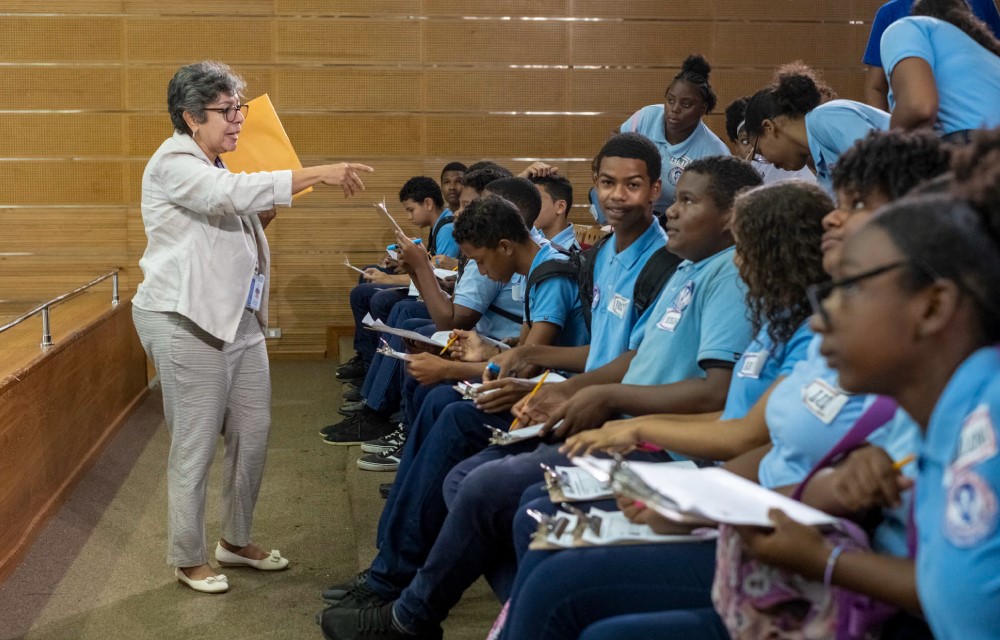
Professor Teresa Bautista. (Photo: Isfodosu)
Green Campus initiative
Additionally, renowned biologist Laura Rethe delivered a talk on the “Impact of Climate Change on the Dominican Republic” as part of ISFODOSU’s Green Campus program. Rethe discussed the effects of climate change, such as air pollution, global warming, and acid rain, and offered practical solutions to mitigate these issues.
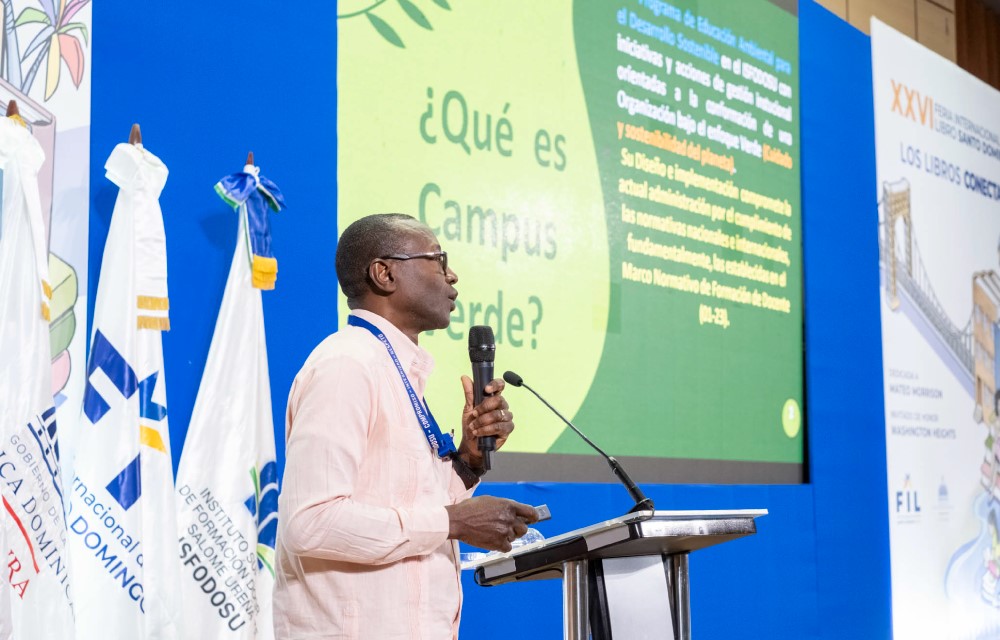
Professor Casimiro Maldonado, coordinator of ISFODOSU’s Green Campus program. (Photo: Isfodosu)
Casimiro Maldonado, coordinator of ISFODOSU’s Green Campus program, highlighted the initiative’s goal of promoting environmental sustainability throughout the institution. “We aim to integrate environmental education into all our academic programs and implement sustainable practices to foster a greater awareness of our impact on the planet,” Maldonado said.
By emphasizing the importance of sustainable consumption and the use of renewable resources, ISFODOSU seeks to create a more environmentally conscious campus community.