

 Smaller
 Bigger
Is the dollar rising or falling? What it means for your wallet
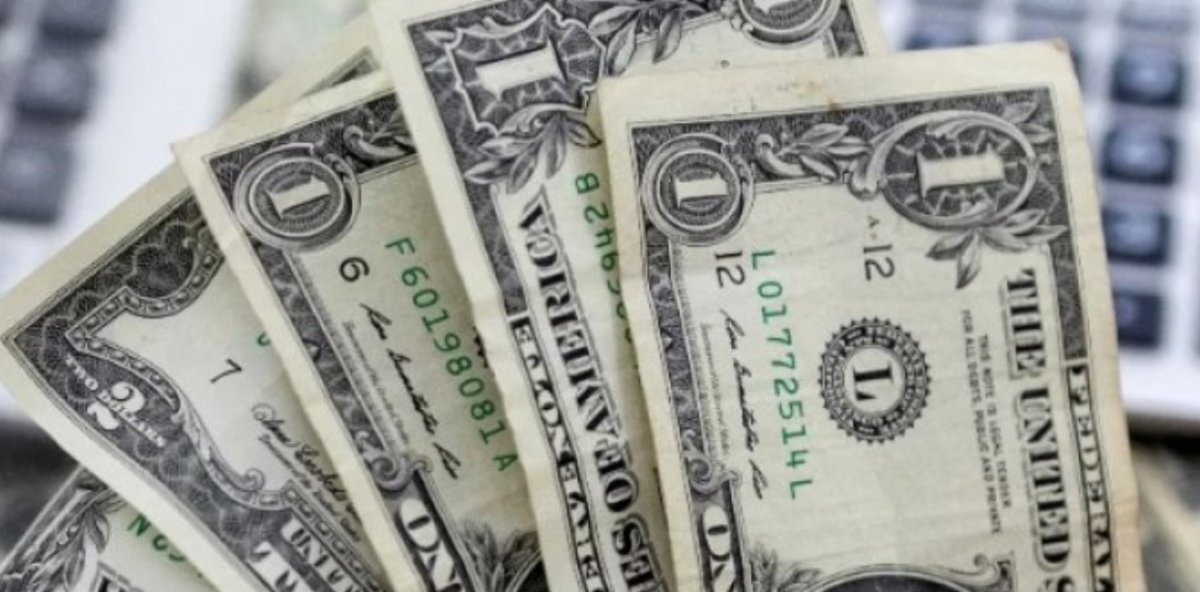
The dollar weakened globally, but the Dominican economy responded with exchange rate stability.
Santo Domingo.- The Central Bank‘s exchange rates for buying and selling the US Dollar, as of the close of business on February 11, 2026, are RD$62.2111/US$ and RD$62.8027/US$, respectively.
These will serve as a reference for this institution’s operations until February 12, 2026.
These rates are the weighted average of spot market transactions (cash, transfers, and checks) for today and exclude transactions in the financial derivatives market.

Exchange rate
Furthermore, the entity reported that, according to the Eleventh Resolution of the Monetary Board dated August 14, 2003, the exchange rate to be used for the daily revaluation of assets and liabilities in foreign currency will be the aforementioned spot market purchase rate.
All in compliance with the provisions of Section b, Article 59 of the Exchange Regulations of the Monetary and Financial Law No. 183-02 of November 21, 2002.
Economic Outlook for 2026 in the Dominican Republic
The Infobae portal indicated that the Dominican Republic is preparing for 2026 with an encouraging economic and political outlook, according to a report by the global firm UBS Financial Services.
The document highlights an acceleration of real GDP growth to 4% in that year, driven by lower interest rates and a more favorable international environment. Political stability and pro-market policies are projected to continue supporting the country’s economic dynamism.
By 2026, UBS expects lower interest rates to boost domestic demand and spur investment, while a more stable external environment will support tourism recovery.
The international portal also reported that the report finds that a targeted fiscal stimulus will help strengthen economic activity throughout the year.
In fiscal matters, the Dominican Government has adopted an active approach to counteract moderate growth.
Congress approved a supplementary budget that increases capital spending by 0.4% of GDP for 2025, widening the overall deficit to 3.5% of GDP. For 2026, the Ministry of Finance projects an overall fiscal deficit of 3.2% of GDP and a primary surplus of 0.5%.
Among the most influential factors in the evolution of the exchange rate, the monetary policy decisions of both the Central Bank of the Dominican Republic and the Federal Reserve of the United States stand out, the domestic demand for dollars linked to imports and the behavior of the local economy, as well as the expected global strengthening of the US dollar towards the end of 2026, within a scenario of controlled depreciation.
The Central Bank estimates that the exchange rate will reach approximately $66.35 in September 2026 and close to $69.15 a year later, anticipating a continuous depreciation trend.
The analysis highlights that gross public debt would remain stable at around 58% of GDP for the next 12 to 18 months from November of last year, provided that no unexpected macroeconomic events occur.
UBS notes that strong surpluses from service exports and remittances will offset deficits in the income and merchandise trade accounts, projecting that the current account deficit will be around 2-2.5% of GDP by the end of 2025 and 2026.
Net foreign direct investment is estimated at approximately 3.5%–4.0% of GDP, with tourism, trade, industry, energy, and real estate being key sectors. This investment would be sufficient to cover the external deficit, according to data from the Central Bank of the Dominican Republic cited by UBS Financial Services.
Finally, the report from the financial services firm warns of risks from adverse weather events and governance challenges, which are common in emerging markets, while maintaining an optimistic view of the country’s economic indicators for 2026.
















This article never answered its own question in the headline!
Agree. The dollar has been falling over the past 2 weeks from over 63 pesos to $1 to just over $61 to $1. There is other financial news sources predicting that the $ rises this year as high as 64 or 65 to the dollar.