 Smaller
 Bigger
Families on the banks of the Ozama River await government expediting their relocation.
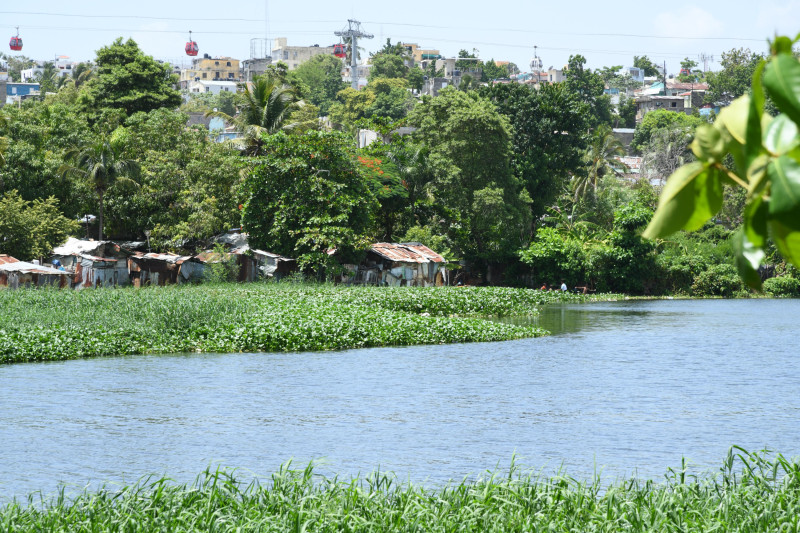
Studies have determined that bacteria exist in the Ozama River bed that can cause various infectious diseases .
Last Thursday, the Presidency of the Republic issued Decree 521-25, declaring the “intervention and recovery” of the Ozama River a high priority, among other things, to “achieve the regeneration” of the land located along its banks.
This Government order issued by President Luis Abinader comes just two days after the Dominican Society of Infectology (SID) reported that the river is affected by the presence of bacteria that are highly resistant to antibiotics.
According to the study used as a reference by the doctors, the pathogens have the capacity to cause various infectious diseases, posing a threat to the families living in the surrounding area.
Specifically, when some community members from areas in Santo Domingo Este (SDE) bordering the banks of this watershed spoke to one another, they expressed concern about the impacts reported in recent days.
“Yes, a child (who lives near the river) started to develop rashes on his skin (after coming into contact with the water),” a man who preferred not to be identified told this newspaper yesterday. He says he has lived in the town of El Dique for more than 34 years.
Adding to this situation is the pollution caused by improvised solid waste dumps and the emergence of insects like mosquitoes due to the dirty water stagnating everywhere on the streets and sidewalks.
Meanwhile, the presidential decree does not mention any specific action to improve the health of the river, limiting itself to impacting areas where human settlements have been established.
Mobilization of families
In fact, the Government should have designed a type of eviction or relocation program that would support families, at least offering them a house-to-house housing project. They’re doing nothing by giving two or three pesos to the people who live here and move. They’ll be forced to move to a new location… or they’ll have to rent a house, meaning they’ll go from being homeowners to renters,” Ruiz said.
With the president’s ordinance, they believe authorities should create “conditions so that people who have not yet been evicted, who live here within the perimeter, are better treated.”
In June 2014, biologist William Gutiérrez conducted a study that revealed the high levels of toxicity and pollution found within the Ozama River, according to news reports. Weeks later, former President Danilo Medina issued Decree 260-14, declaring the rehabilitation, sanitation, preservation, and sustainable use of the basin a “high national priority,” ordering the establishment of a commission to achieve this goal. The impact of this initiative is currently unknown.