

 Smaller
 Bigger
Complaints about high bills and blackouts continue to irritate the population.
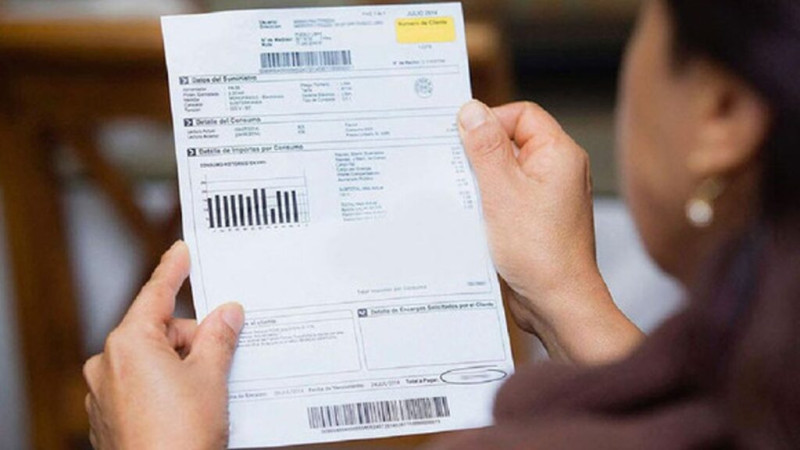
High bills and power outages have become a daily burden, expressed in various ways by citizens.
The Dominican Republic is facing an electricity crisis that has sparked a wave of protests across the country.
From burning tires and banging pots and pans to lighting candles, people are expressing their frustration over the constant blackouts and rising electricity bills.
The discontent is palpable both on the streets and on social media, where complaints have multiplied.
Life in blackouts
Power outages have become a daily problem for Dominicans.
In Haina, San Cristóbal province, professor Carolina Aquino described the situation as unbearable, affecting daily life, food preservation, and children’s well-being.
Similarly, in Altos de Arroyo Hondo, National District, residents of Ciudad Real II lit candles in protest, demanding 24-hour service.
Adding to this situation are the high bills. According to the Consumer Protection Office (Protecom), 95% of the complaints filed this year are related to high electricity costs.
Energy distribution companies received more than 84,000 complaints in a single year, with 93% of these complaints related to high bills.
On social media, users are questioning how bills can be so high despite prolonged power outages.
The president of the Unified Council of Distribution Companies (CUED), Celso Marranzini, attributed the increase in consumption to high temperatures, assuring that service rates have not been modified.
Underlying problems in the electricity sector
Authorities acknowledge that the sector’s problems are complex, including power losses, overloaded grids, a lack of investment, and low collections. Statistics for the January-July 2025 period reveal a fragile financial outlook for the distribution companies Edenorte, Edesur, and Edeeste.
Despite a slight increase in energy purchases, sales revenue and effective collections have decreased.
An alarming fact is that in June, collection losses reached 45.2%, highlighting the sector’s financial difficulties.
The Ministry of Energy and Mines has not updated its statistics since June, leaving the public and industry stakeholders without recent official information.
Furthermore, the sector’s management indicators are worrying. Energy losses stand at 38.2%, and the revenue recovery rate (CRI) has fallen to 59.5%, meaning that distributors are barely recovering half of what they should be billing.
Executed investments have also fallen to US$108.7 million, a significant reduction compared to the previous year, exacerbating the situation.
What is an electricity crisis?
This is a situation in which a country or region’s energy supply system cannot meet electricity demand, resulting in shortages, widespread blackouts, and often dramatic price increases.
This crisis not only affects households but also has serious repercussions on the economy, as industry, commerce, and services depend on a stable energy supply to function.
















The failure of the electricity sector is a result of institutional corruption of the country’s political system more in tune to use it for paying and receiving favors. The sector was abandoned to its chaos in order to cloak misbehaviors favoring the bad actors. The abandonment is the legacy the public suffers now. Chaos does not bring progress, only irritation.