 Smaller
 Bigger
How is democracy eroding in the US and what does this mean for Latin America?
Disruptor in Chief
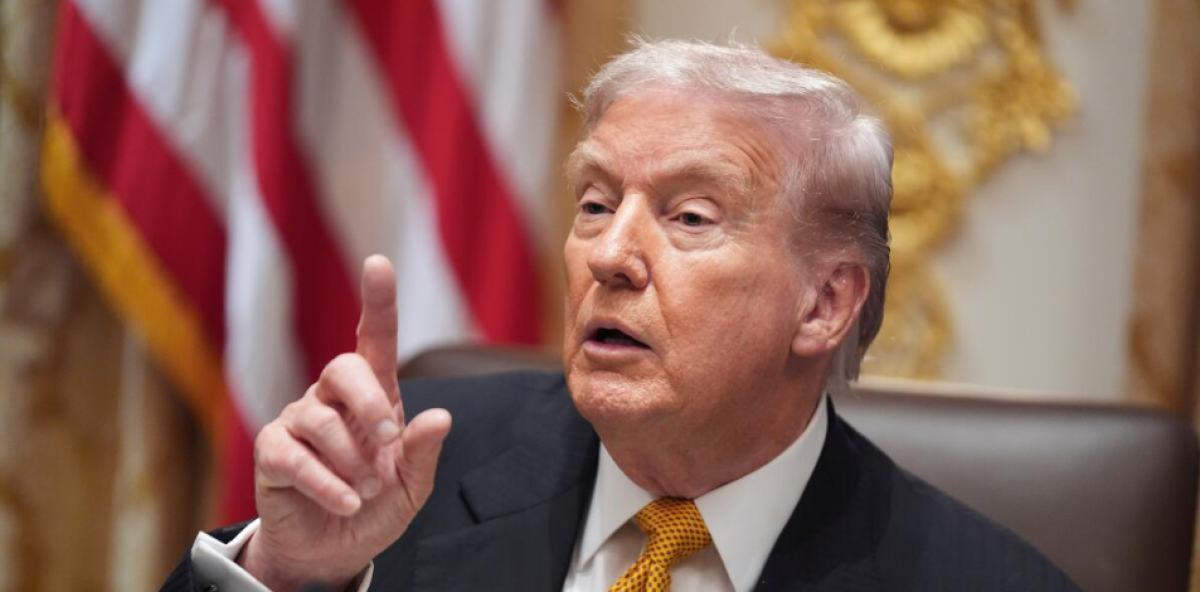
The United States is undergoing rapid democratic erosion. Despite its limitations, until January 2025, it had a democratic regime with relatively free and fair elections (more so in some states than others), universal suffrage, no guardianship authorities, protection of political rights and civil liberties, and a series of checks and balances that restricted executive power. Today, that regime has changed substantially. Following the playbook of Hugo Chávez in Venezuela or Nayib Bukele in El Salvador, in the last ten months, the administration has destroyed the federal bureaucratic apparatus, usurped the powers of the legislature, used Government agencies to attack, censor, and extort universities, the media, and opponents, and violated the due process of immigrants (and citizens of African descent). The change has been so extreme that Steve Levitsky and Lucan Way have declared that the United States is no longer a democracy but a competitive authoritarianism.
The implications of this process of autocratization in the US for Latin America are catastrophic. Enabled by a submissive Congress and Supreme Court, whose majorities are more concerned with ideological victories than with the rule of law or civil and political liberties, Trump has managed to operate with few restrictions. Despite efforts by district, state, and federal courts to block executive orders and actions that violate the Constitution, the president has found ways to circumvent adverse decisions or sidestep inconvenient requirements. This is particularly true in areas where the president’s office has traditionally enjoyed considerable flexibility (and which have a powerful impact on Latin America), such as international aid, immigration processes, and the fight against drug trafficking.
In one of his first acts in office, Trump suspended and/or eliminated U.S. international aid programs that Congress had previously approved. The budget approved by the legislature for 2024 included (among other things) $90 million for democracy promotion programs in Cuba, Venezuela, and Nicaragua, $125 million to counter the flow of fentanyl and other synthetic drugs in Mexico and combat the production and transshipment of cocaine in Colombia, Ecuador, Peru, Panama, and Costa Rica, and $82.5 million for programs to prevent human trafficking and reduce violence against women in Central America. The end of USAID and the State Department’s democracy and human rights promotion programs is accompanied by measures to end immigration (from the Global South). At the beginning of his term, Trump abruptly suspended the U.S. asylum and refugee program and ended temporary protection programs for more than 600,000 Haitian and Venezuelan immigrants.
As if that were not enough, since March, the administration has used the Immigration and Customs Enforcement (ICE) to detain and deport immigrants without due process. By September 2025, ICE had detained more than 59,000 people (71.5% of them without criminal convictions) and had deported 234,210—in many cases without a court order. The arrest and deportation process has been so arbitrary and chaotic that 170 U.S. citizens have been caught up in the raids. Those arrested by ICE (citizens or not, legal immigrants or not) are subjected to cruel and inhumane treatment and often end up disappearing into the immigration prison system or being deported to other countries without being able to contact family members or their lawyers. For those of us who grew up in Latin America, seeing or learning about the human rights violations of dictators such as Rafael Videla or Augusto Pinochet, the images of ICE agents dressed in civilian clothes with balaclavas, refusing to identify themselves or produce a court arrest warrant, while putting people into cars without license plates, are macabrely familiar.
The consequences of these immigration policies are particularly severe for Latin America. Not only do they put our compatriots at risk, but they also reduce the number of immigrants in the US, either because the authorities arrest and deport them, or because people already living in the country decide to leave out of fear. In the long term, the decline in the number of citizens living and earning dollars closes what had been, until now, an escape valve in countries with weak economies. According to a report by the Inter-American Development Bank, remittances range from 0.1% of gross domestic product in Argentina to 27.6% of GDP in Nicaragua. Countries such as El Salvador, Honduras, and Guatemala receive a fifth of their income from remittances sent by relatives abroad. Not all remittances come from the United States, but 60% do.
The attack on migrants, the closure of legal options for entry into the US, and the end of economic aid to the region are compounded by the US Government’s decision to use military force against Venezuela. In the last three months, the US has attacked Venezuelan (and Colombian) vessels that it claims were transporting drugs. These attacks not only violate international law but also reflect worrying changes in the protection of the rule of law in the US. In a liberal democracy, the security apparatus cannot be prosecutor, judge, and executioner. Even if there were evidence that these vessels were carrying drugs (which is not entirely clear), due process requires that the vessel be detained, evidence of drugs be sought, and its crew be subjected to a trial to determine whether they are guilty and what punishment they will receive.
The Trump administration’s use of “war” language, coupled with the increase in military force in the Caribbean and the sanctioning of covert intelligence operations in Venezuela, constitutes a clearly inflammatory policy. Some senators are concerned that the president will unilaterally declare war. This would be an unprecedented step that would certainly be devastating for the region.
All of this leads me to one final reflection. The support that the US gives to democratic (or authoritarian) leaders and regimes has been essential to the stability of democracies (or dictatorships) in the region. In the last two decades, democracy on the continent has been threatened and weakened in several countries. To overthrow dictatorships in Venezuela or El Salvador and protect democracy in countries such as Argentina, Colombia, or Guatemala, strong democratic allies are needed who can exert pressure that complements the efforts of pro-democracy movements. The Trump administration’s erratic policy toward Venezuela, its unconditional support for leaders with authoritarian tendencies such as Nayib Bukele or Javier Milei, and its threats against populist leaders such as Gustavo Petro contribute to political polarization, promote impunity, increase the influence of autocratic powers such as China and Russia, destabilize democratic regimes, and weaken leaders and organizations that promote democracy in the region.
It is difficult to know if and how democratic erosion in the U.S. will progress. Despite important victories, the excesses of the Trump administration are mobilizing opposition within the country. With any luck, this mobilization may curb the administration’s authoritarian impulses. But until that happens, it is difficult to count on the U.S. to protect or advance democracy and human rights in the region. So far, the response to this new reality has been relatively fragmented and, in some countries, improvised. The area would do well to seek collective responses, strengthen democratic regional leadership, and prepare jointly for the fallout from the Trump administration.