 Smaller
 Bigger
Push for reform of the law on the protection of minors
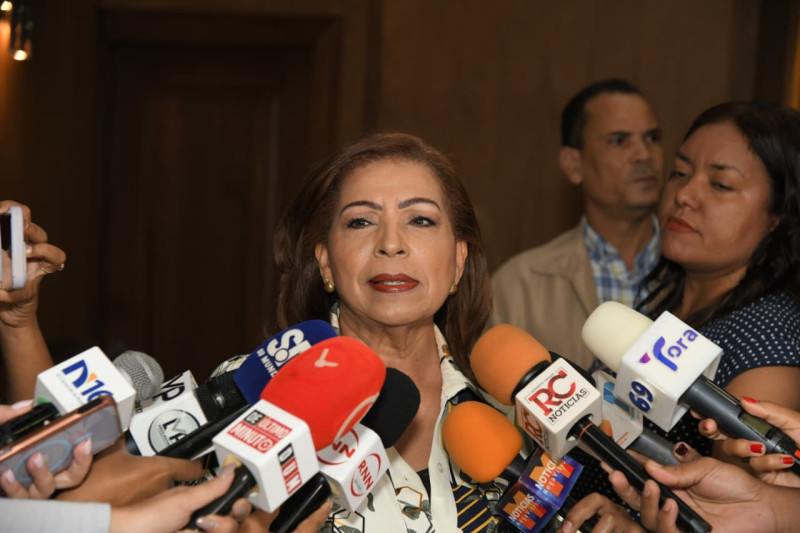
Ligia Pérez, directora CONANI.Leonel Matos
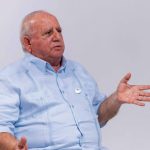
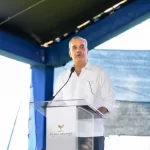
Santo Domingo — The president of the National Council for Children and Adolescents(CONANI), Ligia Perez, detailed the work being done to reform and update the law that protects the rights of children and adolescents in the country.
She recalled that CONANI’s social work seeks to maintain family welfare, with adequate environmental supervision, to ensure that the spaces where children and adolescents live are optimal for their safety.
She said that, together with a team of experts, they are reforming the law that establishes the National Council for Children and Adolescents to keep it in force in light of the needs of infants, as it was enacted 22 years ago.
The president of the National Council for Childhood and Adolescence also spoke to the media about the editorial of the Listín Diario entitled “The precariousness which corrodes the juvenile correctional institution” in La Vega, and emphasized that this organization is not in charge of this part, and recommended asking the Attorney General’s Office about these conditions.
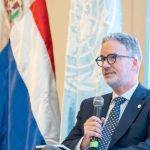
Addressing those present during the development of the International Forum for the Protection of Children, held at the agency, he referred to the reform of Law 136-03 or Code for the System of Protection and Fundamental Rights of Children and Adolescents of the Dominican Republic.
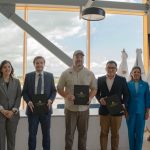
“Today is part of the reform and updating of Law 136-03 that we are currently carrying out,” he said and highlighted the joint work they have maintained with the First Lady Raquel Arbaje and the Minister of the Presidency José Ignacio Paliza.
“The month of June the first flag was given by a high level commission headed by the first lady Raquel Arbaje; the minister of the presidency José Ignacio Paliza; Mr. Henry Molina, of the Judicial Power, among other personalities, both from the government and from the civil society and international organizations. So, from that moment on, the commissions were formed, and we have been working”, said the president.
Three stages
“This review has three stages. We are in the final phase of the first stage, which is the diagnosis and analysis of the law, which has already been completed, and today we are going to have a debate on the pertinence of this law”, she said.
He said that this is an international forum, since Esther Valenzuela, who is a Chilean lawyer and expert in Children and Adolescents Law, will be accompanying us with a magisterial conference”.
He said that the result of the diagnosis has already been presented to the National Board of Directors, which is the highest authority of CONANI, and to that high level commission which, “as I was saying, is headed by Mrs. Raquel Arbaje and Minister José Ignacio Paliza. That is going to end in that study. We are in that process. Today we are going to present part of its results”, said Perez.
He also spoke about the children rescued by CONANI in search of the most appropriate decision-making for children.
“We are a multidisciplinary commission, where there is the Attorney General’s Office, represented in the Prosecutor’s Office for Children and Adolescents; there is CONANI and other institutions; the Ministry of Labor, Interior and Police and the Tourist Police,” he explained.
He said it is a multidisciplinary group that rescues children who are in a situation of falling. “That is one of the axes we work on here at CONANI, jointly with all those institutions we have mentioned and others.”
“We act through complaints through the different means, but also when we see any situation, we give the alert to the prosecutor’s office so that then together that rescue group, in that model of intervention of children and adolescents in street situations, child labor and worst forms of child labor, loss and mobility, rescues are made,” Perez said.
He noted that CONANI’s social work seeks to maintain family welfare, with adequate environmental monitoring to ensure that the spaces where children and adolescents live are optimal for their safety.
“The family is sought to see what has happened,” he said.
He added that there are other institutions involved in family welfare that are integrated so that those children are returned, because most of them have families.
“Then we look for the family, but we follow up with that family, social work is done to see what factors have influenced them to have sent or allowed their children to be away from their homes,” he said.