
 Smaller
 Bigger
Expert warns of constitutional challenges following hasty rollout of new Penal Procedure Code
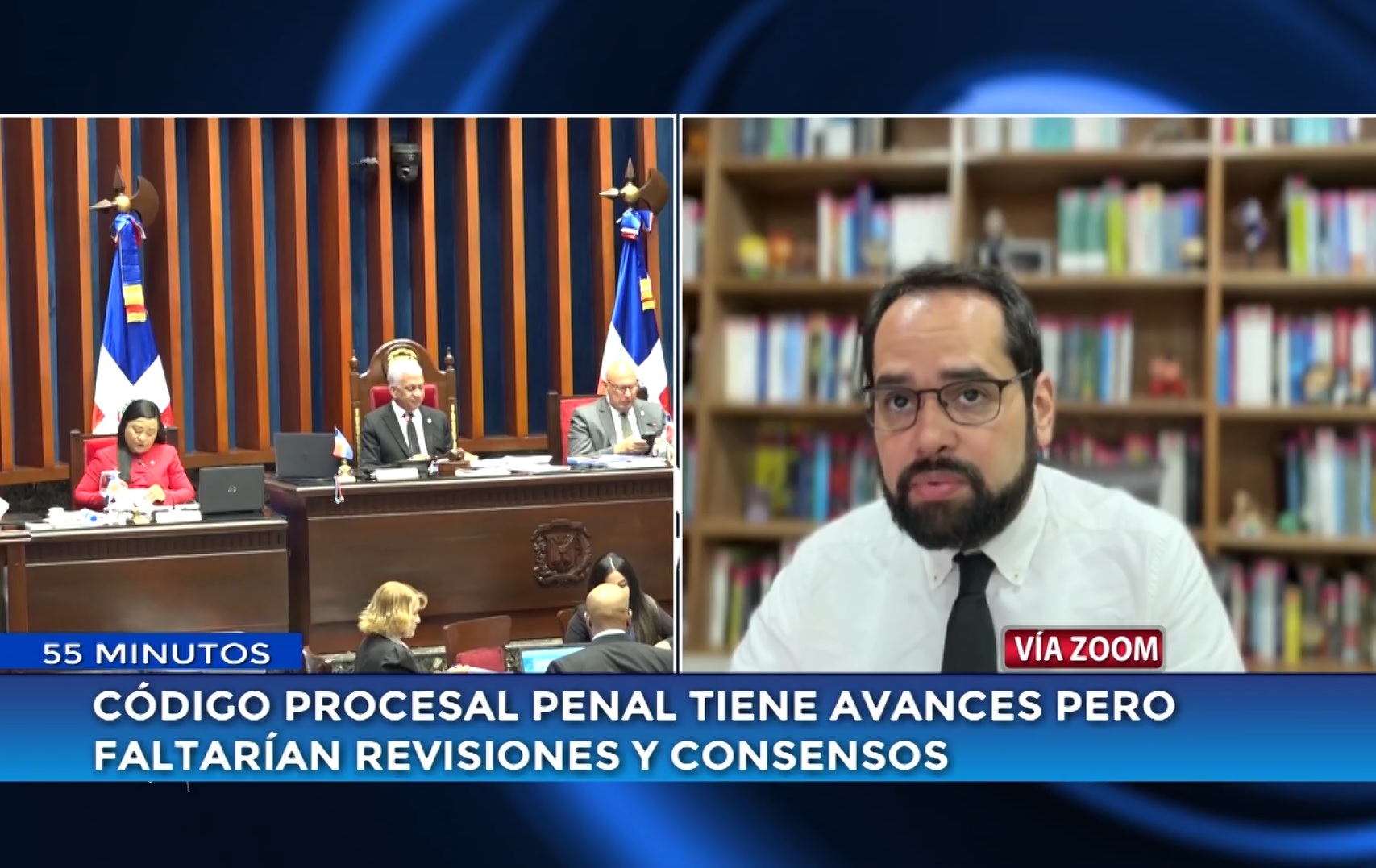
Santo Domingo.- Legal scholar Francisco Álvarez Martínez has expressed serious concerns over the accelerated implementation of the Dominican Republic’s new Criminal Procedure Code (CPP), cautioning that its rapid passage could trigger a wave of constitutional challenges before the Constitutional Court. According to Álvarez, the law suffered from rushed debate, frequent amendments between legislative chambers, and an abrupt enforcement without any transitional period, known as vacatio legis, undermining its legitimacy.
Speaking on CDN’s 55 Minutos, Álvarez said that reform discussions were postponed for years before being rushed through the legislature, which left little room for technical analysis or input from civil society. He warned that the constant shifts in the text as it passed between chambers have eroded confidence in the legislative process and introduced structural weaknesses into the law.
Those weaknesses, he argues, may not withstand legal scrutiny. Álvarez emphasized that the immediate effect of the new code forces lawyers and judges to apply complex, untested provisions with no printed guides or training, creating legal uncertainty and placing undue pressure on legal professionals and defendants alike.
One immediate consequence, Álvarez explained, is that court cases —including high-profile corruption trials— will require delicate interpretation. Judges will be tasked with analyzing both the old and new procedural rules to determine which is more favorable to defendant rights, increasing judicial workloads and potentially delaying proceedings.
Ultimately, Álvarez praised some advancements —such as enhanced victim rights— but maintained that the lack of coherence between the Penal Code and the CPP is a missed opportunity that may generate long-term legal friction. He concluded that constitutional review is not just possible, but likely, unless the text is revisited to align with established legal principles and jurisprudence.