Monsignor José Amable Durán, Auxiliary Bishop of Santo Domingo and Apostolic Administrator of the Diocese of La Vega. José de León
Santo Domingo – The increase in explicit lyrics in urban music, coupled with the unfiltered dissemination of vulgar content on digital platforms and social networks, and its direct impact on the moral, emotional and behavioral development of children, adolescents and young people, is a cause for concern for the Dominican Catholic Church.
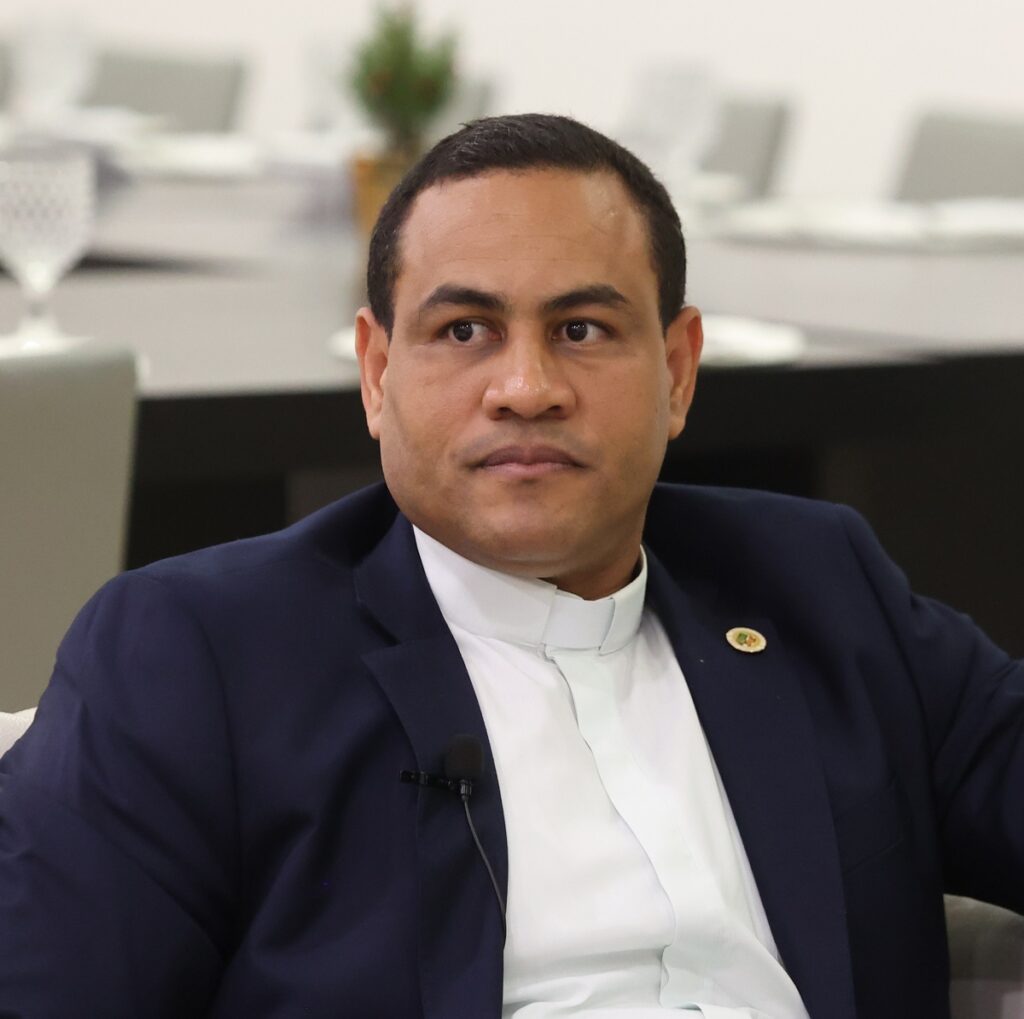
Monsignor José Amable Durán, auxiliary bishop of Santo Domingo and apostolic administrator of the Diocese of La Vega, as well as Father José Luis Cruz, rector of the Catholic University of Santo Domingo (UCSD), consider the normalization of vulgarity, sexism and symbolic violence in contemporary culture alarming , especially through urban music and high-consumption digital content.
Monsignor José Amable Durán raises the debate not only from the perspective of faith , but also from that of Dominican social morality, pointing out that music and language were conceived for good , but that today, in many cases, they are being used in a harmful way.
“Music, like words, is meant for good . There is a text that says, ‘Speak and act as those who are to be governed by a law of liberty .’ And, of course, what we see today does a lot of harm to young people,” the prelate said.
Vulgarity that leaves its mark
Durán warns that many current song lyrics promote explicit sex, moral disorder and irresponsible behavior, directly influencing children and adolescents who consume them from an early age, even within the home.
“Today we have an alarming number of teenage pregnancies , and that’s not by chance. It has to do with the fact that they listen to tremendously harmful music, morally damaging. A girl who listens to that from a very young age at home, the least that can be expected is that she will embark on a life of disorder , and the same is true for young men,” the prelate stated during the Corripio Communications Group’s Weekly Luncheon.
Parents and guardians are primarily responsible
Although he acknowledges that it is a complex and difficult phenomenon to control , especially due to the influence of social media, Monsignor Durán emphasizes that the role of parents remains crucial.
“Social media is here to stay and can’t be eliminated, but every parent needs to implement controls and filters. It’s not about forcing children to learn through punishment, but about fostering responsibility, because ultimately, parents are the ones who suffer the most when these kinds of situations occur,” she said.
For the auxiliary bishop, the crisis of values not only affects the Church or society in an abstract sense, but directly impacts families, who then face the emotional, social, and spiritual consequences of these influences.
Vulgarity as a social norm
Along the same lines, Father José Luis Cruz warns that the main problem is not only the existence of vulgar content, but its progressive normalization.
“It’s a problem that’s growing because we’re normalizing it. Vulgarity, vulgar expressions without any control, are becoming increasingly common, not only in private settings, but also in social settings and in the media,” he noted.
Father José Luis Cruz, rector of the Catholic University of Santo Domingo
The rector of UCSD recalled that in past decades there were stricter regulatory mechanisms in radio and television, which prevented the mass dissemination of certain content.
“Before, there were controls. Certain songs with certain content were not allowed in the media. Today they are played and reproduced without many limits,” he said.
The internet presents a challenge without borders.
However, Cruz acknowledges that the current scenario is more complex due to the impact of the internet and digital platforms, where institutional control is almost impossible.
“Before, the media was manageable. Today, with the internet, there’s no way. Even if it doesn’t appear in the formal media, everything is reproduced online. Children and teenagers have free access, and everything appears there without control,” he explained.
The priest warned that the constant repetition of these messages has a profound psychological effect.
“Music doesn’t have just any effect. It’s something that’s constantly repeated, and people assimilate it until they see it as normal and valid, and end up saying, doing, and living it as commonplace. That does have a harmful effect on society,” he pointed out.
Impact on mental health
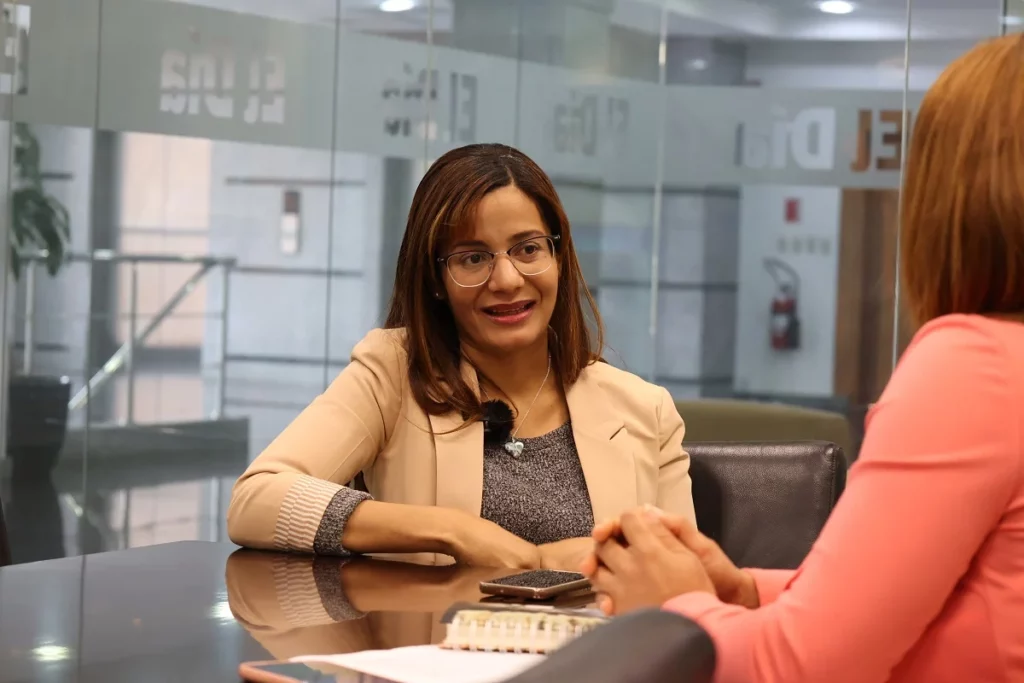
Regarding the effects on mental health, psychologist and family therapist Yesmín Meyer agrees that the models that children and young people follow today through social networks and digital platforms are highly concerning.
“The role models that children and young people currently follow are worrying in terms of conduct, language, clothing and behavior,” he stated.
Psychologist and family therapist Yesmin Meyer. Alexis Monegro.
Meyer points out that many songs and digital content promote violence, sexism, machismo, and gender stereotypes, which directly impacts the roles that young people will assume in their adult lives.
“These negative examples, especially represented by some exponents of urban music and certain ‘influencers’, exert a harmful influence on teenagers and young people,” he said.
The irreplaceable role of the family
Like religious leaders, the specialist emphasizes the responsibility of parents in supervising the content their children consume.
“In most cases, parents don’t regulate the content their children have access to. That’s where the problem begins,” he warned.
However, Meyer clarified that not all artistic production is harmful and acknowledged the existence of cultural expressions that contribute to well-being.
“There are distorted role models that convey negative messages, but there are also artists who bring joy, values, and happiness to society. The challenge lies in knowing how to discern and guide,” he concluded.
Collective reflection
The voices consulted agree that the phenomenon of vulgarity in music and digital content cannot be addressed through absolute censorship, but rather through conscious education, strengthening the family role, and greater social responsibility from creators, platforms, and consumers.
00votes
Article Rating
Subscribe
4 Comments
Oldest
NewestMost Voted
Inline Feedbacks
View all comments
Jean de Langeron
January 18, 2026 1:23 pm
It’s not just that it worries the Churches, it worries regular people, it worries people from abroad that live in DR. The level of vulgarity is unprecedented. Especially in music videos, discos, even restaurants. Unfortunately the majority of the population is of that level.
rosa
January 18, 2026 6:17 pm
so long as there are those who consume this garbage it will prevail. So stop allowing it and it will go away.
Johnny
January 18, 2026 10:05 pm
The black American music is also horrible. Needs to be banned. Ruining our youth.
Jean de Langeron
January 19, 2026 6:56 pm
Most of the population is listening to this kind of music. I instead call it not music but noise. And this kind of music is very popular in the most part of the society. It shows a level of vulgarity of the main population, extreme luck of education and personal culture. It is a national disaster, along with very dangerous driving and throwing of the garbage everywhere.


 Smaller
 Bigger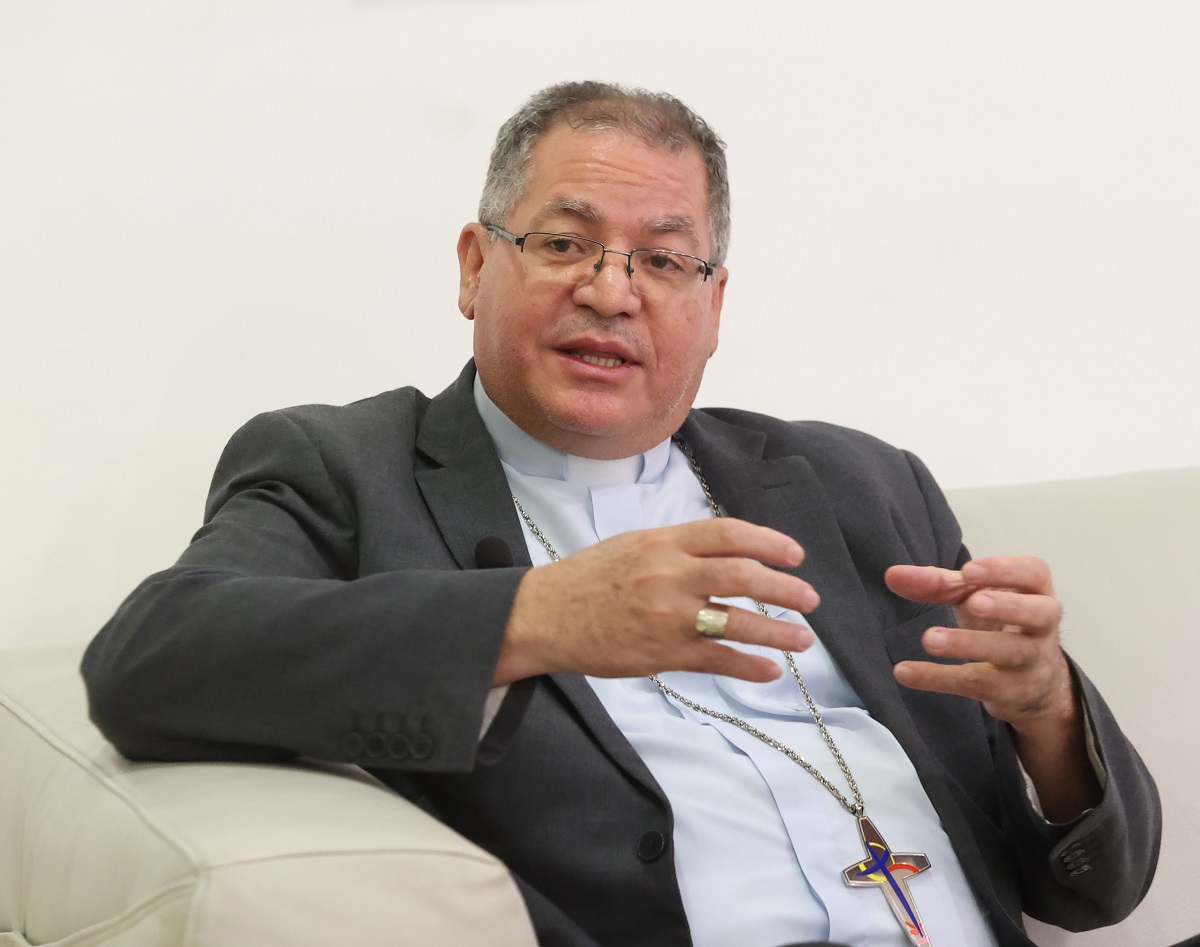
















It’s not just that it worries the Churches, it worries regular people, it worries people from abroad that live in DR. The level of vulgarity is unprecedented. Especially in music videos, discos, even restaurants. Unfortunately the majority of the population is of that level.
so long as there are those who consume this garbage it will prevail. So stop allowing it and it will go away.
The black American music is also horrible. Needs to be banned. Ruining our youth.
Most of the population is listening to this kind of music. I instead call it not music but noise. And this kind of music is very popular in the most part of the society. It shows a level of vulgarity of the main population, extreme luck of education and personal culture. It is a national disaster, along with very dangerous driving and throwing of the garbage everywhere.