 Smaller
 Bigger
Archaeologists discover 13 human skeletons at Pueblo Viejo in search for cacique Enriquillo
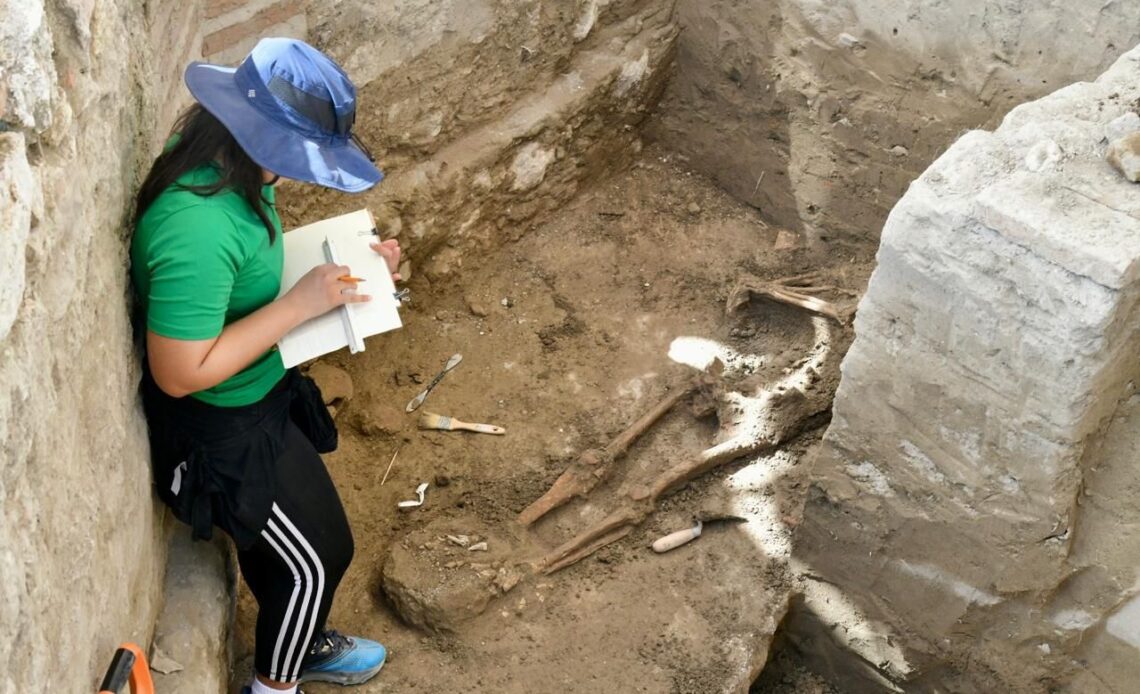
Photo of the excavation (External source)
Azua.- The archaeological project “Following the Remains of cacique Enriquillo” has confirmed the discovery of 13 human skeletons during ongoing excavations at the Pueblo Viejo ruins in the Dominican Republic. The research is part of a scientific initiative supported by the Macarrulla Foundation, building on more than ten years of historical, documentary, and archaeological investigation.
The remains were uncovered during a technically complex excavation phase that also documented scattered bones from earlier, poorly recorded interventions, expanding the scope of scientific analysis at the site. Dominican archaeologist Kathleen Martínez, technical coordinator of the project, stated that the work follows strict international standards, with detailed stratigraphic recording and full documentation of the ruins—procedures not previously applied at Pueblo Viejo.
Martínez explained that the team has recovered 13 complete bodies so far and continues to find additional remains. While it is too early to reach definitive conclusions, DNA testing will be conducted on the skeletons in accordance with international protocols, using laboratories in the Dominican Republic and potentially Costa Rica. Excavations combine fieldwork and laboratory analysis, with technical records describing each layer and find to ensure scientific rigor.
The project also emphasizes knowledge transfer to Dominican professionals and the use of methodologies applied in internationally recognized excavations, allowing results to be evaluated in academic settings locally and abroad. According to project leaders, the initiative goes beyond locating the remains of cacique Enriquillo, aiming instead to preserve and enhance the entire Pueblo Viejo archaeological site, with strong support from the local community.
Forensic and anthropological studies are being led by Spanish specialist Víctor Barrera Alarcón, who is analyzing sex, age, and height of the individuals and collecting samples for ancient mitochondrial DNA analysis to determine lineage and ancestry. Carbon-14 dating may be used to complement stratigraphy where necessary. The project is also supported by the General Directorate of Strategic and Special Projects of the Presidency (PROPEEP), reinforcing its national scientific and cultural significance.