
 Smaller
 Bigger
Miguel Ledhesma, founding president of World Travel Journalism Organization, unveils Digital Solidarity book
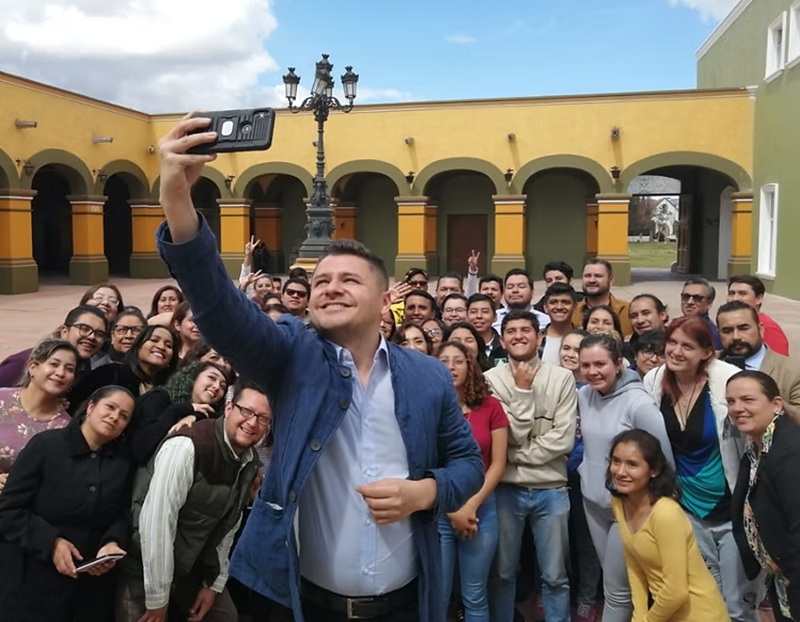

Candelaria, Valle del Cauda, Colombia.- Miguel Ledhesma the Argentine journalist, educator and founding president of the World Travel Journalism Organization (WTJO), introduced his new book Digital Solidarity yesterday at the 6th International Forum of Journalists and Tourism Leaders in Candelaria, Valle del Cauca, Colombia. The hybrid event—streamed across the Ibero‑American region—brought together experts to explore how we might reclaim our humanity by simply living one day without screens.
Miguel Ledhesma’s book, Digital Solidarity, explores how technology can be a tool to foster empathy, cooperation and social justice in digital environments. The title is available for free at: https://www.academia.edu/129787674/Solidaridad_Digital. The author argues that switching off devices for 24 hours can restore our “vital energy” and rebalance both mind and spirit.
His presentation was followed by talks on journalism and content creation (Katerina Mandrygina), the importance of digital solidarity (Ramón Chávez), empathetic travel (Míriam Martínez Posada), AI in tourism (Andrés Álvarez Cortez) and intercultural digital experiences (Irina Grassmann).
The event also featured sessions on solidarity within the WTJO (Izela Noriega) and communication for local development (Alejandra Delgado), plus remarks by Adompretur president Yenny Polanco Lovera celebrating the Dominican association’s achievements. The book launch coincided with the #SigueConTuVida (“Keep on Living”) campaign, which condemns online hate speech and promotes ethical technology use.
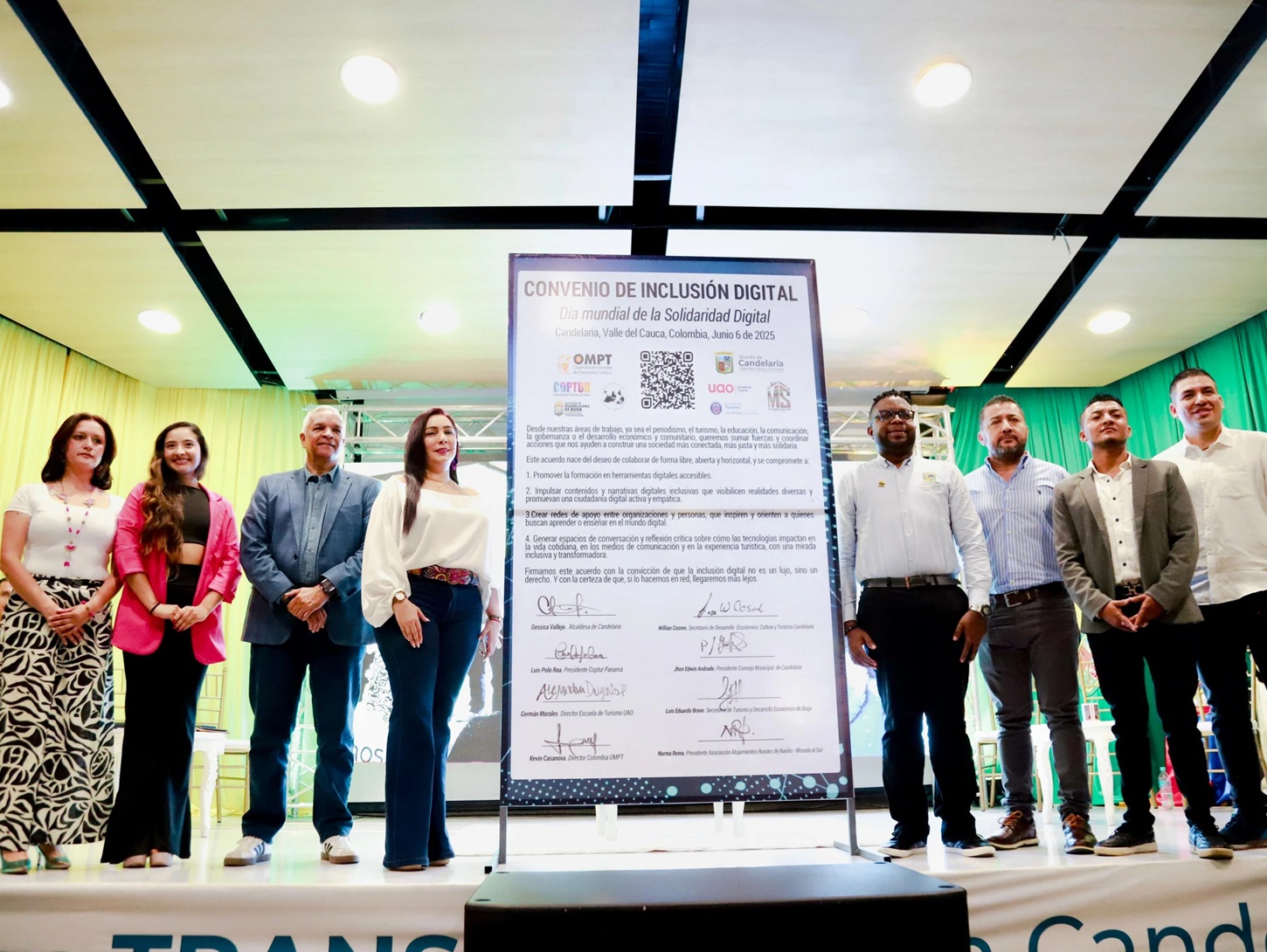
As part of the World Digital Solidarity Day agenda, a Collaboration Agreement for Digital Inclusion was signed in Candelaria, Colombia. This inter-institutional initiative aims to reduce technological gaps and promote more just and equitable access to the digital world. (Photo: WTJO)
Reclaiming humanity in the digital era: The transformative power of true solidarity
In an age overwhelmed by rapid technological advances and relentless online activity, the book offers a compelling reflection on the nature of genuine solidarity and how it can thrive within the digital landscape. According to the author, the core challenge lies in transforming our superficial interactions—characterized by likes, shares, and reactive comments—into meaningful acts rooted in awareness, presence, and authentic care. The work emphasizes that digital solidarity is not merely about external gestures but an internal commitment to truly engaging with others, even amid the fragmentation and noise that define contemporary online life.
Ledhesma begins by acknowledging the era’s complexity, noting that we live in times of accelerated communication, where the suffering of others is often displayed in real time. Yet, this immediacy can paradoxically lead to a disconnection from the true depth of human relationships. As discussed in the chapter on “Volver al centro en la era de las pantallas”, there is an urgent need to go beyond superficial responses. The author argues that true digital solidarity involves not just being available, but being present; not just shouting louder, but choosing when to speak with wisdom. This subtle but profound shift moves the focus from external validation—such as accumulating likes—to cultivating awareness and conscience. According to the author, such an approach requires a conscious awareness of how our digital interactions impact ourselves and others.
Practicing deeper listening and respectful support
One of the key themes in the book is the importance of practicing deeper listening and empathetic understanding before reacting or offering help. On the chapter dedicated to “Nuevas prácticas de solidaridad digital”, the author describes new practices of mature digital solidarity. He emphasizes that sharing useful and validated content, listening fully before commenting, and offering support without overloading oneself are essential.
It is highlighted that genuine solidarity begins with attentiveness—being present in a mindful way, understanding the context behind what individuals share, and recognizing that every person’s online expression is embedded in a complex web of personal histories, cultural backgrounds, and relational networks. Ledhesma warns against hasty judgments and superficial responses, as these often contribute to misunderstandings instead of fostering authentic connection.
The book also explores the necessity of helping others from a place of humility and equality. On a chapter emphasizing “Ser solidarios con otros en el mundo digital sin dejar de ser fieles a nosotros mismos”, the author warns against the tendency to help from a position of superiority—what he refers to as “helping from above”—which can foster dependence and diminish the dignity of those receiving help. Instead, he advocates for a horizontal approach to support, where one recognizes the other as a capable and autonomous individual.
This perspective aligns with the idea that true aid is rooted in mutual respect rather than control or paternalism. In this light, the act of helping must respect the timing and space of the person’s process, offering support only where and when it is truly welcomed. This highlights the importance of humility and patience in our digital interactions.
The cognitive toll and reclaiming attention
Furthermore, the author emphasizes that the fragmentary nature of digital content—such as headlines, short clips, and snippets—has a profound impact on our cognitive and emotional well-being. In the chapter dedicated to “El contenido fraccionario y la ruptura de la atención”, he describes how constant exposure to brief fragments diminishes our capacity for sustained attention and deep reflection. Our brains, he explains, need continuity—longer narratives, silent moments, or slower reading— to maintain a coherent sense of self and understanding of the world. Without these practices, we risk living in an “eterno presente ansioso,” jumping from stimulus to stimulus without internal integration.
As an act of kindness toward oneself, the author advocates for returning to activities that foster internal constancy—reading full stories, spending time in silence, engaging with longer texts or walks without digital distractions. These acts of self-care are presented as fundamental to genuine solidarity with oneself, which in turn enhances our ability to support others authentically.
Throughout the book, there is a clear message that the real power of digital solidarity resides in subtlety, presence, and authenticity. Ledhesma challenges us to see that helping others is not about grand gestures or viral campaigns but about simple yet sincere acts that are rooted in awareness of ourselves and our interconnectedness. For example, he underscores campaigns like #UnDíaSinPantallas or #SigueConTuVida not as superficial slogans but as symbolic invitations to pause and prioritize genuine human connection over superficial metrics.
Toward a conscious digital humanity
In his final reflections, the WOTJ founder reminds us that even amidst the rapid pace and fragmentation of modern life, it remains possible—and necessary—to cultivate a digital consciousness rooted in love, respect, and humility. He emphasizes that technology itself is neutral; its moral value depends entirely on the intentions behind our interactions. As stated in the concluding chapters, the ultimate aspiration is to live better with digital tools—inhabiting the online world without losing our core humanity—and practicing compassion from a centered, conscious place.
This insightful work encourages a shift from the superficiality that often characterizes online exchanges toward a more profound, human presence. The most impactful acts of solidarity, Miguel Ledhesma suggests, are often silent, rooted in quiet attentiveness and internal balance. In a world flooded with noise, authentic presence and inner steadiness emerge as acts of resistance—pathways for maintaining our humanity and fostering genuine connection in the digital age.