 Smaller
 Bigger
U.S. capture of Maduro triggers regional diplomatic crisis in CELAC
External source
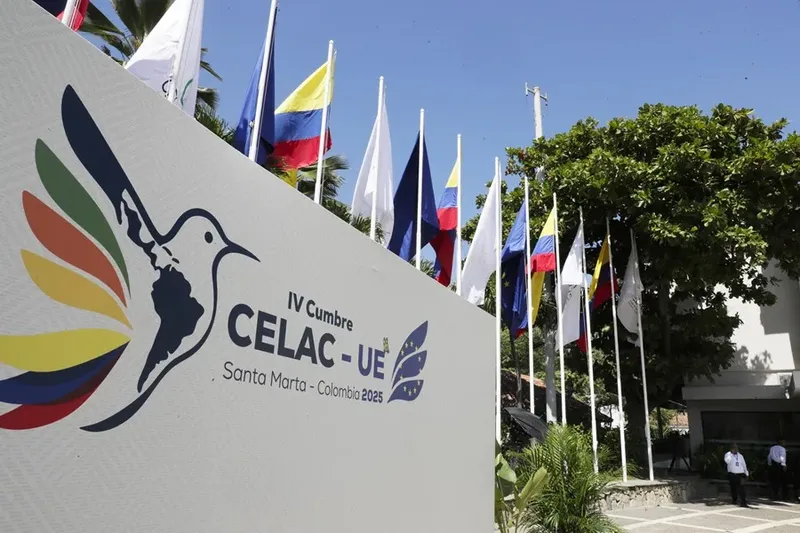
The capture of Venezuelan President Nicolás Maduro by U.S. military forces unleashed a serious diplomatic crisis in the recent history of the Community of Latin American and Caribbean States (CELAC). What was intended to be an emergency session—called by Colombia and Brazil to condemn foreign intervention—instead exposed a sharply divided region, unable to reach a unified position on Washington’s military operation.
At the center of the split, the Dominican Republic aligned with a bloc of ten countries, led by Argentina, that blocked consensus on rejecting the U.S. action. Argentine Foreign Minister Pablo Quirno openly challenged Colombian President Gustavo Petro, accusing him of claiming a “fictitious majority.” The bloc—comprising Argentina, the Dominican Republic, Paraguay, Peru, Bolivia, Costa Rica, Ecuador, El Salvador, Panama, and Trinidad and Tobago—reportedly plans a joint statement that would validate Maduro’s arrest, citing allegations of transnational narcoterrorism, according to diplomatic sources and reports from Infobae.
This position marks a turning point for Dominican foreign policy, signaling a departure from its traditionally cautious stance in multilateral forums. On the opposing side, a progressive bloc including Mexico, Brazil, Chile, Honduras, Cuba, and Nicaragua warned that the operation sets a dangerous precedent by violating national sovereignty. The divide even extends within countries, such as Chile, where outgoing President Gabriel Boric condemned the action while president-elect José Antonio Kast praised it. With Venezuela politically destabilized and CELAC unable to issue a joint response, the organization’s silence has become a powerful symbol of Latin America’s growing fragmentation.