 Smaller
 Bigger
Why did Juan Pablo Duarte die in exile?
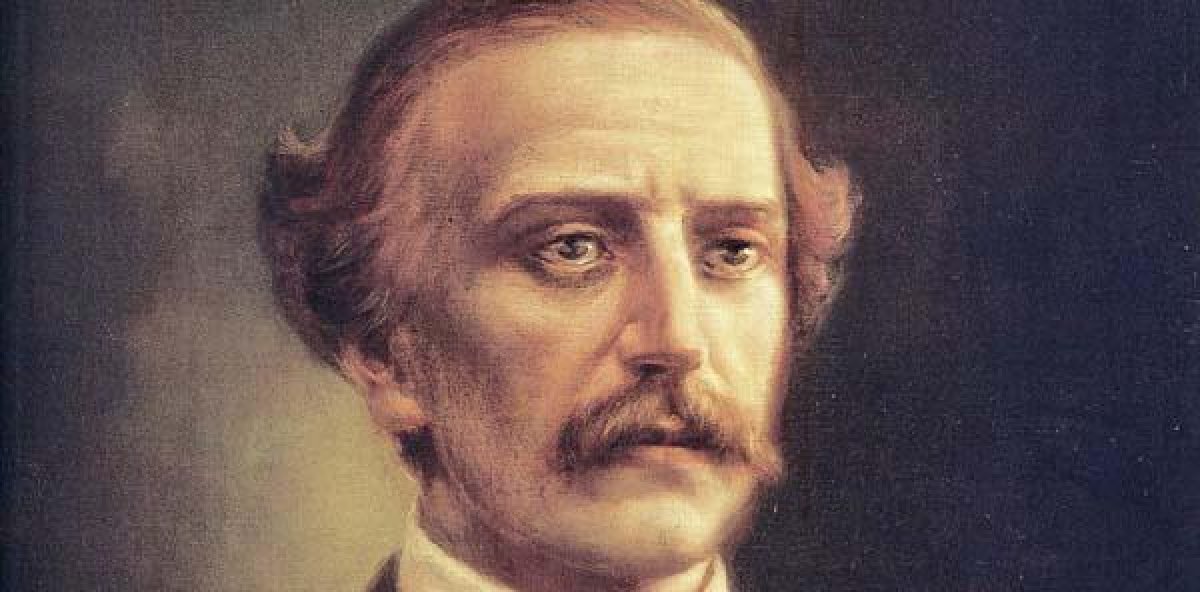
Juan Pablo Duarte, Father of the Dominican Nation
He fought to the very end for the independence of the Dominican Republic. He dedicated his youth, his possessions, and his life to the patriotic cause, founded La Trinitaria, and breathed his last breath for his homeland. Yet, he died far from the country for which he fought so hard. Juan Pablo Duarte died in exile.
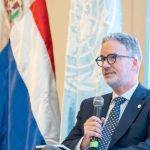
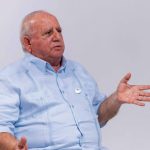
This January 26th marks the anniversary of the birth of the patriot Juan Pablo Duarte. On this occasion, the newspaper HOY spoke with Wilson Gómez, president of the Duartian Institute, who explained the historical and political reasons that led the main ideologue of independence to die outside his homeland, and revealed little-known aspects of his life in exile.
Gómez explained that Duarte died in exile because, after returning to the country in 1864 with the intention of joining the Restoration War, the Restoration Government did not allow him to remain in Dominican territory and forced him to return to Venezuela. As a pretext, he was assigned a diplomatic post as minister plenipotentiary, under the argument that he would be more useful to the cause from abroad.

Wilson Gómez Ramírez
“Initially, Duarte resisted that decision, but ultimately, he had no other alternative,” Gómez said.
The president of the Duartian Institute recalled that Duarte’s exiles were a direct consequence of political persecution: in 1843, due to the repression unleashed by Haitian President Charles Hérard; in 1844, due to the actions of General Pedro Santana; and in 1864, by the decision of the Restoration Government itself.
Santana declares Duarte a traitor.
“The conservative group was relentless against Duarte and the Trinitarians. They could not forgive their resistance to living under the control of large nations or any other country,” Gómez stated.

Pedro Santana
He explained that the Dominican liberals, led by Duarte, had a clear vision of national sovereignty and rejected any direct or indirect interference in the country’s internal affairs. This stance, coupled with their political integrity, religious faith, and trust in the Dominican people, provoked hostility and cruelty against them.
Within that conservative group, Pedro Santana and Tomás Bobadilla y Briones were, according to Gómez, his most implacable adversaries. Santana even went so far as to declare Duarte a traitor and a disloyal citizen, along with other prominent members of the Trinitarian movement.
Today
During his absence, especially between 1844 and 1864, the course of political events in the country became an insurmountable obstacle to his reintegration into national life. Authoritarian governments, corruption, persecution, and insecurity prevailed, and the idea of placing the Dominican Republic under the protection of foreign powers was never abandoned.

Duarte House Museum
Although the Trinitarians suffered political capitulations and betrayals, Gómez emphasized that firm positions and fidelity to the ideals of sovereignty prevailed.
“That is why, today, 182 years into our republic, in every instance of violation of our sovereignty, leaders have risen up embracing the flag created by Duarte and invoking his thoughts and ideals,” he emphasized.
Duarte’s life in exile
Regarding the life of the patriot in exile, Gómez clarified that it was hard, like that of anyone forced to leave their country against their will, but he rejected the idea that Duarte lived in defeat or extreme poverty.

The Trinitarians
“It’s an exaggeration to portray him as defeated amidst poverty and limitations, because he always had the skills to do business. His family lived with dignity: they owned real estate, lived in the central part of Caracas, and their wealth was such that he sold properties to return to the country after the Annexation to Spain,” he explains.
However, little is known about Duarte between 1848 and 1860. His sister Rosa Duarte wrote in her Notes that he “spent twelve years wandering in the interior of Venezuela.” The historian José Gabriel García recounts that the patriot engaged in trade on the eastern coasts of that country, venturing inland along the Orinoco and Negro Rivers as far as the borders of Brazil.
Some accounts even indicate that in 1857, a Portuguese missionary, identified as Sanjení, found him on the Rio Negro, a tributary of the Amazon, and took him to San Fernando de Apure. Other historians consider it likely that in 1859 Duarte learned of the death of his mother, Manuela Díez, which occurred in December 1858, as well as of the presidential decree declaring her amnesty in 1848.