 Smaller
 Bigger
Beyond the horizon: the odyssey of Logan Wolf
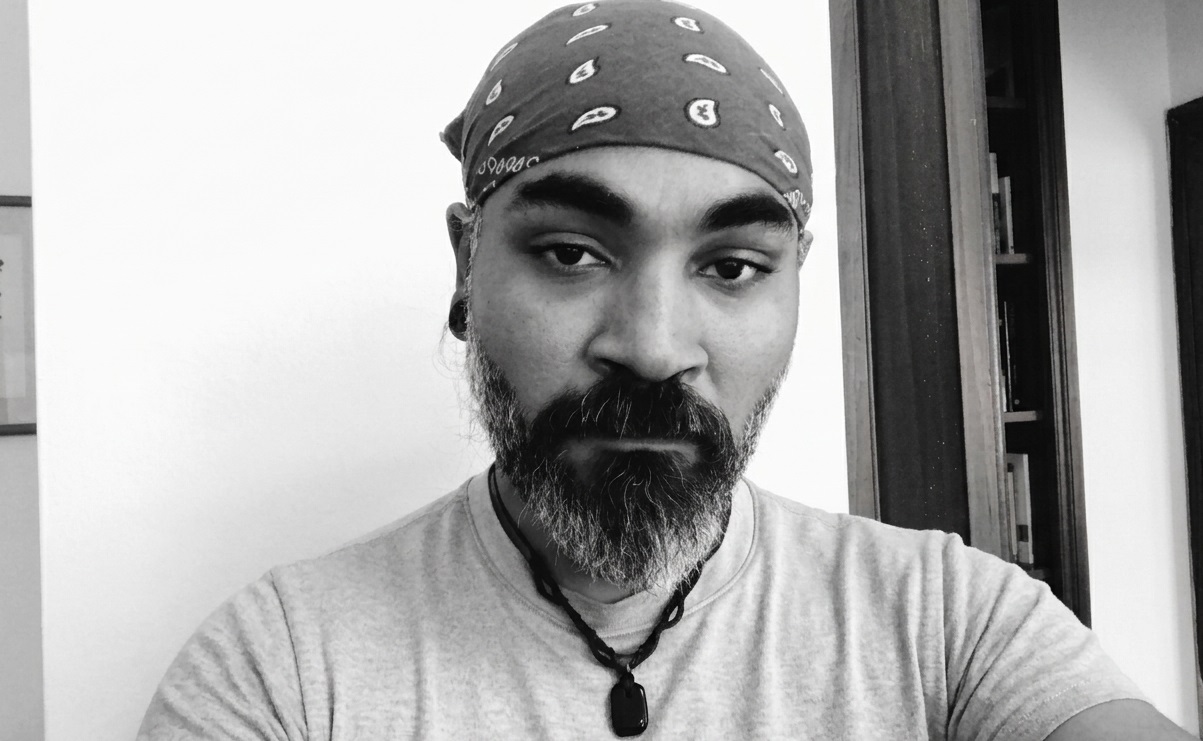

Santo Domingo.- To speak of Logan Wolf is to approach a trajectory that resists easy definition. Born Marino Martínez in the Dominican Republic and currently based in Japan, his work moves across writing, illustration, and manual arts, shaped both by migration and by a sustained aesthetic inquiry.
Rather than presenting displacement as a purely external condition, his work appears to engage with its internal dimensions. This tendency is visible in La leyenda del recordatorio de los dioses, published by La Pereza, a novel that departs from the realist modes often associated with Dominican narrative and instead enters a symbolic register.
As outlined in its premise, the book draws readers into a world that seems distant from everyday life, yet gradually reveals a closer connection to the inner landscape. Its characters, marked by elements of mysticism and reflection, and its measured, accessible pacing, evoke at times the structure of a fable.
This allows the text to operate on more than one level: as an accessible narrative and as an invitation to a more introspective reading.
Between craft and narrative
This shift toward allegory can be read as a deliberate aesthetic choice. On one hand, it expands the range of what Dominican storytelling can encompass, moving beyond strictly social or realist frameworks. On the other hand, it raises an open question: to what extent can a turn toward universality sustain, without dilution, the specificity of cultural origin? The work does not resolve this tension, but it remains one of its most suggestive aspects.
His experience in Japan forms part of this context, though not always in explicit ways. Rather than directly thematizing his surroundings, his work seems to incorporate certain modes of attention –an emphasis on detail, formal balance, and restraint– that may invite comparison with other narrative traditions.
This, however, is a critical reading rather than a stated position by the author. What is evident is a writing style that avoids urgency and privileges a more contemplative rhythm.
That same approach extends to his broader creative practice. Wolf integrates visual and material processes into his work, illustrating his own texts and maintaining an active engagement with crafts such as macramé and jewelry design. This suggests a conception of the artistic object that goes beyond the written word, where the book can also be understood as a crafted piece shaped through multiple stages.
His workspace, known as “Wolf’s Art Den,” functions as a center for this practice. From there, he develops both his artistic production and a pedagogical dimension, sharing techniques and processes with others.
Without overt didacticism, this aspect also informs his writing, which remains accessible while engaging with more layered ideas.
Positioning within Dominican literature
While La leyenda del recordatorio de los dioses –originally released in 2010 and reissued in 2024–serves as a cornerstone of his current narrative identity, it is merely one piece of a broader, more diversified literary catalog. Wolf’s bibliography reflects the intellectual restlessness of a polyglot author comfortable writing in multiple languages.
His earlier works, such as Melodic Rhymes from a Distorted Mind and Histoires courtes de longs voyages (both 2013), and Bitácora de un alpinista (2014), showcase his initial explorations of form and theme. This path continued with the 2023 release of Twenty-one Murders, further expanding his reach.
His sustained creative impetus through the mid-2020s, which solidified his prolific standing, includes works like Dimensional, 7531 and the Stages of Grief, and the evocatively titled Ookami and the New Dawn (all from 2024).
This substantial body of work demonstrates that his commitment to the written word is not a momentary phase, but a sustained, decades-long dedication to the art of storytelling across diverse cultural and linguistic spectrums.
In the Dominican Republic, his participation in events such as the Santo Domingo International Book Fair has placed his work within broader conversations about the diversity of contemporary literary forms. Rather than claiming a fully established impact, his trajectory points toward an emerging line of exploration that opens space for genres less anchored in realism.
More than offering definitive statements, Logan Wolf’s work seems to operate through questions. What forms can identity take when it moves beyond its place of origin? How do myth and lived experience intersect in a contemporary context? His writing does not attempt to settle these questions; instead, it creates a space in which they can be considered.
In that sense, his trajectory is best understood not as a fixed position, but as an ongoing process, one that unfolds across disciplines, geographies, and forms, and that finds in that movement its central impulse.