
 Smaller
 Bigger
What are the causes of low growth in Latin America and the Caribbean? Informality is among them.
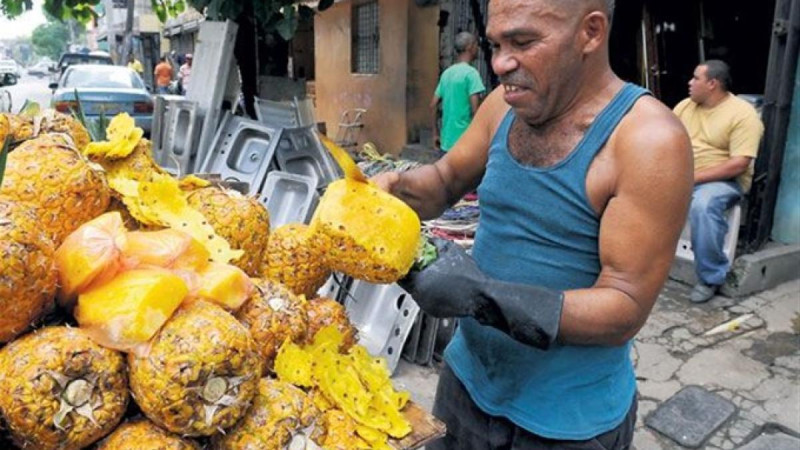
Informal employment, low innovation, and a lack of economic integration are the main factors linked to the low level of productivity and growth in the Caribbean and Latin America.
This is according to a report prepared by the knowledge management department of the Development Bank of Latin America and the Caribbean (CAF), presented this Wednesday at the Monterrey Institute of Technology and Higher Education.
In this report, CAF referred to informality as a “structural and defining feature” of the region, which implies a slowdown in its economic growth.
According to CAF, informality affects a country’s growth and productivity in different ways.
In general, he stated that this phenomenon suppresses investment at the business level, asserting that informal businesses tend to remain small in order to avoid being detected.
He also indicated that these types of companies have a negative effect on the allocation of resources, since they allow inefficient businesses to survive by evading taxes and regulations, isolating them from global value chains, credit markets, and public support.
He also asserted that informal jobs offer few opportunities for on-the-job learning, which, as a consequence, reduces the incentive for young people to invest in their skills.
Similarly, the report “Driving Growth in a Changing World: Innovation, Integration and Formalization for Latin America and the Caribbean” emphasized that informality increases economic inequality in this region, referring to informal jobs as “low quality”.
Why are they of low quality? According to the CAF, it is because wages are much lower in this sector and because of the limited access these workers have to contributory health and pension systems.
“Reducing informality is not only a strategy to boost productivity, but also a priority policy to promote equality and inclusion,” read part of the report.
INFORMALITY IN THE DOMINICAN REPUBLIC
The report indicated that the informal employment rate in the Dominican Republic for the period 2023-2024 was 55%, which represents a reduction compared to that recorded between 2006 and 2011, which exceeded 60%.
Likewise, CAF said that, in the Dominican Republic, around 85% of micro, small and medium-sized enterprises (MSMEs) are not properly registered.
LACK OF INVESTMENT IN INNOVATION
According to the report, Latin America and the Caribbean suffer from a deficit in two key factors for innovation, compared to the rest of the world: financing and specialized people.
Similarly, this region has a “significantly” smaller number of researchers, and of those that exist, most work primarily in academia rather than in business.
LOW INTEGRATION INTO THE GLOBAL ECONOMY
The CAF lamented that the presence of Latin America and the Caribbean in world trade has been less than expected, indicating that its participation has increased by 0.6% in 44 years.
“Today, the economies of the Caribbean and South America continue to have much less exposure to international trade than similarly sized economies in other regions,” the CAF stated in its report.
This could be because several subregions of Latin America and the Caribbean are geared towards trading with distant counterparts, which is not necessarily a bad thing, but examples from the best-performing regions ( East Asia, North America and Europe ) suggest that their success is linked to greater trade between neighboring countries.
Similarly, CAF deplored the lack of diversification in Latin American and Caribbean trade.
“The lack of international integration deprives the region of powerful drivers of productivity,” CAF highlighted in its report.