 Smaller
 Bigger
Presenting the perception and alleged evidence of corruption in the country
Reports from qualified organizations indicating moderate progress in the fight against corruption contrast with accusations that downplay or virtually deny such progress. Although the country has been mired in embezzlement prosecutions of very little precedent and sufficient historical significance over the last two terms of Government, what most characterizes the current situation is the uproar in various spheres that publicly and loudly reveal signs of disintegration in the management of certain areas of public affairs. Transparency must begin somewhere.
From the perspective (specifically) of Transparency International, a substantial body that monitors State behavior, the Dominican Republic has made some progress in confronting and controlling embezzlement over the last four years, but the country is still below the global average of progress in this fight (42%), with a score of 36 out of a hundred, which indicates that much remains to be done in the direction of generalizing cleanliness in Public Affairs.
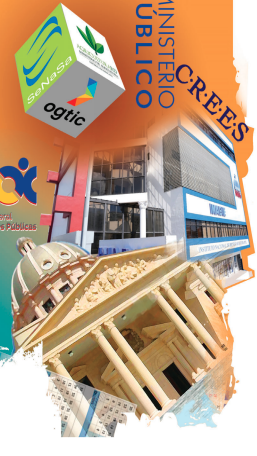
Speaking from its reputation as an independent organization within civil society, the Regional Center for Sustainable Economic Strategies (CREES) has posited that consolidating strong institutions against impunity would be a determining factor in ensuring a more stable and trustworthy environment in the country. “Improving transparency and strengthening the capacity to punish corrupt acts would contribute not only to better governance but also to a safer and more attractive environment for both investment and citizens’ quality of life.”
Based on this reasoning, the prominence of the General Directorate of Public Procurement over the last five years should be taken into account, marking a significant shift toward genuine oversight of the use of public funds and government actions aimed at gaining public trust. Carlos Pimentel, upon taking office as its director in 2020, said he found it completely lacking in regulatory mandates that had not been previously developed, which significantly diminished its efficiency. These mandates, one could say, are essential for regulating policies and standards for the procurement of state goods, services, and works. Until then, this entity had been mired in a state of insignificance, one that was adverse to the protection of public assets.
The DGCP cancels public sector contracts before they can be executed or after a breach has been discovered, as recently occurred with the disavowal of massive purchases from the Student Welfare Institute (INABIE).
The entity was singled out by Pimentel at a recent luncheon of the Corripio Communications Group as one of the organizations that, due to the high volume and magnitude of its operations, tend to face the most significant difficulties in executing tenders, which explains why they are subject to constant scrutiny. This meticulousness is unprecedented among previous Government.
Government Cases
A recent list by the newspaper Listín Diario of episodes previously reported by the national press with indications of irregularities and corruption under the current Government administration alluded to “nine major scandals” in public institutions, which in some cases were followed by the dismissal of officials, imprisonment for those involved, or, surprisingly, no sanctions at all.
He made specific mention of what happened at the National Health Insurance (SENASA), based on a report from the Attorney General’s Office alluding to “major irregularities” and recommending “pertinent investigations,” focusing suspiciously on drug procurement contracts that mentioned and enforced a commitment to pay 65 million pesos per month for services that were never provided.
“Serious findings” were filed with the Public Prosecutor’s Office by high-ranking Government officials, alleging irregularities with criminal implications after the General Directorate of Public Procurement had previously declared a contract between Senasa and Farmacard void for violating the law. On Wednesday, Santiago Hazim, who at the time headed the state insurance company, announced that he will personally defend his administration and his integrity, maintaining that he was the first to report the aforementioned irregularities in November 2024.
Other accusations against the current government include the opaque acquisition of digital books; irregularities in the aforementioned bidding processes by INABIE; allegations of fraud and failures in the electronic toll collection system; theft of funds by security personnel from the Ministry of Agriculture; and the contracting of more than RD$6 million pesos by the Government Office (OGTIC) for a project that was never carried out.
Other cases, whether or not followed by dismissals and prosecutions, relate to Christmas donations to a group of national artists without proof of merit or legal consequences; the controversial multi-million-dollar award by Intrant for a truncated installation of smart traffic lights; and the criticisms of the Supérate social action program that showed it vulnerable to fraud and deception, such as card cloning to steal approximately one hundred million pesos from the state.
Following a donation of more than 3.5 million vouchers to vulnerable households last year, numerous beneficiaries were found to be mistakenly or intentionally not living in poverty after the Ministry of Youth was caught in the act of benefiting companies with multimillion-dollar expenditures without bidding. In most cases, there were no legal consequences.
BEFORE 2020
A citizen observation group made up of the renowned entities Citizen Participation, Solidarity Foundation, Juan XXIII Center, Alternative City and the Center for Ecumenical Planning and Action issued an assessment of the government’s term that concluded by stating that at the end of the previous five-year period, it was perceived that “high corruption” had flourished in the country despite the fact that in 2018, while attending the VIII Summit of the Americas in Lima, Peru, the representative of the Dominican Executive Branch, Danilo Medina, signed a continental commitment to strengthen judicial independence to save nations from impunity.
The document issued for this purpose argued that the advance of corruption in the Dominican Republic was implicitly certified in various reports from journalistic investigations and the annual report of the United States Department of State that reports alleged damage to national heritage and human rights, also maintaining that since the beginning of the pandemic in 2019, through irregularities and lack of transparency, the country has experienced hidden overvaluations of health supplies taking advantage of a declared state of emergency.
In addition to denouncing that no such case was sanctioned in the courts, he added that “The Public Prosecutor’s Office failed (at the time) to fulfill its responsibility to investigate and prosecute the guilty parties, and in cases like the Odebrecht scandal, it not only compiled a terrible case file but also excluded government officials and leaders of the ruling party from it. The damage to the justice system that occurred between 2016 and 2020 was immense, as the National Council of the Judiciary appointed members of the ruling party to the Supreme Court of Justice and other high courts.”
Citing an investigative report signed by Edith Febles, it was stated that the high command of the Public Ministry at the time had rigged competitions for the selection of new prosecutors and placed “unconditional supporters” of the then-governing party in the prosecutor’s offices. Elsewhere in the evaluation document, it is stated that since 2012, “Civil society and the independent press had published evidence and indicators of a coalition of high-ranking public officials, collusion, and close associates in overpriced contracts with public institutions.”
IMPROVEMENT OR NOT?
In Transparency International’s 2024 Corruption Perceptions Index, endorsed by the Regional Center for Sustainable Economic Strategies (CREES), in an analysis, the Dominican Republic ranked 104th out of 180 countries on the aforementioned scale with a score of 36 out of 100: “a slight improvement compared to the previous year when the country obtained 35 points and moved up to 108th place.”
Analysts from the public sector evaluation mechanism based their conclusions on data from organizations such as the World Bank and the World Economic Forum. In the document they issued last year, they said they had focused on “the prevalence of bribery, the misappropriation of public funds, the impunity of officials who allegedly engage in acts of corruption, and those that undermine the independence of the judicial system.” They also believe that the country “has a long way to go to overcome impunity.”