
 Smaller
 Bigger
Roast pork, porcelain, or crabs: The stories found on the Duarte Highway
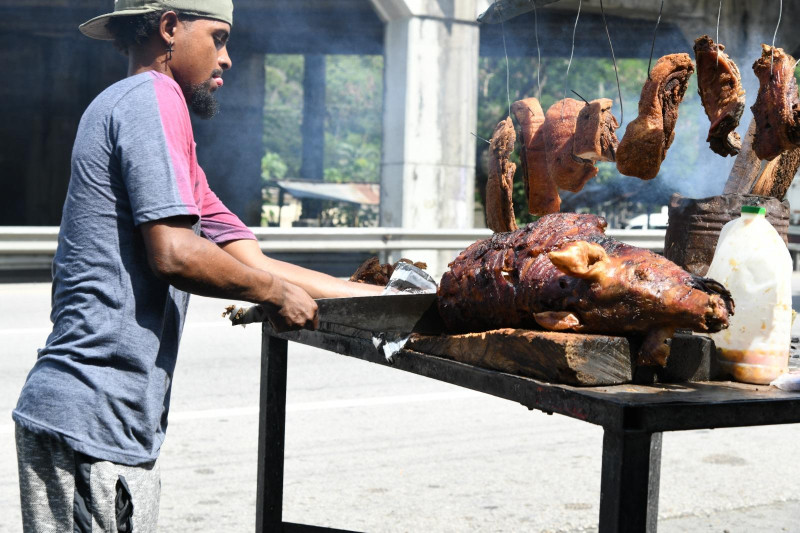
Alejandro has been selling chicarrón since he was nine years old. Raúl Asencio
Santo Domingo — The Juan Pablo Duarte Highway connects the city of Santo Domingo with the province of San Fernando de Monte Cristi, passing through six provinces along the way and almost unwittingly telling stories along the journey.
Regardless of which of these areas is the destination, it is inevitable to notice the different vendors who position themselves along the route to display their merchandise and attract as many buyers as possible with their typical regional products.
Such is the case of Alejandro, a 27-year-old man who sells chicharrón, a food made from pork fat, at a well-known lechonera stand on the highway.
Alejandro said that he has been involved in the business since he was young and now has more than 15 years of experience.
“I was nine years old when I started. I began by helping to pass plates, then I learned the ropes and started cutting up pigs,” he explained, adding that the business is usually in high demand and there is rarely a break in the work.
For Ariel, selling blue crabs, also known as jaibas, was a skill taught to him by his father, who introduced him to the business when he was young. As a street vendor, he sets up near the Maiboa River hill to make it easier to obtain the crustaceans, as do other vendors.
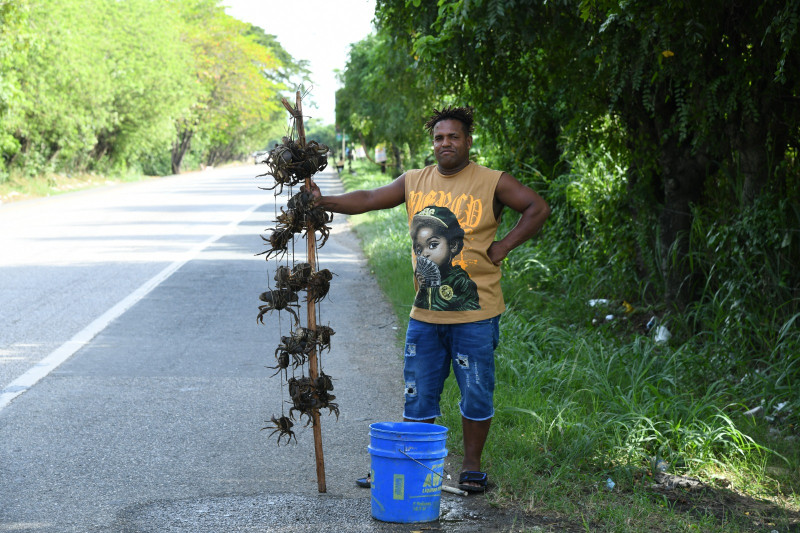
Ariel has been selling jaibas for more than 21 years. Raúl Asencio
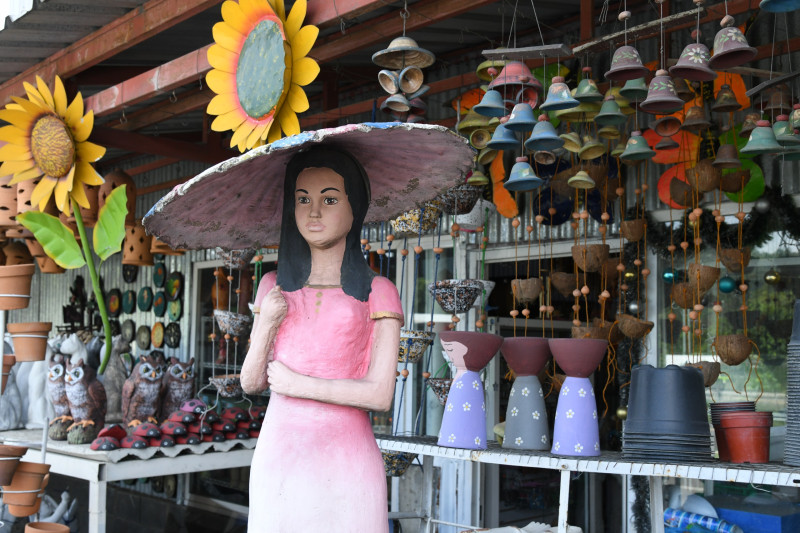
Handicrafts for sale on the main highway in the Dominican Republic, Raul Asencio
With his charismatic and cheerful personality, he manages to attract as many customers as possible from early morning until late afternoon.
“That’s how I make my living,” he said, recalling why he has been in the business since he was a child.
Crafts
From an early age, Criselyn Cabreja was sure that her passion in life was crafts, and she enjoyed spending hours painting and creating with her hands at school and at home.
“I’ve always liked crafts, and I used to do little crafts at home or at school. Once, a girl at my house started painting plaster, and I went to help her and stood out,” she said.
As she delved deeper into this world, she perfected her skills until a neighbor suggested she start her own business and earn money from her art.
The idea was so successful that her brother decided to join her and form the business “Hermanos Cabreja,” which today maintains a loyal customer base thanks to her dazzling handicrafts.
Rufino Hidalgo told a similar story. He has been working in the wood craft business for more than 20 years since he was young. Although he does not work directly in the execution, he explained that the pieces, mostly kitchen utensils, are handmade by the owner.
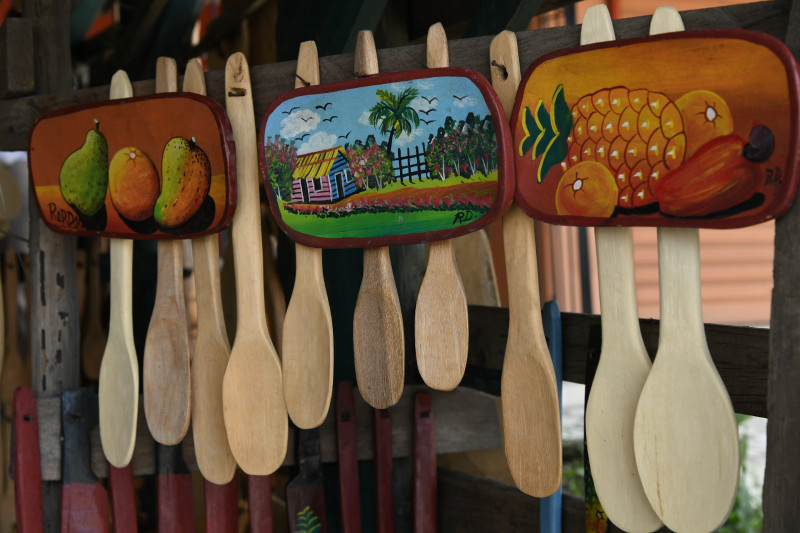
Rufino helps Don Yeyito sell wooden kitchen utensils. Raúl Asencio
He said that the wooden sticks are sought out by Don Yeyito, the owner, to be sanded by the assistants and shaped into the desired instrument. Mortars, spatulas, trays, and decorated platters are some of the orders they receive to be made by hand.
In addition to wood crafts, Rufino showcased the cockfighting cages that they also make by hand, stating that it is a very prosperous business due to the high demand for cockfighting in the country.