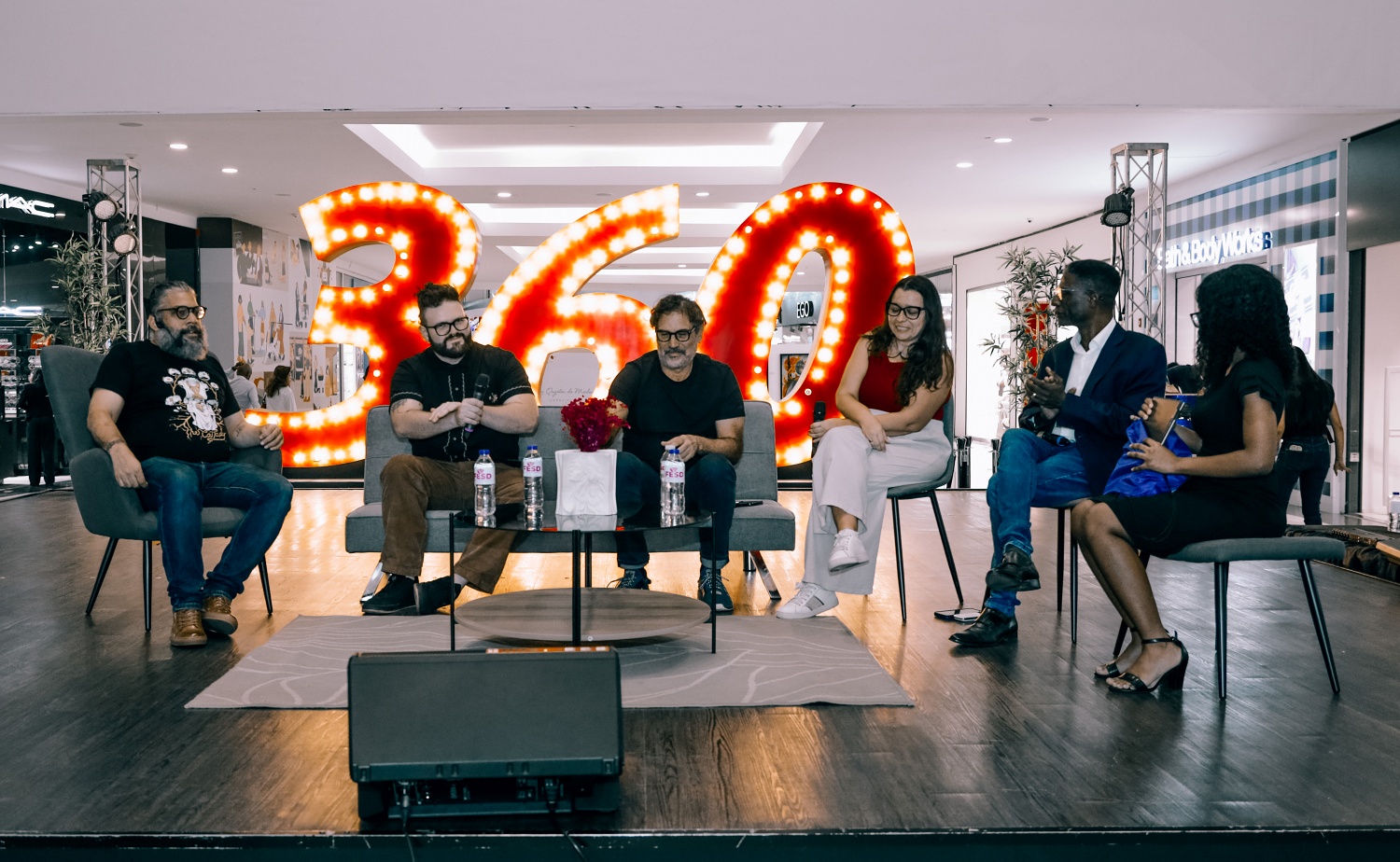
Santo Domingo.- New book distribution agreements, debates on regional collaboration and conversations on migration, identity and publishing marked the close of the fourth Dominican Writing Festival on Sunday, as the event continued to expand its footprint as a meeting ground for Caribbean literature.
Held April 25 and 26 at Galería 360, the festival brought together more than 50 writers, publishers, academics, booksellers and literary agents from the Dominican Republic, Haiti, Cuba, Puerto Rico and Venezuela for two days of panels, readings, performances and professional exchanges focused on both the cultural and business sides of the book world.
At the center of this year’s edition was a question that surfaced repeatedly across the program: how to build stronger connections among Caribbean literary markets long separated by geography, language and limited distribution networks.
Opening the festival, Rafael José Rodríguez Pérez, president of Río de Oro Editores and co-founder of CuentaRD, called for greater collaboration among publishers and wider circulation for Caribbean books, while festival founder Roxanna Marte described the gathering as part of a broader effort to strengthen a regional literary ecosystem. That emphasis moved beyond rhetoric.
Organizers highlighted distribution agreements in Puerto Rico through Editorial Pulpo and business rounds that connected independent publishers, distributors and authors — a practical dimension that has become increasingly central to the festival.
Among participants were Puerto Rican publisher Carlos A. Colón, Haitian writer Jacques Alix Louis, Dominican authors Miguel Yarull and Manuel Chapuseaux, along with Ingrid Luciano, Clara Morel, Jhak Valcourt, Bismar Galán, Celestino Esquerré and Siddharta Mata. Scholars Keturah Nichols, Rosa Calosso, Meaghan Coogan, María Carla Picón and Ibeth Guzmán joined discussions that linked literary production with broader questions of history and culture.
Beyond the book fair model
If earlier editions leaned toward the traditional literary festival format, this year’s event pushed further into becoming a platform for debate and industry-building.
Panels explored migration, Afro-diasporic identity, colonialism and digital humanities, while the dialogue Haiti in Words: Identity, Resistance and Hope in Literature placed particular focus on cultural exchange between Haiti and the Dominican Republic.
Venezuela’s inclusion as a participating country broadened the festival’s reach, with conversations on diaspora writing and displacement, including Reading a New Country, featuring Siddharta Mata and Aída Magallanes.
Another standout session, From Paper to Screen, examined growing opportunities to adapt Caribbean literature for film and theater, pointing to interest in the region’s stories beyond publishing.
A roundtable on alliances among publishers, distributors and bookstores — featuring Mary Claudia Pérez, Víctor Vidal, Francis Santos and Luis Reynaldo Pérez, among others — returned to a recurring concern: how independent publishers in the Caribbean can build stronger markets through cooperation.
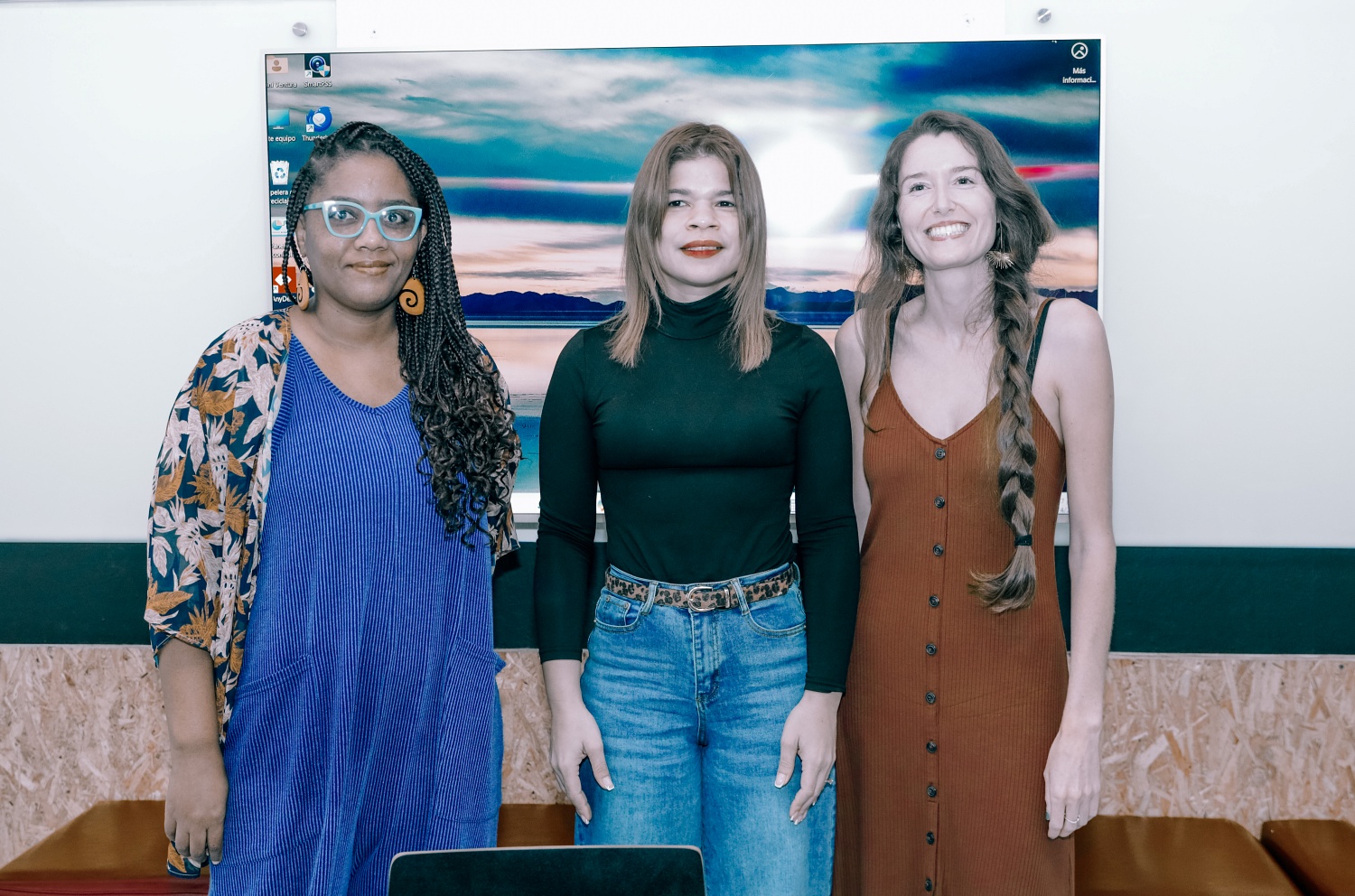
Alicia Méndez Medina, Ibeth Guzmán and Meaghan Coogan at the fourth Dominican Writing Festival, where Guzmán was honored for her contributions to the literary and cultural field. (Photo: FESD 2026)
The festival also included children’s literature programming, poetry readings, theater and music, underscoring its wider cultural reach.
During the closing ceremony, organizers honored María Carla Picón, Ibeth Guzmán and Claudio Pérez for contributions to the literary and editorial field, while paying tribute to Caribbean literary figures including Julia de Burgos, Aída Cartagena Portalatín and Teresa de la Parra.
Now in its fourth edition, the Dominican Writing Festival is increasingly positioning itself as more than a showcase for authors. This year’s gathering suggested an event trying to shape the future of Caribbean publishing as much as celebrate its literature.


 Smaller
 Bigger