 Smaller
 Bigger
Literature, memory, and the postcolonial divide between Haiti and the Dominican Republic
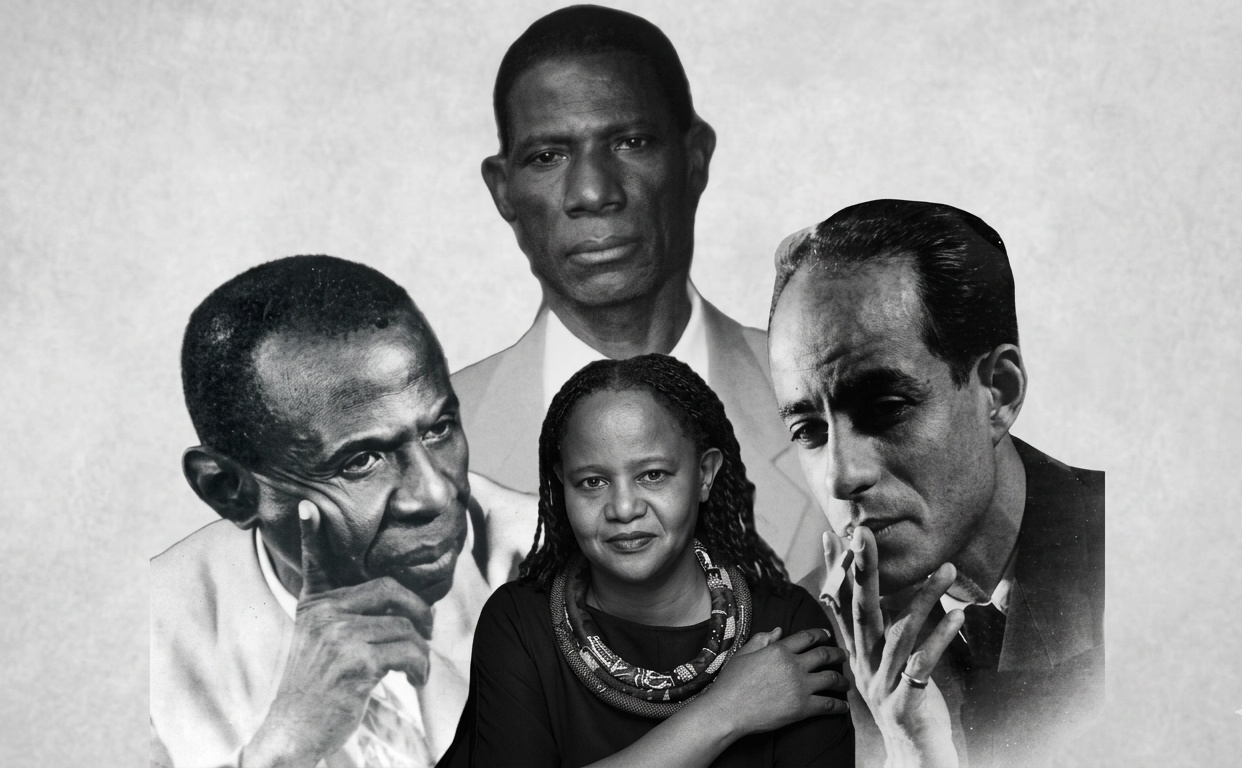
The relationship between Haiti and the Dominican Republic has long been reflected, interpreted, and sometimes contested through literature. Haitian writers, in particular, have engaged with the Dominican Republic not merely as a neighboring country, but as a historical, cultural, and political mirror—one that reveals both shared origins and deep fractures. Their writings must be understood within the broader context of colonial legacies, national identity formation, border conflicts, and episodes of violence that have shaped the consciousness of both nations.
One of the most prominent Haitian intellectuals to write about the Dominican Republic is Jean Price-Mars. Writing primarily in the early to mid-20th century—especially during and after the U.S. occupations of both Haiti (1915–1934) and the Dominican Republic (1916–1924)—Price-Mars approached the island as a shared cultural space historically known as Quisqueya. His work emphasized the African heritage common to both peoples and critiqued the Dominican elite’s tendency to deny or minimize this heritage in favor of a Hispanic identity.
He wrote essays, diplomatic reflections, and ethnographic studies, often from Haiti but also during his diplomatic missions abroad. His approach was analytical and corrective: he sought to dismantle what he perceived as a historical and cultural alienation within Dominican identity. His motivation was rooted in a broader intellectual project: the rehabilitation of African heritage and the critique of what he termed “collective bovarism,” the tendency to reject one’s own cultural reality.
Another key figure is Jacques Roumain, who, although best known for his novel Gouverneurs de la rosée, also reflected indirectly on Ayiti/Hispaniola’s shared condition. Writing in the 1930s and 1940s, Roumain’s Marxist and humanist perspective led him to interpret tensions between Haiti and the Dominican Republic as rooted in class struggle and economic exploitation rather than purely ethnic or national antagonism. While he did not focus exclusively on the Dominican Republic, his broader Caribbean and anti-imperialist lens implicitly included Dominican realities. He wrote primarily in Haiti and in exile, and his method was both literary and ideological, using narrative and symbolism to expose structural inequalities.
Perhaps the most direct and emotionally charged Haitian engagement with the Dominican Republic emerges in response to the Parsley Massacre, ordered by Rafael Trujillo. This event, in which thousands of Haitians were killed along the border, profoundly marked Haitian literary consciousness. Writers such as René Depestre and, later, Edwidge Danticat revisited this trauma.
Danticat’s novel The Farming of Bones (1998), though written in English and from the diaspora, is one of the most powerful literary reconstructions of the massacre. Writing from the United States, she drew on oral histories and collective memory, adopting a deeply human, narrative-driven approach. Her purpose was not only to document, but to humanize—to give voice to victims whose stories had long been marginalized.
Historical roots and narrative frames
The “why” behind these writings is crucial. Haitian authors did not write about the Dominican Republic in a vacuum. Their works were shaped by historical tensions, including the Haitian occupation of Santo Domingo (1822–1844)—itself rooted in the invitation extended by Núñez de Cáceres to Jean-Pierre Boyer to unify the island. They also engage with Dominican independence, border disputes, racial ideologies, and the persistent influence of foreign powers.
Writing about the Dominican Republic became, for many Haitian intellectuals, a way to interrogate identity—both their own and that of their neighbor. It also served as a means of responding to violence, correcting historical narratives, and asserting dignity in the face of exclusion or hostility.
The “how” varies significantly. Some, like Price-Mars, adopted a scholarly and diplomatic tone, seeking dialogue and correction. Others, like Danticat, used literature as a space of memory and mourning. Still others employed ideological frameworks, such as Marxism and Pan-Africanism, to interpret the relationship. Yet, despite these differences, a common thread runs through much of this writing: a tendency to approach the Dominican Republic through the lens of conflict, trauma, or critique.
While this approach is historically grounded, it also has limitations. By focusing predominantly on moments of rupture—occupation, massacre, discrimination—literature risks reinforcing a narrative of permanent division. It may unintentionally solidify the very boundaries it seeks to question.
Beyond division: toward a shared literary horizon
A different approach is therefore necessary, one that does not erase history, but reframes it within a broader horizon of shared humanity and mutual construction. Haitian and Dominican writers could engage more deeply with themes of interdependence, cultural hybridity, and shared resistance. The island of Hispaniola is not only a site of conflict; it is also a space of exchange—linguistic, musical, religious, and economic. Vodou and Dominican spiritual traditions, for instance, share African roots, and border communities often sustain daily forms of cooperation despite national narratives of division.
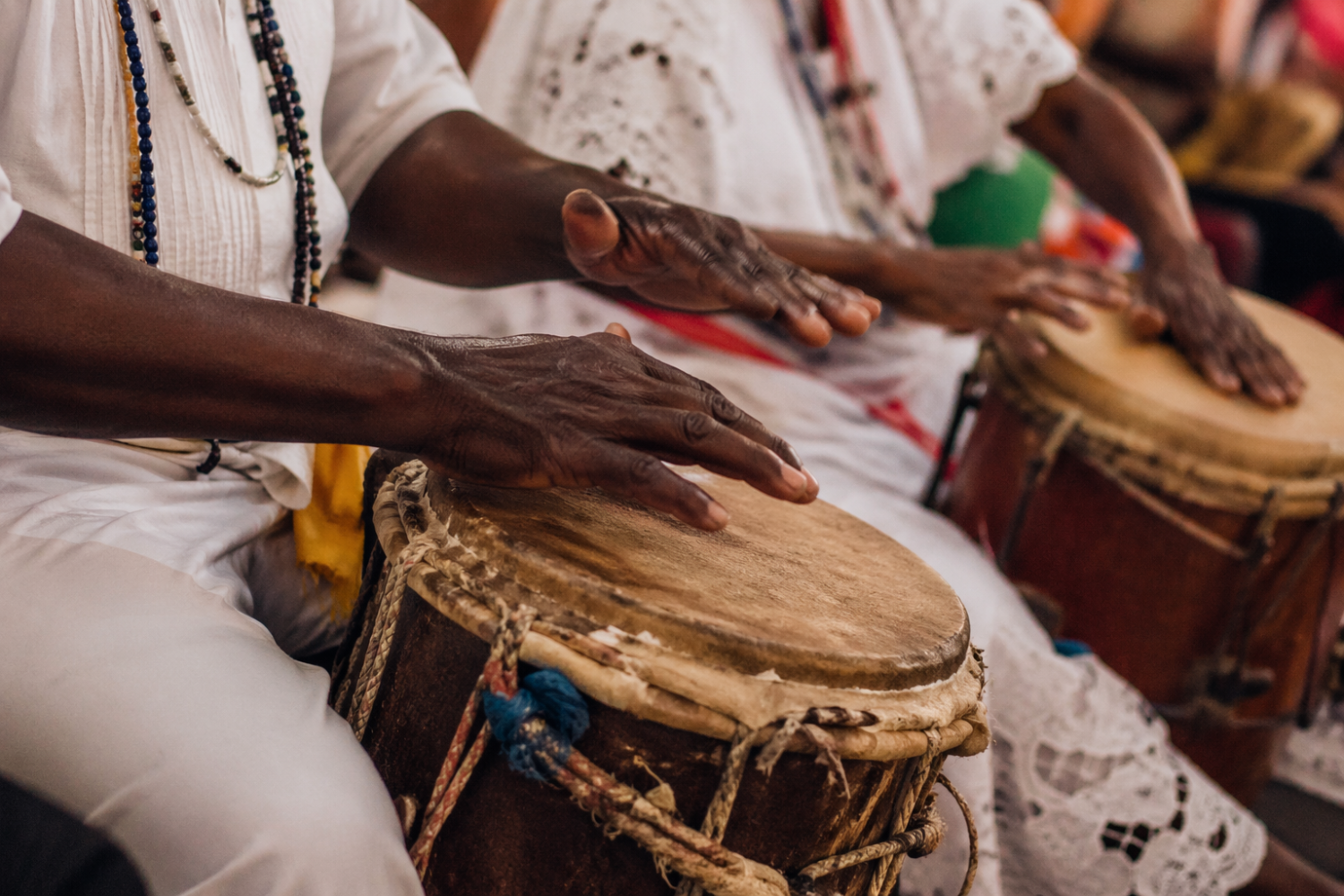
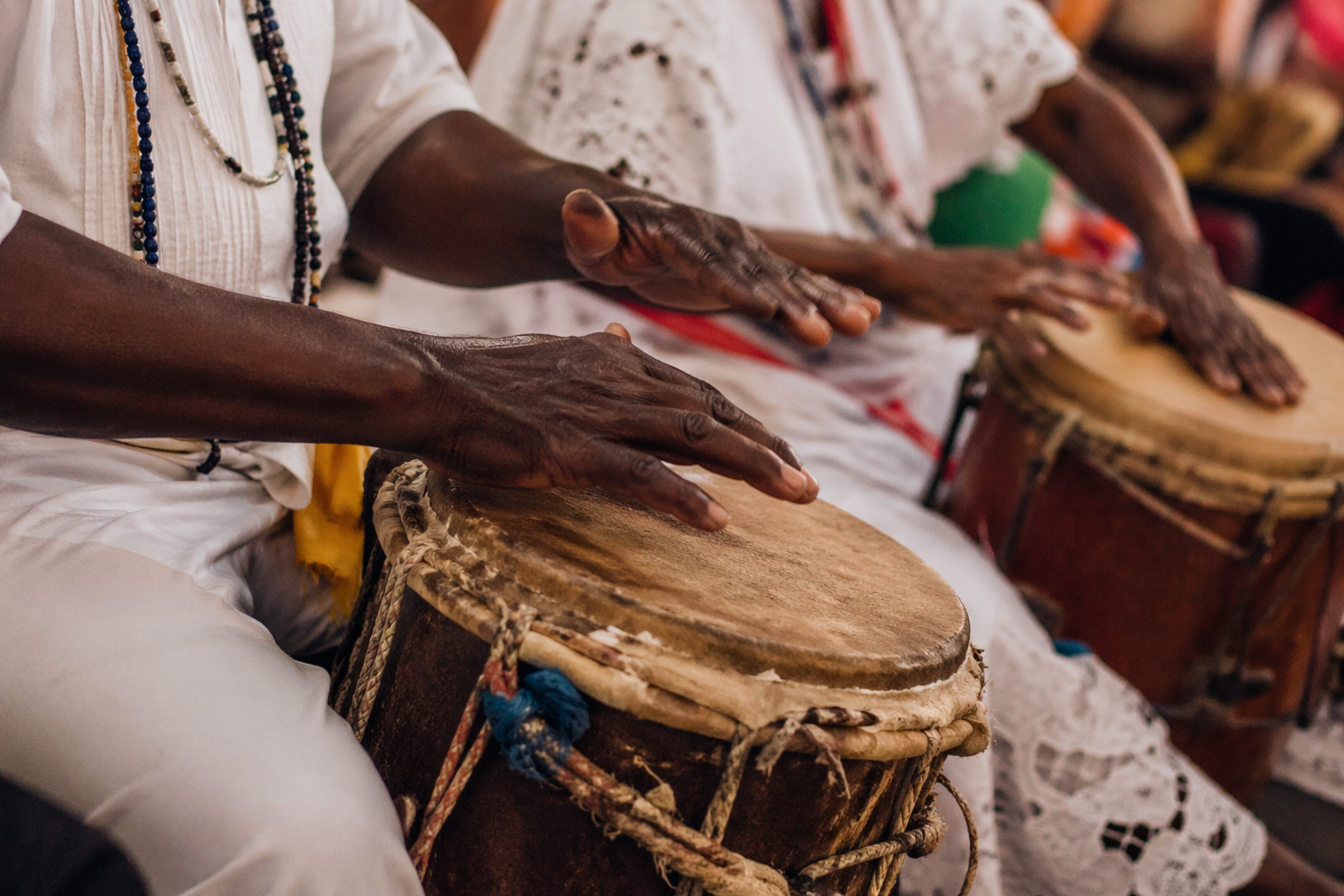
Hands play traditional drums during a Caribbean ritual, where shared African-rooted spiritual and musical traditions continue to connect communities across Haiti and the Dominican Republic, beyond the divisions of history. (Photo created with AI, for illustrative purposes / Dominican Today)
A renewed literary approach might emphasize co-authored histories, collaborative anthologies, and bilingual or trilingual publications (Creole, French, Spanish) that reflect the island’s linguistic reality. Writers could explore stories of solidarity—Dominicans who protected Haitians during the 1937 massacre, or contemporary initiatives where both communities work together. Literature could become not only a space of remembrance, but also a laboratory for reconciliation.
Moreover, moving beyond a purely national framework toward a Pan-Caribbean or Pan-African perspective could help situate both Haiti and the Dominican Republic within a larger shared struggle against colonial legacies and global inequality. This shift would allow writers to see each other not as opposites, but as parallel expressions of a common historical condition.
Seen as a whole, Haitian writers who have engaged with the Dominican Republic have done so with depth, urgency, and historical awareness. They have written in response to real events, from intellectual debates to violent ruptures, using diverse methods ranging from ethnography to fiction. Their works are indispensable for understanding the island’s complexities. Yet the next step may lie in transforming literature from a space of division into one of convergence—where memory is preserved. Still, new narratives of unity and shared destiny can emerge.
It is for this reason that a renewed approach to writings concerning the two nations is needed, grounded in a rigorous pedagogy of colonization, decolonization, and postcolonization. The latter, in particular, constitutes, at a profound level, one of the principal sources of persistent misunderstandings and antagonisms. Postcolonization cannot be reduced to a mere historical period; it designates a mental and structural condition in which hierarchies inherited from the colonial system continue to shape representations, identities, and social relations.
Within this framework, certain identity constructions rely on partial or idealized narratives—most notably the notion of an exclusive lineage rooted in Spanish and Arawak heritage. Historical evidence indicates that by 1502, Arawak populations had been nearly decimated, while the large-scale importation of Africans had already begun, intensifying significantly by 1510. The French colonial order would be established more than a century later. These realities call for a critical reexamination of the foundations upon which national identities on the island have been constructed.
The true challenge, therefore, lies in transcending this postcolonial condition. The symbolic violences inherited from the colonial order—often invisible mechanisms that devalue certain cultures while privileging others—have generated deep forms of alienation, at times leading to the distancing from, or even rejection of, one’s own cultural roots.
A renewed body of literature, conscious of these dynamics, could work to deconstruct such inherited frameworks—not to reopen the wounds of the past, but to restore a shared historical consciousness. By illuminating these processes, it would make possible a transition from suspicion to mutual understanding, and from division to a lucid recognition of a common heritage—an essential condition for any meaningful and lasting rapprochement between the two peoples.
_________________
By Jacques-Alix Louis
A Haitian educator, translator, consultant, and independent researcher based in the Dominican Republic. He is best known for his academic and literary work on Haitian history and pedagogy.