
 Smaller
 Bigger
Cuba today: Fidel Castro’s unfulfilled legacy
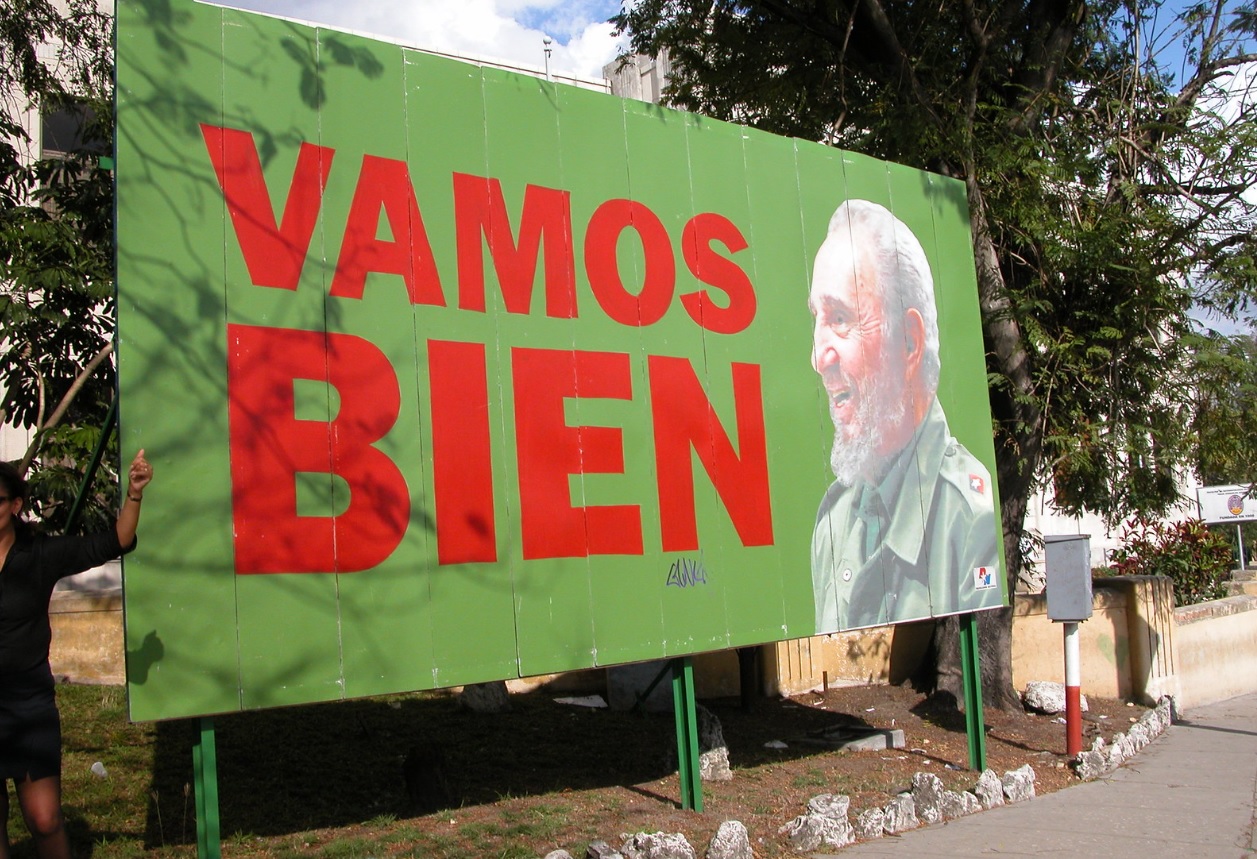
A billboard featuring a quote by Fidel Castro. (Photo: Mike Nyby from his Flickr account)
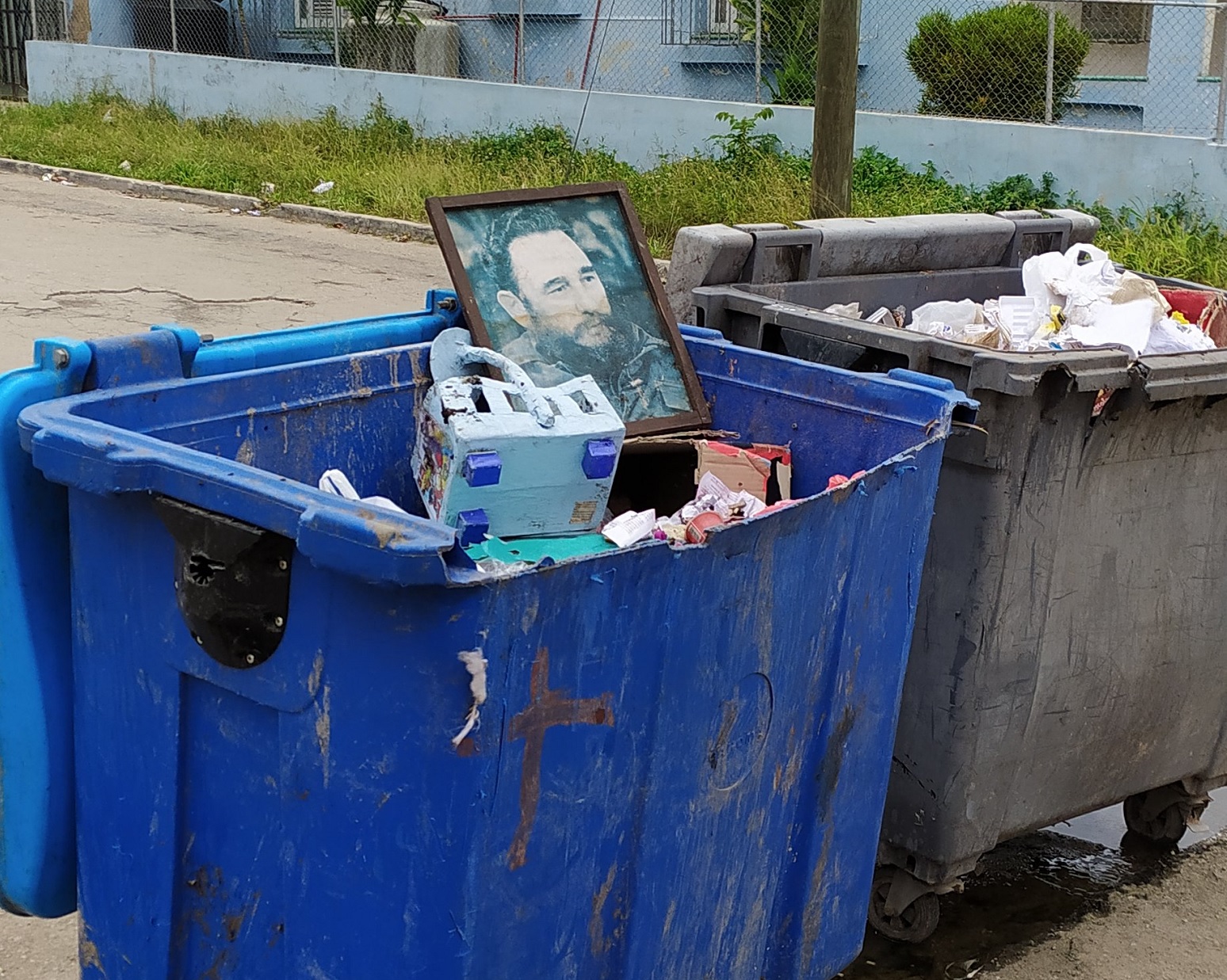
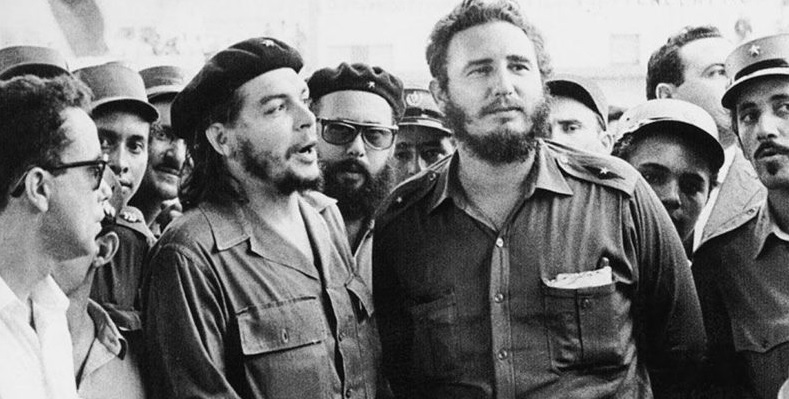
On the 99th anniversary of Fidel Castro’s birth, the commemoration reads less like a tribute and more like a reckoning. What once anchored a mythology of resilience and sacrifice now exposes a bitter paradox: a revolution that promised dignity has produced a brittle state, an extractive economy and an aristocracy of insiders whose luxury floats above a country marked by hunger, blackouts and mass departures.
That paradox no longer belongs to exile chat rooms and academic footnotes. A new wave of YouTubers and social-media witnesses has pulled back the curtain on the regime’s backstage, making what was once whispered into something undeniable, corroborated by official acknowledgments, independent researchers and the voices of dissidents and ordinary Cubans who have chosen to speak.
The contrast between revolutionary rhetoric and lived reality has never been sharper. Rather than inspire pride, this anniversary underlines how, after 66 years of single-party rule, the governing project has failed its people, and the story of that failure is now impossible to ignore.
The US$18 billion paradox: GAESA’s empire and a hungry nation
Cuba’s commanding heights are not run through transparent ministries but through GAESA (Grupo de Administración Empresarial S.A.), the opaque military conglomerate that controls tourism, retail, logistics, real estate, and finance. Investigative accounts and independent estimates have placed GAESA’s assets in the billions; one frequently cited figure approaches US$18 billion, an astonishing sum in a country where bread lines lengthen and malnutrition indicators worsen.
Amid this misery, revelations about the regime’s financial opacity are infuriating many, particularly in the diaspora and exile communities, where censorship does not muzzle debate. A recent investigation, first reported by the Miami Herald and amplified by Cuban outlets abroad, confirmed the scale of this fortune and crystallized a central grievance: while families scramble for basics, a parallel economy accumulates hard currency behind closed doors.
GAESA’s portfolio has grown even as food imports decline and agricultural production collapses. Hotels rise, not harvests. The pattern is stark: investments that capture hard currency take precedence over measures that would secure basic subsistence for ordinary households.
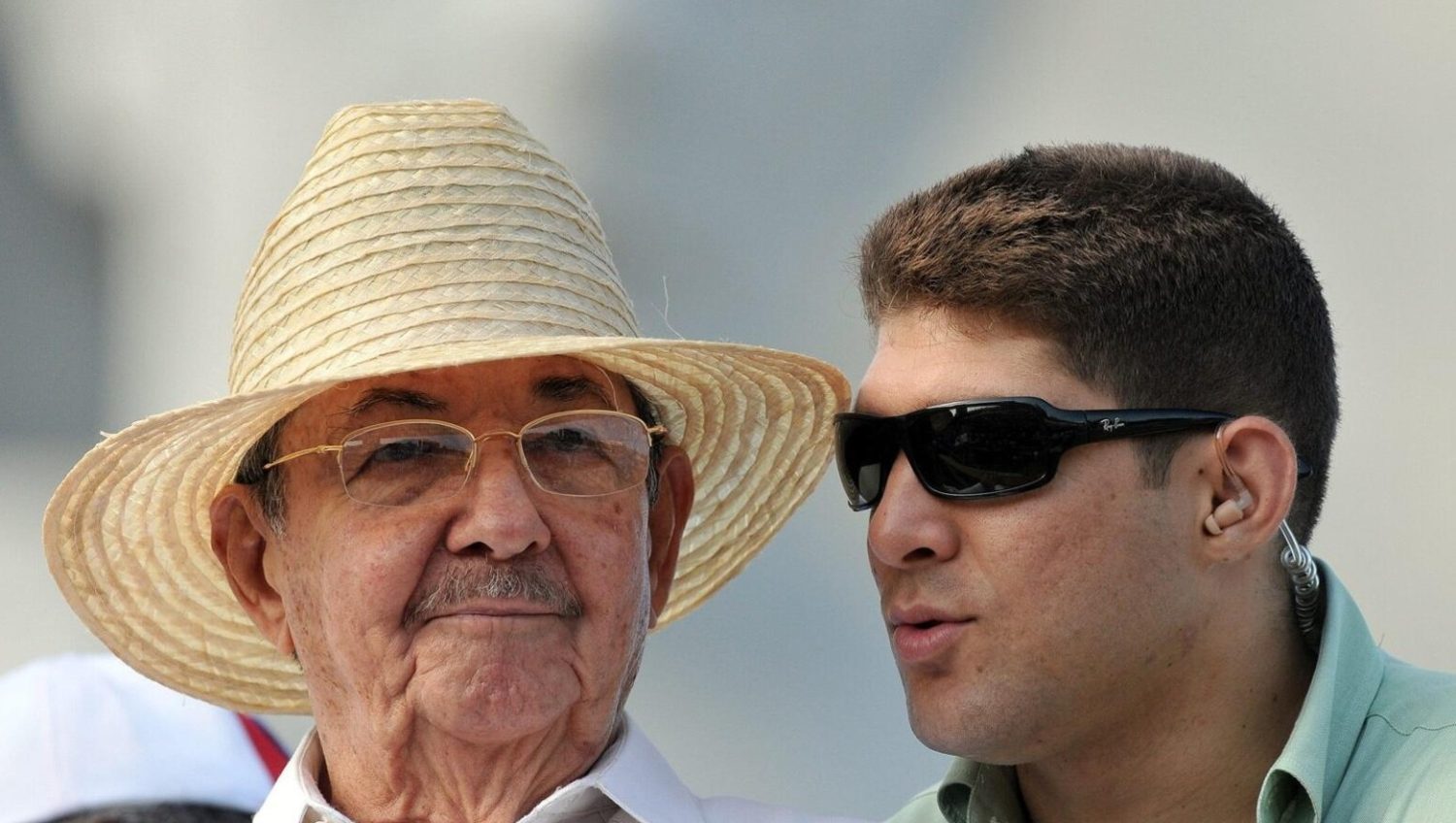
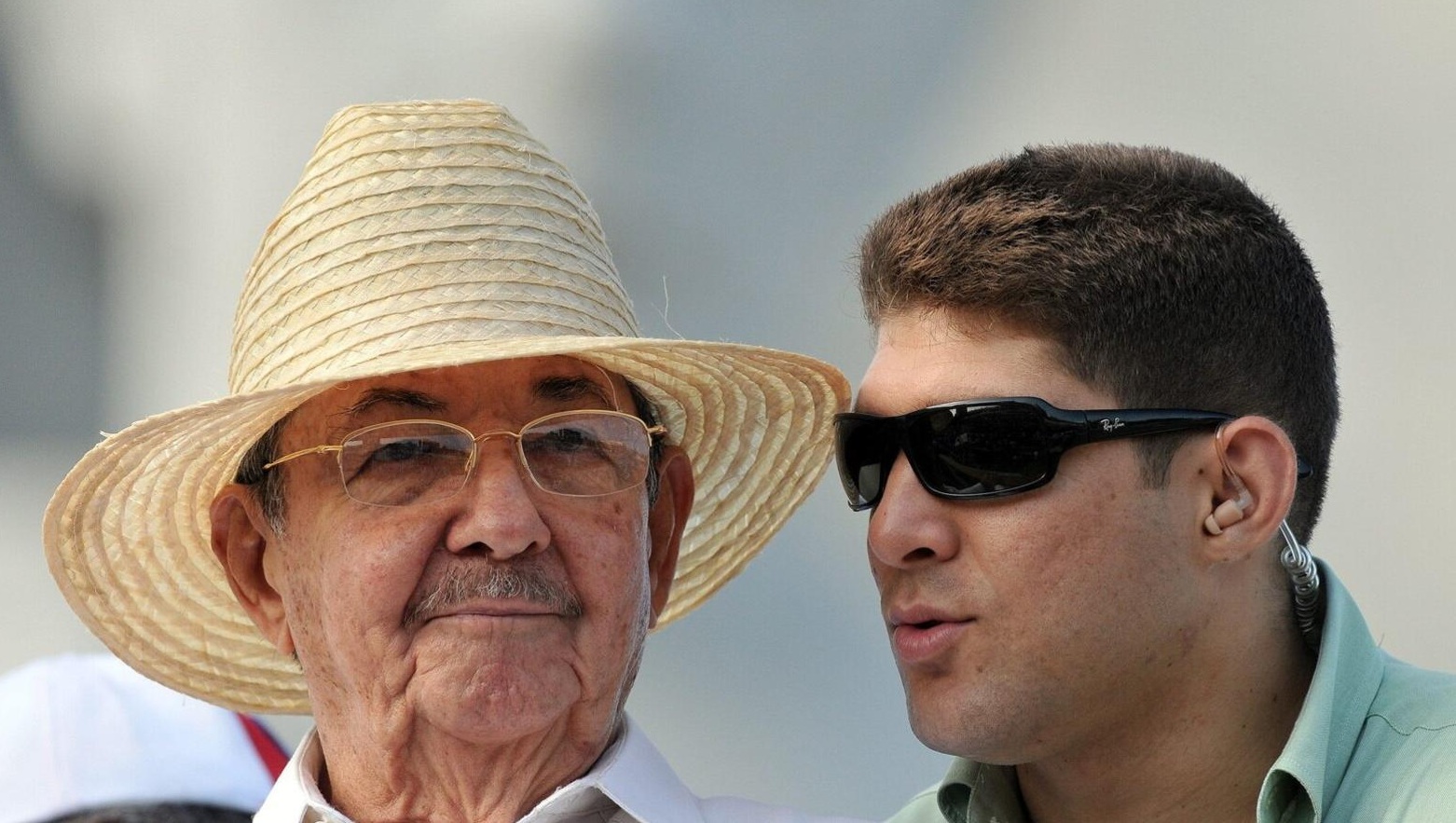
Raúl Castro and his grandson, Raúl Guillermo Rodríguez. (Photo: External source)
This contradiction is not abstract — it plays out in more than a million people lacking reliable access to potable water due to drought and chronic equipment failures, and in blackouts lasting up to 20 hours in some eastern provinces. Oversight remains nonexistent, and at the operational level, figures like Raúl Castro’s favorite grandson, Luis Alberto Rodríguez López-Calleja’s stepson, known as “El Cangrejo,” are said to wield considerable influence within GAESA’s orbit, underscoring the fusion of military command and family privilege.
A health system in free fall
Cuba’s health diplomacy once impressed the world. The domestic system now buckles under acute shortages: antibiotics, anesthesia, reagents, and even gloves and syringes run scarce. Doctors moonlight, emigrate, or accept overseas deployments; clinics ration services; patients barter for medicine in WhatsApp groups. Oncology and cardiac wards face dangerous delays as equipment sits idle for lack of parts, and wards go dark during blackouts. Families and medical staff tell independent outlets of infections spreading in deteriorated facilities.
The crisis is not solely the result of external pressure. As sociologist Mayra Espina (La Joven Cuba outlet) and others argue, poverty in Cuba has become multidimensional — nutritional deficits, precarious housing, and intermittent services compound health risks. Between 2022 and 2023 alone, the health workforce shrank by 32,586 professionals, according to the Oficina Nacional de Estadísticas e Información (ONEI). This includes 13,303 fewer doctors, 3,125 fewer dentists, and 6,258 fewer nurses than the previous year.
Salaries that fail to cover basic needs, the chronic shortage of supplies, deteriorating hospital conditions, and restrictive regulations on final-year residents and specialists have driven many from the profession. From 2021 to 2022, doctors were already the largest group exiting the system, with 12,065 leaving in that single year.
When scarcity becomes structural, “free” healthcare turns into a lottery won by those with time, connections, or dollars. The promise of universal care — once a cornerstone of the revolutionary project — is now one more myth eroded by decades of mismanagement and misplaced priorities.
Poverty on the ground
Independent analysis suggests nearly half the population lives in dire conditions. One sociologist recently estimated that 40–45 percent of Cubans qualify as poor. In Havana’s streets, begging and scavenging from dumpsters are routine. Many Cubans watch in frustration as diamond-studded shops and dollar-only markets open around them — only those with U.S. dollars, often sent by relatives abroad, can afford the imported goods.
A pensioner captured the reality bluntly: “Almost everything here is in dollars. Cuban money can’t even buy food… I don’t have a single dollar.” The widening gap has even been acknowledged by the regime: President Miguel Díaz-Canel admitted the new dollar stores favor those with external capital or remittances, a recognition that underscores inequality rather than mends it.
These dollar enclaves, together with an economy that tolerates only narrow private activity, create a two-tier system in which access to basic goods depends less on work and more on family networks overseas. That dynamic explains why remittances — billions sent by the diaspora — function as both lifeline and leverage. They keep households afloat, yet they also subsidize a state that fails to provide reliable water, power or food.
The gilded heirs: yachts, supercars and a ruling class apart
The revolution preached austerity. Its heirs live otherwise. The Wall Street Journal, El País and other outlets, together with social-media leaks, have documented how Castro family members and insiders enjoy lives of conspicuous consumption.
Fidel’s grandson Sandro Castro has become emblematic: profiles describe him smoking Cuban cigars, driving a Mercedes, renting a trendy Vedado nightclub and toasting with whiskey while revelers post videos of his antics. He has been filmed bathing in bottles of Cristal beer and boasting of celebrating in Miami — footage that sits uneasily beside images of Havana sweltering through power blackouts. Observers note that Sandro’s gas tank is “always full” despite national fuel shortages.
El País and other reporters point to similar examples: Antonio Castro seen yacht-sailing in Mykonos, Mariela Castro shopping Louis Vuitton, and Raúl Guillermo — nicknamed “El Cangrejo” and widely portrayed in the press as Raúl Castro’s favored grandson — has been photographed on luxury yachts and in elite circles abroad. His public displays of wealth, along with similar footage of other Castro descendants, reinforce the sense that a privileged inner circle enjoys privileges far removed from the daily hardships most Cubans endure.
These are not isolated displays of wealth. They perform an ideological message: loyalty to the party-military nexus grants access to privileges that no diploma or honest work can secure. Where the state once demanded sacrifice, the new elite indulges in spectacle. That gap between rhetoric and reality does more than scandalize; it instructs a generation on which behaviors lead to advancement.
The ideology that promised abundance… and delivered rationing
The official line blames the U.S. embargo for every shortage. That argument has traction, but it cannot explain why dollar-only “MLC” stores brim with imported brands while peso markets go bare. The deeper causes are policy choices: centralized controls that curb private initiative, price regulations that strangle production and a patronage economy that channels scarce hard currency into GAESA’s accounts instead of the productive sectors that sustain families.
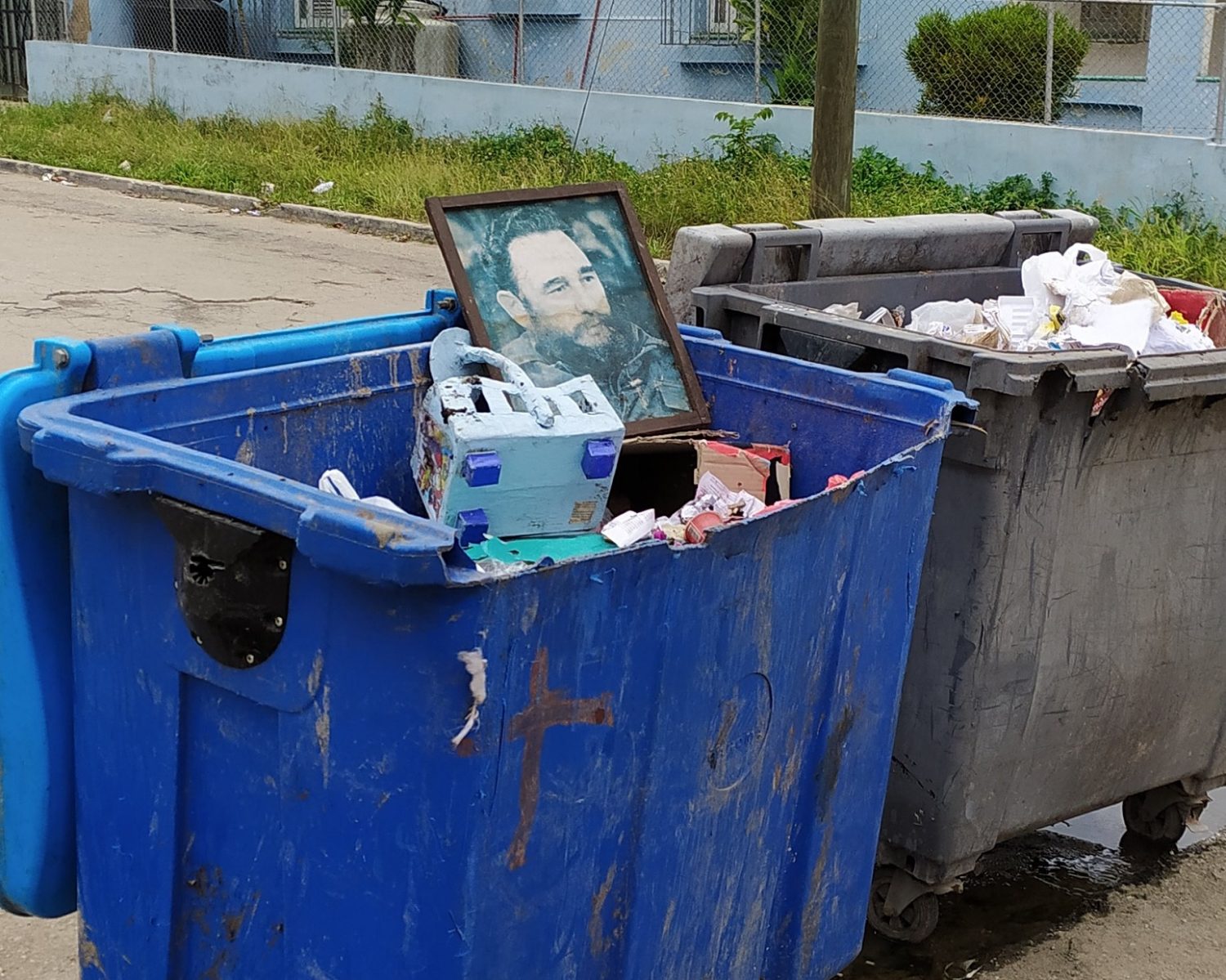
A framed photograph of Fidel Castro thrown in a trash container. (Photo: X account @LanzadeCuba)
Procurement collapses, logistics rot and ministries tasked with ordering the economy generate cascading disorder. As reporting has shown, even water and electricity — the most basic utilities — have become intermittent goods.
The state’s inability to secure refrigeration, clean water and reliable power undermines livelihoods and precipitates secondary crises: spoiled vaccines, school closures and small-business failures.
Repression, prisons and exodus
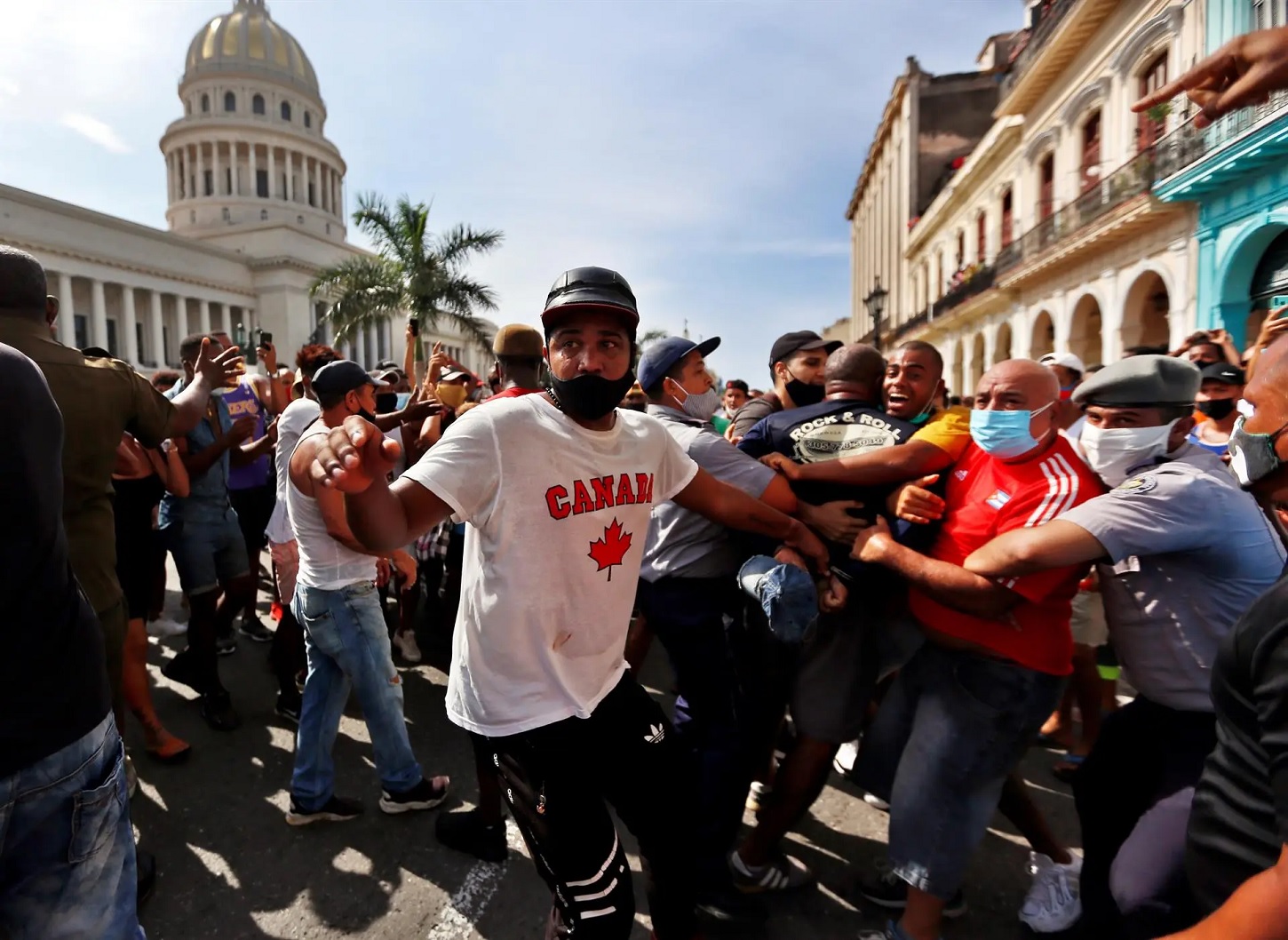
Ideas do not migrate; people do. Since 2021 the island has experienced an exodus that rivals earlier waves, draining Cuba of youth and skilled labor. Those who remain face a tightening vise: arrests, summary trials and preventive harassment persist. Human-rights monitors report that protesters from July 2021 and later dissenters remain under legal pressure.
Police officers arrest protesters in front of the Capitol in Havana during the July 11 anti-government demonstrations. (Photo: Verifica.efe.com)
Meanwhile, revelations that party cadres and loyal propagandists enjoy privileges abroad — sometimes in the very countries the regime denounces — add insult to injury and erode the moral capital once used to demand sacrifice.
A city of collapses and a country of blackouts
Walk Old Havana and the myth peels off the plaster. Buildings pockmarked by decades of deferred maintenance lean and fall; stairwells serve as kitchens; families sleep amid dust and cracks. Structural collapses have become routine, especially in the rainy season.
Blackouts provide the country’s metronome: outages surpassing 10 hours in the capital and 20 in parts of the east now cripple refrigeration, schooling and small enterprise. Darkness breeds other scourges. Independent reporting and community accounts point to the spread of a cheap synthetic stimulant known as “El Químico,” a social symptom of despair that fuels petty crime and corrodes social fabric.
The diaspora as lifeline… and leverage
Cuba depends on the diaspora. Remittances and shipments of goods — medicines, food, clothing — move billions annually through informal and formal channels. Church networks and civic organizations in Miami, Madrid and elsewhere operate parallel supply chains that sustain households when the state cannot.
This charity is also political: the diaspora’s money sustains families and, indirectly, the regime’s survival. Recognizing that reality means treating remittances as leverage for transparency, property rights and pragmatic reforms that permit private enterprise to provide stable incomes rather than sporadic parcels.
August 13, without illusions
Anniversaries tempt nostalgia. The most honest tribute to history is clarity about the present. The state now concedes it cannot keep lights on or taps running for vast swaths of its population. Scholars document layered poverty; ordinary Cubans with phones and signals show a ruling class living a separate reality.
(Photo: Humanidades.com)
The revolution has become a brand managed by a conglomerate, and the nation a ledger of losses — of power, of talent, of time. Cuba needs governance that shares the daily struggles of its people, not one that revels in lavish dinners on yachts. It needs a society that values genuine contribution over mere loyalty and a political system that fears empty shelves more than the noise of dissent.
If August 13 is to hold any meaning now, let it mark the day the pretense ends — that darkness equals patriotism — and the simple, human right to have the lights on is finally demanded. Only then will the island’s history mean more than myth and its future more than spectacle.
___________
By Paul Collins
Contributor




Heartbreaking.