
 Smaller
 Bigger
Ruling party dominance delivers 2026 budget despite opposition push for indexation
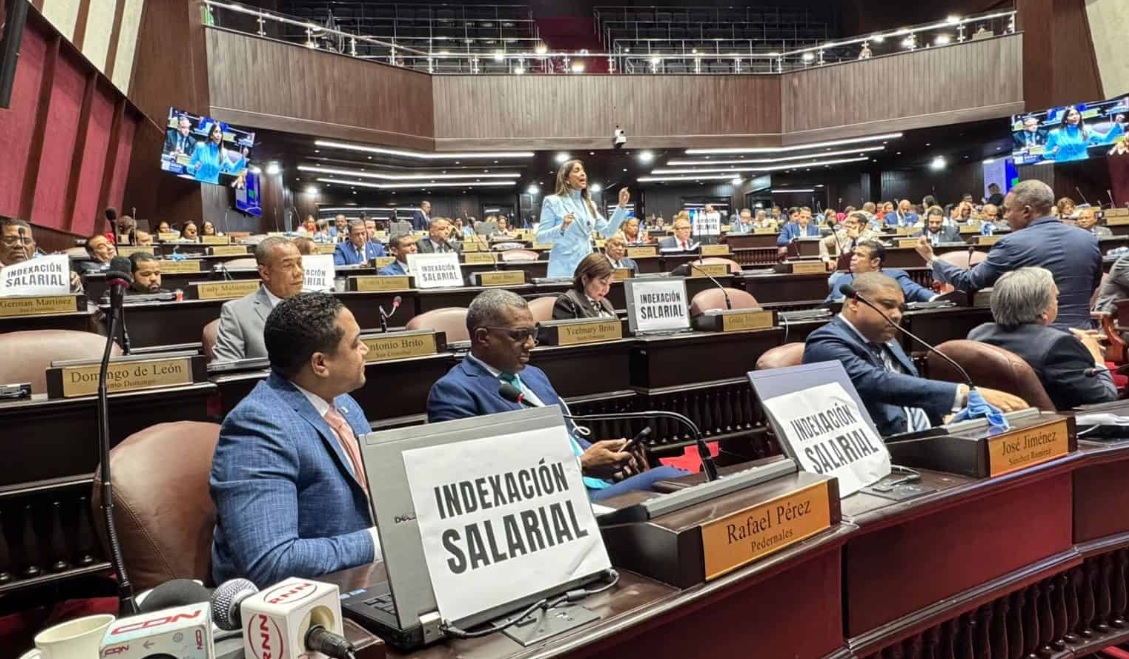
Santo Domingo.- The ruling Modern Revolutionary Party (PRM) used its overwhelming congressional majority to approve the Dominican Republic’s 2026 General State Budget on Thursday, securing passage without a single vote from the opposition. The spending plan, totaling RD$1.744 trillion, was adopted in two consecutive readings in the Chamber of Deputies, reflecting the governing party’s tight control of the legislative agenda.
A central point of contention was Article 45 of the budget bill, which once again postpones the enforcement of mandatory annual salary indexation established in the Tax Code. PRM deputies voted en bloc to maintain the suspension, effectively preventing the adjustment of taxable income brackets to inflation in 2026. The measure passed with 130 votes from government legislators, while opposition members were unanimously against it.
Efforts by Fuerza del Pueblo lawmakers Llaniris Espinal and Carlos de Pérez to modify the article and mandate indexation were rejected by 126 PRM deputies. A subsequent attempt to strike Article 45 entirely, introduced by Fuerza del Pueblo deputies Rafael Castillo, Seliné Méndez, and Miguel Espinal, along with Charlie Mariotti of the PLD, was also defeated by the same ruling-party majority. Opposition leaders argued that the decision undermines workers’ rights and contradicts the legal requirement for annual inflation-based adjustments.
Defending the budget, Francisco Javier Paulino, the PRM deputy who chaired the bicameral committee that reviewed the bill, said the revenue projections reflect “significant economic growth” and affirmed that the spending plan prioritizes continuity across government ministries. He described the RD$1.744 trillion allocation as evidence of the country’s economic resilience and a framework that supports ongoing public investment.
Opposition responses were sharp. Fuerza del Pueblo spokesman Rafael Castillo labeled the refusal to apply salary indexation an “abuse,” arguing that compliance with the statute is neither discretionary nor a political concession. PLD deputy Danilo Díaz criticized the budget for allocating excessive funds to debt interest payments and offering inadequate capital investment, while PRD national deputy Ramón Raposo condemned what he viewed as disproportionate funding directed to the Presidency at the expense of youth, culture, and women’s programs.
PRM deputy Soraya Suárez countered that the suspension of indexation is offset by substantial government subsidies for housing and fuel, which she said “help compensate the population” amid inflationary pressures.