 Smaller
 Bigger
Casa del Cordón screens “Galeones de Azogue,” exploring the origins of underwater archaeology in Dominican Republic
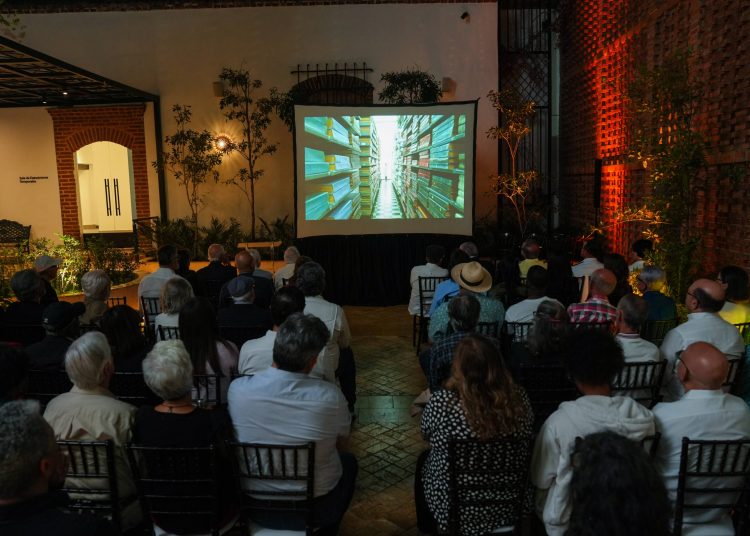
Photo: External Source
Santo Domingo.- The Taíno Cultural Center Casa del Cordón, an initiative of Banco Popular Dominicano, hosted the screening of the documentary Galeones de Azogue at its headquarters. The film explores the origins of underwater archaeology in the Dominican Republic through the study of the Azogue Fleet galleons, which sank off the coast of Miches in the 18th century.
The event was organized in collaboration with the Royal Shipyards Museum and featured the participation of its director, Íñigo Apestegui, along with screenwriters Carlos León and Cruz Apestegui. The panel shared insights into the documentary’s research process, historical sources, and key discoveries that shaped this landmark investigation.
Produced by Duho Cinema, Retama Studio, and Guasabara Cine, the documentary was led by general producers Fernando Santos and Gabriel Valencia. Editing was handled by Mikel D. Etxebarría, with sound design by Laura Gantes. The film features interviews with renowned specialists including Pedro Borrel, Frank Moya Pons, Bernardo Vega, Federico Schad, Jaime Vega, and Tracy Bowden.
The story behind the documentary
Galeones de Azogue recounts the discovery in 1976 of the remains of two galleons by fishermen from Miches in Samaná Bay. This finding triggered the first official underwater archaeological investigations in the Dominican Republic and led to the recovery of artifacts linked to a historical event that occurred more than three centuries ago.
The shipwreck dates back to August 24, 1724, when the galleons Nuestra Señora de Guadalupe and Tolosa, part of the Mercury Fleet, were sailing from the Iberian Peninsula to the Viceroyalty of New Spain, present-day Mexico. The vessels were carrying more than 360 tons of mercury from Spain’s Almadén mines, a key element in colonial silver extraction. Caught in a powerful storm, the Guadalupe was severely damaged, while the Tolosa sank completely off the Dominican coast.
More than 600 people lost their lives in the tragedy. Survivors endured harrowing conditions—some clinging to ship masts for weeks, others searching jungles and beaches for help—leaving behind a powerful story of resilience and survival.
Archaeological investigations resumed in 1994 through joint Dominican-Spanish efforts, marking a turning point in the country’s maritime heritage. The Quicksilver Galleons Project recovered more than 45,000 artifacts, including cannons, navigation instruments, coins, personal items, and an exceptional collection of European glassware. These findings not only deepened knowledge of colonial trade and 18th-century navigation but also laid the foundation for underwater archaeology in the Dominican Republic, helping the nation reclaim and preserve its submerged historical memory as part of its cultural identity.