
 Smaller
 Bigger
Social reality: Woman, mother and “NEET”: the female face of a worrying statistic
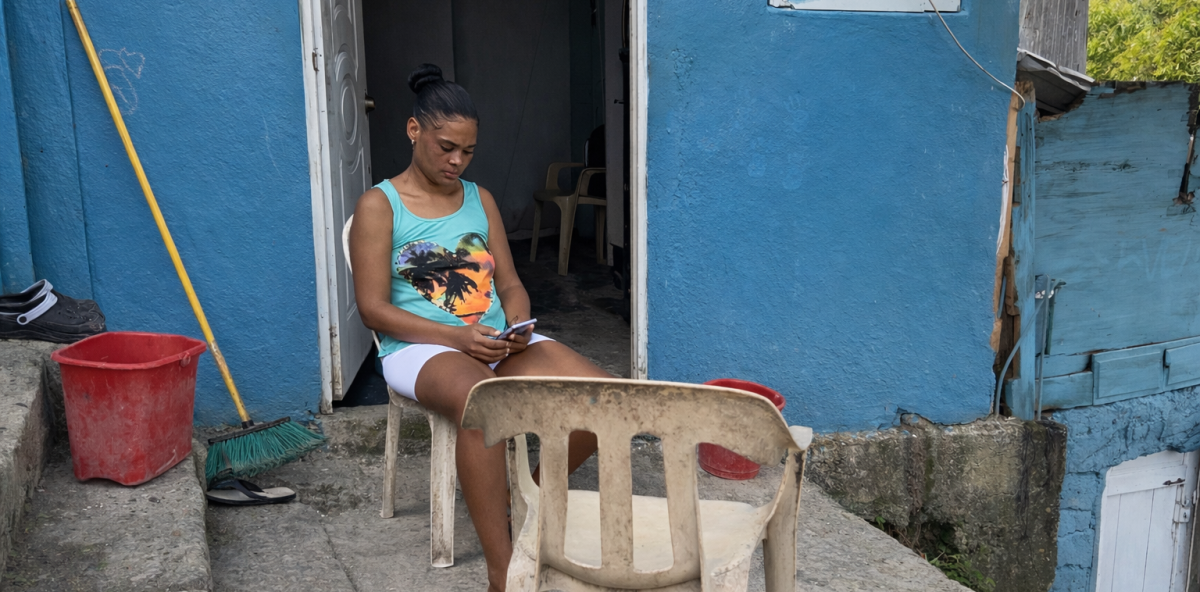
Brianda Araujo is one of the more than 628,180 young people between the ages of 18 and 35 who are neither working nor studying in the Dominican Republic.
Brianda Araujo Rodríguez is 35 years old, a mother of five young children, and lives every day with a silent battle: type two diabetes and other complications that, as she explains, prevent her from working.
“I am a type two diabetic, my blood sugar spikes all the time, and the diabetes itself has caused neuropathy in my bones,” says the young woman, whose last job was a year ago at a bank, and who now depends financially on the help of her siblings.
Brianda injects insulin daily and takes 850 milligrams of Metformin.
But illness is not the only burden she carries; when she was barely in eighth grade, at 15 years old, she married a man 14 years older than her, from then on, what she thought was love ended up being a story marked by mistreatment, lies and infidelities.
“He had his wife and children, the thing is, I was just a young girl, you know how love blinds people,” she says, looking downcast.
She also remembers the pain of losing her mother in childhood. “When you lose your mother,it’ss as if the world collapses,” she says, her voice breaking. Today, she affirms that her only wish is that her children don’t repeat her story.
Two of her five children have been out of the education sector for two years because she has not been able to secure places for the 6-year-old boy and the 10-year-old girl.
“I’ve gotten up and had to go back to bed, because I have nothing to give my children,” she confesses.
Sometimes she smiles, sometimes she shares, but behind that image of strength lies a reality many do not see.
Brianda is not an isolated case; her story reflects statistics.
Of the 628,181 young Dominicans aged 18 to 35 who neither work nor study, 454,779 are women, representing 72.4% of that population.
This is supported by the most recent data published by the National Statistics Office (ONE) in 2022.
However, considering that the country’s youth population exceeds 8,145,548, the so-called “nini” represent approximately 7.2%, a minority within the general population of young people.
From a sociological perspective
In conversation with sociologist Tahira Vargas, she argued that the higher percentage of women than men in the young population who neither work nor study raises more questions than answers.
“Behind this data, there may be several hypotheses related to the labor market of the Dominican Republic, where there is a greater male than female presence, because access to employment is heavily mediated by strategies that are entirely masculine,” he said.
“Young people who don’t finish high school are already working in the informal sector” while they’re studying, whether it’s in electricity, hairdressing, motorcycle taxiing, security, or any other area. However, these jobs are very male-dominated, so women’s income options are reduced, leading them to take on domestic work, childcare, or eldercare if they don’t have the academic education to enter the formal labor market,” Vargas added.
Opportunity 14-24
In October 2020, President Luis Abinader created the “Opportunity 14-24” program, coordinated by the Social Policy Cabinet and directed by Alexander Mordan.
This program seeks to promote the socio-economic inclusion of young people aged 14 to 24 who are disconnected from the education system or the labor market and belong to households in a highly vulnerable situation.
Teenagers aged 14 to 17 who participate will have the opportunity to reintegrate into the education sector. At the same time, those aged 18 to 24 will be able to access the labor market after a period of preparation.