 Smaller
 Bigger
Forest fires, a constantly increasing problem in the Dominican Republic over the last six years
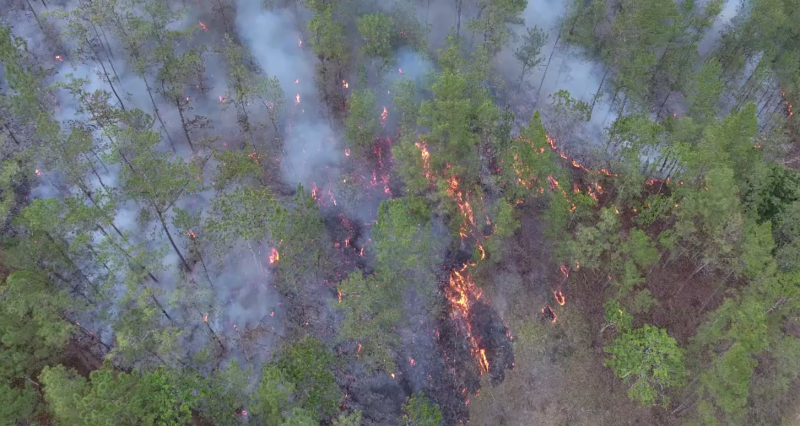
Between 2020 and 2025, 2,558 forest fires were recorded in the Dominican Republic. With 492 incidents in the last five years, the figures reveal that La Vega is the province where these fires, which devour dozens of acres and hectares, have occurred most frequently.
“Record-breaking wildfires are becoming the norm, and four of the five worst years for wildfires globally have occurred since 2020,” states a 2025 report published by the World Resources Institute. The Dominican Republic is no exception.
Between 2020 and 2025, 2,558 forest fires were recorded. This figure reflects a 57% increase compared to the 1,630 forest fires recorded between 2014 and 2019, according to information published by the Ministry of Environment and Natural Resources on the Government’s Open Data portal.
With 492 incidents in the last five years, the figures reveal that La Vega is the province where these fires, which devour dozens of acres and hectares of forest, have occurred most frequently. Still, itcannot be precisely delimited due to errors in the data, such as the attribution of municipalities to provinces to which they do not belong or the repetition of records.
However, within this province, the municipalities of Constanza and Jarabacoa are the geographic points most affected by accident frequency, appearing in the data practically every month of every year.
On the other hand, Dajabón, Santiago, and Santiago Rodríguez are the provinces that follow La Vega in terms of the number of fires in the last six years, with more than 200 fires each.
The municipality of Restauración (Dajabón), for example, has one of the highest incident densities in the entire border region. This municipality reports multiple incidents within very short periods of time, often accompanied by neighboring municipalities, such as Loma de Cabrera, which also show a persistent presence in the data.
The other block of high activity is represented by Santiago Rodríguez and Santiago, with the municipality of San José de las Matas in the latter province standing out for maintaining an uninterrupted flow of reports throughout the period, ending in December 2025.
While the municipalities of Monción and San Ignacio de Sabaneta in Santiago Rodríguez appear frequently, particularly during the first months of the year, reflecting a saturation of fires in those localities.
Major Fires
In terms of area affected, severity was more frequent in the south, with Pedernales the province that recorded the most devastating fire during the six years. A single fire consumed 191,120 tareas (approximately 1,300 acres) in that province in January 2022
That same month, Pedernales faced two other fires, one of 46,240 tareas and the other of 12,320 tareas, marking a difficult start to the year for the ecosystems of the south.
The province of San Juan ranks as the second most affected area, standing out for a series of catastrophic fires between 2023 and 2024.
Records show that a fire broke out on March 30, 2023, affecting 64,000 acres, followed just two days later by another fire that burned 56,000 acres. While the first fire was extinguished on April 9, the second was brought under control on April 8.
In addition, in April 2024, San Juan recorded another large-scale event with 32,000 tareas affected, adding to other significant reports of 18,600 tareas in January 2022.
The province of Azua is also among those with the largest area damaged due to specific incidents of extreme severity. The most notable finding in this area occurred on March 6, 2023, in the municipality of Padre Las Casas, where a single fire affected 77,360 tareas (approximately 1,000 acres).
These last two provinces have in common that these fires occurred in 2023, a year that stands out as the one with the highest number of incidents in the entire six-year period analyzed, with 873 forest fires.
First quarter
Only during March and April 2023, an unusual density of records is observed, which, in those spring months, amounts to 492 in 2023 alone, that is, more than half of the forest fires of the entire year.
Although August is one of the hottest months, data reveal that the critical fire season in the Dominican Republic is concentrated in the first four months of the year.
Between January and April, the number of daily fires can exceed 15 simultaneous events across different provinces, coinciding with the period of greatest drought and agricultural land preparation.
Consequences
As wildfires worsen, even in historically low-risk areas like the tropics, these disasters are driving global forest loss. But it’s not just biodiversity that’s affected; they’ve also destroyed homes and infrastructure and polluted surrounding ecosystems.
LEARN MORE
Data
The forest fire data available on the Government’s Open Data portal covers the period from January 5, 2014, to December 25, 2025
Each entry in the statistics details the date of origin, the province, the municipality, and the affected area, but not the reasons or origins of each fire.