

 Smaller
 Bigger
Haiti’s horizon: from total chaos to open war
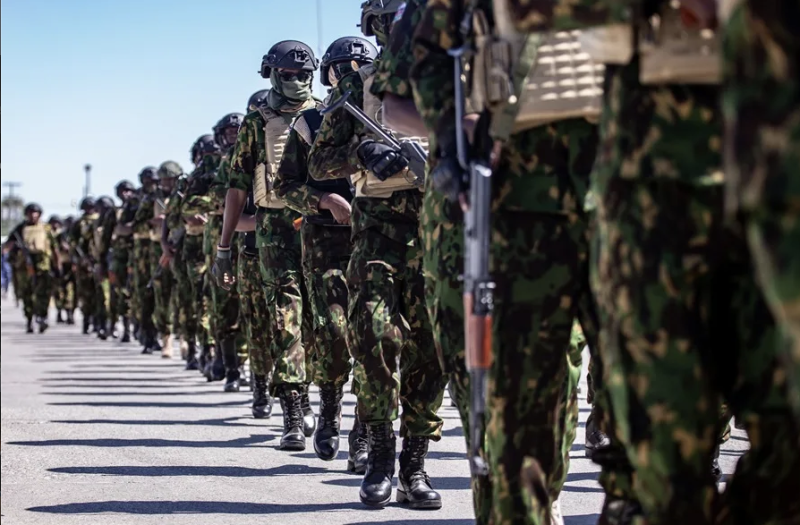
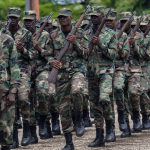
The Gang Suppression Force is mandated to suppress Haitian gangs and provide a far more robust and combat-capable response than previous efforts to confront the unprecedented power of armed groups in Haiti. AP
The irrefutable proof is that the military option there is no longer “on the table” but has been approved and implemented.
The UN Security Council’s authorization of the Gang Suppression Force (GSF) marks an irreversible turning point; there is no turning back.
It’s no longer about “keeping the peace” or “supporting the police,” but rather a strategy of repression and neutralization of armed groups that control up to 90% of Port-au-Prince.
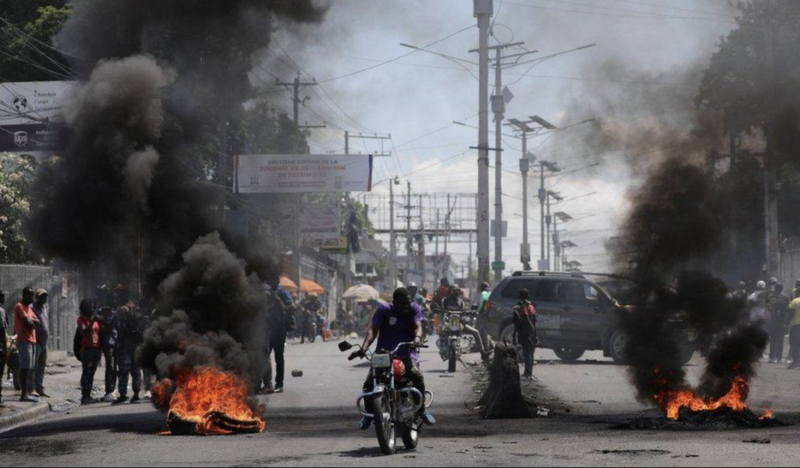
In Haiti, the conditions are ripe for a brutal confrontation with devastating results. AP
On the Haitian horizon, the only uncertain variable is not whether there will be war, but when the GSF will be ready to act and how prolonged and brutal it will be.
The solid outlook is for a low-intensity, but high-brutality fight, with an initial phase of logistical stalemate followed by a direct and inevitable confrontation between the multinational force and the gangs.
The creation of the GSF, with an explicit 12-month mandate (until October 2027) and 5,550 troops to “dismantle armed gangs” and protect critical infrastructure, eliminates any possibility of negotiation or coexistence.
Logic of confrontation
Please note that the GSF is a law enforcement force, not a peacekeeping mission. Its success depends on reducing gang territorial control, a goal that can only be achieved through the use of force.
Armed groups control territories, exploit resources (kidnappings, trafficking), and have demonstrated a capacity for resistance superior to the Multinational Security Support Mission (MSS), whose 12-month mandate ended last Thursday, October 2. They will not submit voluntarily.
The arrival of this force will be seen as a declaration of war and an existential threat to their “rule” of terror and death.
The GSF will have to operate in an environment of what is known as asymmetric urban warfare. In short, a fight in which any means and form are valid.
The gangs will use their knowledge of the terrain, coercion of civilians as human shields, and guerrilla tactics, ensuring a high risk of casualties and collateral damage.
Window for the bands.
The deployment of 5,550 troops, funding, country selection, and establishment of the UN Support Office will take time, possibly months. The GSF will await the preparation of logistics and coordination.
And it is in this last point that the key factor for armed groups lies.
The gangs won’t wait passively, so this delay opens a window of opportunity for them.
Therefore, it is likely that they will escalate violence, expand their territorial control, and carry out high-visibility attacks before the arrival of the force, seeking to maximize chaos and weaken the legitimacy of the intervention.
Impossibility of elections
Faced with this inevitable threat of direct confrontation, the possibility of holding elections on November 15 has become untenable, to the point of being tacitly abandoned by the Presidential Transitional Council (CPT).
And here’s the proof: The CPT no longer refers to “elections” but to “stability and defense.” A reasonable change, because it’s impossible to organize a free electoral process when armed groups control the territory and 1.3 million people are displaced.
The new force seeks to “facilitate the conditions for long-term peace and development” and “strengthen national institutions.” Security is the absolute prerequisite. Without it, there are no elections.
The mandate of the CPT and the GSF will likely need to be extended, as the goal of “neutralizing gangs” is too ambitious to achieve in just one year.
The focus will be on governance reform and institutional strengthening, such as the police. Security and governance will be the pillars of next year (2026), relegating elections to a more distant horizon, perhaps 2027 or later.
Haiti is entering a period of intense conflict, where the GSF will face the daunting task of dismantling entrenched criminal networks, while the political leadership will focus on restoring basic stability and defending the institutions.
This means that election day will be postponed until security is at least manageable, prioritizing the consolidation of order over holding the elections.












DR better get ready to secure the border at maximum capacity. Many of those victims, innocent bystanders and gang criminals on the Haitian side are gonna try to seek refuge in our territory and we cannot allow it!