

 Smaller
 Bigger
Protest Nurses raise their voices for their demands: “We are not asking for anything unreasonable.”
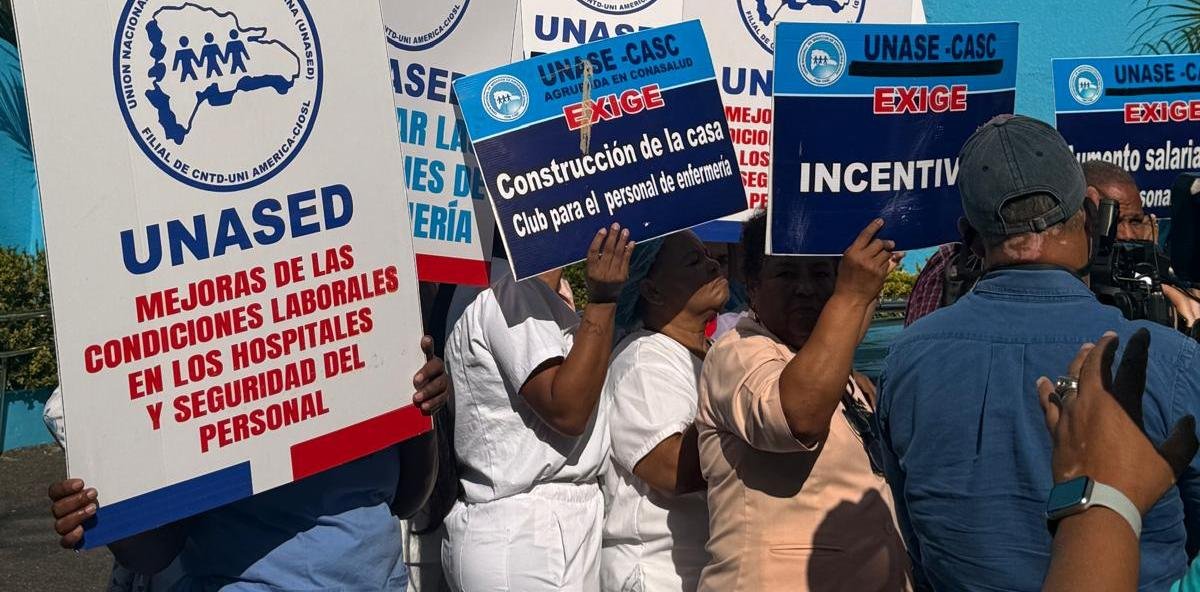
With banners in hand, members of the National Union of Dominican Nursing Services (UNASED) protested this Friday in front of the Maternidad Nuestra Señora de la Altagracia hospital to demand that the central Government address a series of grievances that, according to them, have been pending for years.
“We are not asking the president for anything out of this world. What we are asking for are the demands that they have had and known about for five years,” said one of the protesters.
The group pointed out that Dr. Mario Lama, executive director of the National Health Service (SNS), promised to reclassify 1,000 positions from assistant to bachelor’s degree this year; however, he has only implemented about 200 of them.
“Of those demands, they have only given a paltry 25 percent in three installments. Now, as for the reclassification of positions, nurses who went to college starving, perhaps even walking to school to prepare themselves, today continue to be paid as assistants in hospitals,” said another of the protesters.
Similarly, union representatives warned that their struggle will continue to escalate until the authorities decide, while emphasizing that their current salaries are not enough to cover the basic family basket, “which is around 47,000 and something.”
“We are not talking about a raise, but rather recognition of the incentive for time in service and those other demands that date back to 1990-95. Mr. President, respond to the nurses; this will go as far as the authorities want it to go,” they said.
What they are asking for
Among the demands made by the nurses are: a 100% salary increase for staff; the reclassification of nursing assistants to licensed nurses; the streamlining of nursing pensions; improvements in working conditions in hospitals and greater safety for staff; the construction of a clubhouse for nurses; as well as incentives, among others.















Like most nurses everywhere, they are overworked and underpaid for their services and the risks they take. They have to compensate for inadequate staffs, unsuitable workloads, workplace violence, health hazards, and ect.